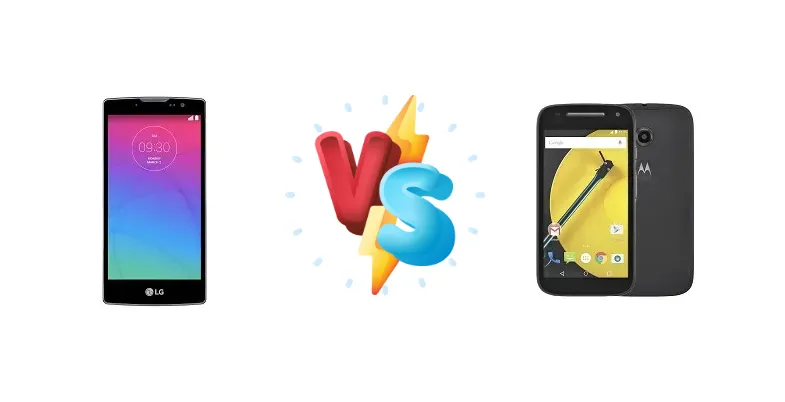
The budget smartphone market is fiercely competitive, offering incredible value for those seeking essential features without breaking the bank. Today, we pit two contenders against each other: the LG Spirit and the Motorola Moto E (2nd Generation). Let's see which one emerges as the champion.
🏆 Quick Verdict
The Motorola Moto E (2nd Gen) generally edges out the LG Spirit thanks to its exceptional battery life and slightly more consistent performance. While the Spirit offers some regional chipset variations, the Moto E's reliability and endurance make it a stronger overall choice for budget-conscious users.
| Network |
|---|
| 2G bands | GSM 850 / 900 / 1800 / 1900 - SIM 1 & SIM 2 (dual-SIM model only) | GSM 850 / 900 / 1800 / 1900 - all versions |
| 3G bands | HSDPA 900 / 1900 / 2100 - H440N | HSDPA 850 / 1700(AWS) / 1900 - XT1527, XT1511 |
| 4G bands | 1, 3, 7, 8, 20 - H440N | 2, 4, 5, 7, 17 - XT1527 |
| Speed | HSPA 21.1/5.76 Mbps, LTE Cat4 150/50 Mbps | HSPA, LTE |
| Technology | GSM / HSPA / LTE | GSM / HSPA / LTE |
| | 2, 4, 5, 7, 17 - H445 | 1, 3, 7, 20 - XT1524 |
| Launch |
|---|
| Announced | 2015, February. Released 2015, March | 2015, February. Released 2015, February |
| Status | Discontinued | Discontinued |
| Body |
|---|
| Dimensions | 133.3 x 66.1 x 10 mm (5.25 x 2.60 x 0.39 in) | 129.9 x 66.8 x 12.3 mm (5.11 x 2.63 x 0.48 in) |
| SIM | Single SIM (Micro-SIM) or Dual SIM (Micro-SIM, dual stand-by) | Micro-SIM |
| Weight | 124.4 g (4.37 oz) | 145 g (5.11 oz) |
| Display |
|---|
| Protection | Corning Gorilla Glass 3 | Corning Gorilla Glass 3, oleophobic coating |
| Resolution | 720 x 1280 pixels, 16:9 ratio (~312 ppi density) | 540 x 960 pixels, 16:9 ratio (~245 ppi density) |
| Size | 4.7 inches, 60.9 cm2 (~69.1% screen-to-body ratio) | 4.5 inches, 55.8 cm2 (~64.3% screen-to-body ratio) |
| Type | IPS LCD | IPS LCD |
| Platform |
|---|
| CPU | Quad-core 1.2 GHz Cortex-A53 - H440N, H445Quad-core 1.3 GHz Cortex-A7 - H420 | Quad-core 1.2 GHz Cortex-A7 - 3G modelQuad-core 1.2 GHz Cortex-A53 - LTE model |
| Chipset | Qualcomm MSM8916 Snapdragon 410 (28 nm) - H440N, H445Mediatek MT6582 - H420 | Qualcomm Snapdragon 200 (28 nm) - 3G modelQualcomm Snapdragon 410 (28 nm) - LTE model |
| GPU | Adreno 306Mali-400MP2 | Adreno 302 - 3G modelAdreno 306 - LTE model |
| OS | Android 5.0.1 (Lollipop), upgradable to 6.0.1 (Marshmallow) | Android 5.0/5.1 (Lollipop) - only XT1527, upgradable to 6.0 (Marshmallow) |
| Memory |
|---|
| Card slot | microSDHC (dedicated slot) | microSDHC (dedicated slot) |
| Internal | 8GB 1GB RAM | 8GB 1GB RAM |
| | eMMC 4.5 | eMMC 4.5 |
| Main Camera |
|---|
| Features | LED flash | Panorama, HDR |
| Single | 8 MP, AF - H440N, H445
5 MP, AF - H420 | 5 MP, f/2.2, AF |
| Video | 1080p@30fps | 720p@30fps |
| Selfie camera |
|---|
| Single | 1 MP | VGA |
| Video | 720p | - |
| Sound |
|---|
| 3.5mm jack | Yes | Yes |
| 35mm jack | Yes | Yes |
| Loudspeaker | Yes | Yes |
| Comms |
|---|
| Bluetooth | 4.1, A2DP, LE | 4.0, LE, aptX |
| NFC | Yes (H445 only) | No |
| Positioning | GPS, GLONASS | GPS, GLONASS |
| Radio | FM radio, RDS | FM radio, RDS |
| USB | microUSB 2.0 | microUSB 2.0, OTG |
| WLAN | Wi-Fi 802.11 b/g/n, Wi-Fi Direct, hotspot | Wi-Fi 802.11 b/g/n, Wi-Fi Direct, hotspot |
| Features |
|---|
| Sensors | Accelerometer, proximity | Accelerometer, proximity |
| Battery |
|---|
| Stand-by | Up to 540 h (2G) / Up to 591 h (3G) | - |
| Type | Li-Ion 2100 mAh, removable | Li-Ion 2390 mAh, non-removable |
| Misc |
|---|
| Colors | Titan, Gold, White | Black, White |
| Models | H440n, H442, H420, H422 | XT1527, XT1511, XT1505, XT1524, XT1528, XT1526 |
| Price | About 120 EUR | About 130 EUR |
| SAR | 1.06 W/kg (head) 0.92 W/kg (body) | 0.89 W/kg (head) 1.40 W/kg (body) |
| SAR EU | 0.78 W/kg (head) 0.69 W/kg (body) | - |
| Tests |
|---|
| Battery life | - |
Endurance rating 82h
|
| Camera | - |
Photo / Video |
| Loudspeaker | - |
Voice 72dB / Noise 68dB / Ring 75dB
|
| Performance | - |
Basemark OS II 2.0: 546Basemark X: 1851 |
LG Spirit
- Potentially more regional features (depending on variant)
- Slightly different design aesthetic
- Inconsistent performance due to chipset variations
- Shorter battery life
- Lower camera quality
- Limited display quality
Motorola Moto E (2nd gen)
- Exceptional battery life (82h endurance)
- More consistent performance
- Reliable and proven track record
- Slightly better display quality
- Basic performance – not suitable for demanding tasks
- Limited camera capabilities
- Low-resolution display
Display Comparison
Both phones feature relatively basic displays, typically around 4.5-5 inches with resolutions around 854 x 480 or 960 x 540. The Moto E's display is generally considered slightly better due to better color accuracy and viewing angles, though both are adequate for everyday use. Expect limited brightness and contrast.
Camera Comparison
Camera quality on both devices is unremarkable. Expect decent photos in good lighting conditions, but struggles in low light. The Moto E's camera might have a slight edge in processing, but overall, neither phone excels in photography. Video recording is limited to 720p on both.
Performance
Performance is a mixed bag. The LG Spirit's chipset variations (Snapdragon 410 or Mediatek 6582) can lead to inconsistent results. The Moto E, with its Snapdragon 200 or 410, offers more predictable performance, though neither phone is a powerhouse. Expect some lag with demanding apps or multitasking.
Battery Life
This is where the Moto E truly shines. Its endurance rating of 82 hours is exceptional for a budget phone. The LG Spirit's battery life is considerably shorter, typically around 16-20 hours of moderate use. The Moto E's superior battery life is a significant advantage.
Buying Guide
The LG Spirit might appeal to users specifically needing its regional features or a slightly different design. However, the Motorola Moto E (2nd Gen) is a better buy for most, offering a dependable experience, long battery life, and a proven track record of value.
Frequently Asked Questions
❓ Which phone is better for gaming?
Neither phone is ideal for gaming. Both have limited processing power and graphics capabilities. Simple games might be playable, but demanding titles will likely struggle.
❓ What is the difference between the LG Spirit H420 and H440N?
The main difference lies in the chipset. The H420 uses a Mediatek MT6582 processor, while the H440N uses a Qualcomm Snapdragon 410. This impacts performance and availability.