
LG Q9 vs Samsung Galaxy S10e: A Deep Dive into Two Compact Flagships
| Phones Images | |||||
|---|---|---|---|---|---|
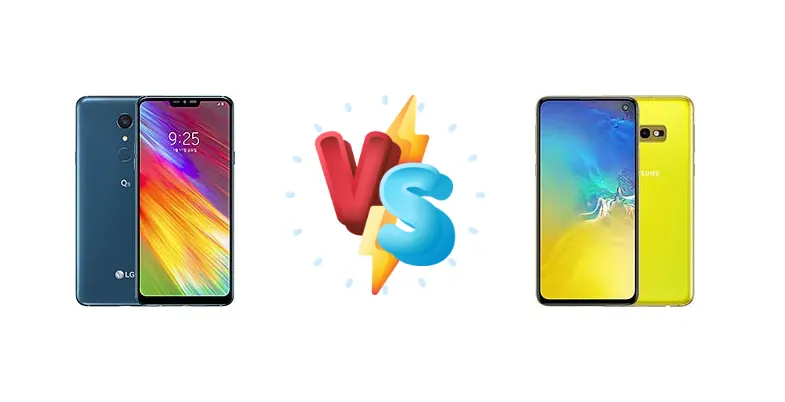
|
🏆 Quick Verdict
For the average user prioritizing all-around performance and future-proofing, the Samsung Galaxy S10e emerges as the better choice. Its Exynos 9820 (or Snapdragon 855 in some regions) offers a significant performance leap over the LG Q9’s Snapdragon 821, coupled with wireless charging and reverse wireless capabilities. However, the Q9 remains a viable option for budget-conscious users.
| PHONES | ||
|---|---|---|
| Phone Names | LG Q9 | Samsung Galaxy S10e |
| Network | ||
|---|---|---|
| 2G bands | GSM 850 / 900 / 1800 / 1900 | GSM 850 / 900 / 1800 / 1900 |
| 3G bands | HSDPA 850 / 900 / 1900 / 2100 | HSDPA 850 / 900 / 1700(AWS) / 1900 / 2100 - Global, USA |
| 4G bands | 1, 3, 5, 7, 8, 28, 38 | 1, 2, 3, 4, 5, 7, 8, 12, 13, 17, 18, 19, 20, 25, 26, 28, 32, 38, 39, 40, 41, 66 - Global |
| Speed | HSPA 42.2/5.76 Mbps, LTE (3CA) Cat11 600/50 Mbps | HSPA 42.2/5.76 Mbps, LTE (7CA) Cat20 2000/150 Mbps |
| Technology | GSM / HSPA / LTE | GSM / CDMA / HSPA / EVDO / LTE |
| - | 1, 2, 3, 4, 5, 7, 8, 12, 13, 14, 17, 18, 19, 20, 25, 26, 28, 29, 30, 38, 39, 40, 41, 46, 66, 71 - USA | |
| Launch | ||
|---|---|---|
| Announced | 2019, January. Released 2019, July | 2019, February 20. Released 2019, March 08 |
| Status | Discontinued | Discontinued |
| Body | ||
|---|---|---|
| Build | - | Glass front (Gorilla Glass 5), glass back (Gorilla Glass 5), aluminum frame |
| Dimensions | 153.2 x 71.9 x 7.9 mm (6.03 x 2.83 x 0.31 in) | 142.2 x 69.9 x 7.9 mm (5.60 x 2.75 x 0.31 in) |
| SIM | · Nano-SIM· Nano-SIM + Nano-SIM | · Nano-SIM· Nano-SIM + Nano-SIM |
| Weight | 159 g (5.61 oz) | 150 g (5.29 oz) |
| IP68 dust/water resistant (up to 1.5m for 30 mins) MIL-STD-810G compliant* *does not guarantee ruggedness or use in extreme conditions | IP68 dust/water resistant (up to 1.5m for 30 min) | |
| Display | ||
|---|---|---|
| Protection | - | Corning Gorilla Glass 5 |
| Resolution | 1440 x 3120 pixels, 19.5:9 ratio (~564 ppi density) | 1080 x 2280 pixels, 19:9 ratio (~438 ppi density) |
| Size | 6.1 inches, 91.0 cm2 (~82.6% screen-to-body ratio) | 5.8 inches, 82.8 cm2 (~83.3% screen-to-body ratio) |
| Type | IPS LCD, HDR10 | Dynamic AMOLED, HDR10+ |
| Always-on display | Always-on display | |
| Platform | ||
|---|---|---|
| CPU | Quad-core (2x2.15 GHz Kryo & 2x1.6 GHz Kryo) | Octa-core (2x2.73 GHz Mongoose M4 & 2x2.31 GHz Cortex-A75 & 4x1.95 GHz Cortex-A55) - EMEA/LATAMOcta-core (1x2.84 GHz Kryo 485 & 3x2.42 GHz Kryo 485 & 4x1.78 GHz Kryo 485) - USA/China |
| Chipset | Qualcomm MSM8996 Snapdragon 821 (14 nm) | Exynos 9820 (8 nm) - EMEA/LATAMQualcomm SM8150 Snapdragon 855 (7 nm) - USA/China |
| GPU | Adreno 530 | Mali-G76 MP12 - EMEA/LATAM Adreno 640 - USA/China |
| OS | Android 8.1 (Oreo) | Android 9.0 (Pie), upgradable to Android 12, One UI 4.1 |
| Memory | ||
|---|---|---|
| Card slot | microSDXC (dedicated slot) | microSDXC (uses shared SIM slot) - dual SIM model only |
| Internal | 64GB 4GB RAM | 128GB 6GB RAM, 128GB 8GB RAM, 256GB 8GB RAM |
| UFS 2.0 | UFS 2.1 | |
| Main Camera | ||
|---|---|---|
| Dual | - | 12 MP, f/1.5-2.4, 26mm (wide), 1/2.55", 1.4µm, dual pixel PDAF, OIS 16 MP, f/2.2, 12mm (ultrawide), 1/3.1", 1.0µm, Super Steady video |
| Features | LED flash, HDR, panorama | LED flash, auto-HDR, panorama |
| Single | 16 MP, f/2.2, 28mm (wide), PDAF | - |
| Video | 4K@30fps | 4K@60fps (no EIS), 4K@30fps, 1080p@30/60/240fps, 720p@960fps, HDR10+, stereo sound rec., gyro-EIS & OIS |
| Selfie camera | ||
|---|---|---|
| Features | HDR | HDR |
| Single | 8 MP, f/1.9, 26mm (wide) | 10 MP, f/1.9, 26mm (wide), 1/3", 1.22µm, dual pixel PDAF |
| Video | 1080p@30fps | 4K@30/60fps, 1080p@30fps |
| Sound | ||
|---|---|---|
| 3.5mm jack | Yes | Yes |
| 35mm jack | Yes | Yes |
| Loudspeaker | Yes | Yes, with stereo speakers |
| 32-bit/192kHz audio | 32-bit/384kHz audio Tuned by AKG | |
| Comms | ||
|---|---|---|
| Bluetooth | 5.0, A2DP, LE | 5.0, A2DP, LE, aptX |
| NFC | Yes | Yes |
| Positioning | GPS, GLONASS, BDS | GPS, GLONASS, BDS, GALILEO |
| Radio | FM radio | FM radio (USA & Canada only) |
| USB | USB Type-C 3.1, OTG | USB Type-C 3.1 |
| WLAN | Wi-Fi 802.11 a/b/g/n/ac, dual-band, Wi-Fi Direct, DLNA | Wi-Fi 802.11 a/b/g/n/ac/6, dual-band, Wi-Fi Direct |
| Features | ||
|---|---|---|
| Sensors | Fingerprint (rear-mounted), accelerometer, gyro, proximity, compass | Fingerprint (side-mounted), accelerometer, gyro, proximity, compass, barometer |
| - | ANT+ Bixby natural language commands and dictation Samsung Pay (Visa, MasterCard certified) | |
| Battery | ||
|---|---|---|
| Charging | 18W wired, QC3 | 15W wired, PD2.0 15W wireless (Qi) 4.5W reverse wireless |
| Type | Li-Ion 3000 mAh, non-removable | Li-Ion 3100 mAh, non-removable |
| Misc | ||
|---|---|---|
| Colors | Carmine Red, New Aurora Black, New Moroccan Blue | Prism White, Prism Black, Prism Green, Prism Blue, Canary Yellow, Flamingo Pink |
| Models | LM-Q925S, LM-Q925L, LM-Q925K | SM-G970F, SM-G970U, SM-G970W, SM-G9700, SM-G970U1, SM-G970N, SM-G970X |
| Price | About 400 EUR | About 130 EUR |
| SAR | - | 0.56 W/kg (head) 0.70 W/kg (body) |
| SAR EU | - | 0.58 W/kg (head) 1.57 W/kg (body) |
| Tests | ||
|---|---|---|
| Audio quality | - | Noise -92.9dB / Crosstalk -89.4dB |
| Battery life | - | Endurance rating 83h |
| Camera | - | Photo / Video |
| Display | - | Contrast ratio: infinite |
| Loudspeaker | - | Voice 71dB / Noise 76dB / Ring 80dB |
| Performance | - | AnTuTu: 325192 (v7), 389694 (v8) GeekBench: 10081 (v4.4), 2141 (v5.1) GFXBench: 40fps (ES 3.1 onscreen) |
LG Q9
- More affordable price point
- Decent performance for basic tasks
- Functional and reliable
- Outdated Snapdragon 821 processor
- Lacks wireless charging
- Inferior performance compared to S10e
Samsung Galaxy S10e
- Significantly faster Exynos 9820/Snapdragon 855 processor
- Wireless and reverse wireless charging
- More modern feature set
- Higher price than LG Q9
- Battery life is comparable, not superior
- May show its age in 2024
Display Comparison
Both the LG Q9 and Samsung Galaxy S10e boast displays with an 'infinite' contrast ratio, suggesting excellent black levels likely achieved through OLED technology. However, specific details like peak brightness and color gamut coverage are missing. The S10e’s smaller 5.8-inch display likely contributes to a higher pixel density, potentially resulting in a sharper image. The S10e’s display benefits from Samsung’s established display expertise, potentially offering superior color accuracy and viewing angles, though this is difficult to quantify without detailed testing data.
Camera Comparison
Both phones offer photo and video capabilities, but detailed specifications are lacking. The S10e likely benefits from Samsung’s advanced image processing algorithms and potentially a larger main sensor. While the Q9 may offer acceptable image quality in good lighting conditions, the S10e’s superior processing power and potentially better sensor technology should result in better low-light performance, dynamic range, and overall image clarity. The absence of details regarding sensor sizes and lens apertures makes a precise comparison difficult, but Samsung’s history suggests a more sophisticated camera system.
Performance
The performance gap between these devices is substantial. The Samsung Galaxy S10e, equipped with the Exynos 9820 (8nm) or Snapdragon 855 (7nm), leverages a more advanced manufacturing process and a significantly more powerful CPU architecture. The S10e’s octa-core processor, with its Mongoose M4 cores (EMEA/LATAM) or Kryo 485 cores (USA/China), outperforms the LG Q9’s quad-core Snapdragon 821 (14nm) in both single-core and multi-core tasks. This translates to faster app loading times, smoother multitasking, and a better gaming experience. The 7nm/8nm process node also contributes to improved thermal efficiency, reducing the likelihood of throttling under sustained load.
Battery Life
Both devices share an endurance rating of 83 hours, indicating comparable battery life despite the LG Q9’s lack of wireless charging. However, the S10e’s 15W wired charging (with PD2.0 support) and 15W wireless charging (Qi) provide greater convenience and flexibility. The Q9’s 18W QC3 charging is respectable, but lacks the versatility of the S10e’s charging options. The S10e also offers 4.5W reverse wireless charging, allowing it to charge accessories like earbuds, a feature absent on the Q9.
Buying Guide
Buy the LG Q9 if you need a functional smartphone with a decent processor for everyday tasks and are on a very tight budget. It’s a good option for those who prioritize affordability over cutting-edge features. Buy the Samsung Galaxy S10e if you prefer a more refined experience with significantly better performance, wireless charging, and a more modern feature set, even if it means spending a bit more. It’s ideal for users who want a compact phone that can handle demanding apps and games.