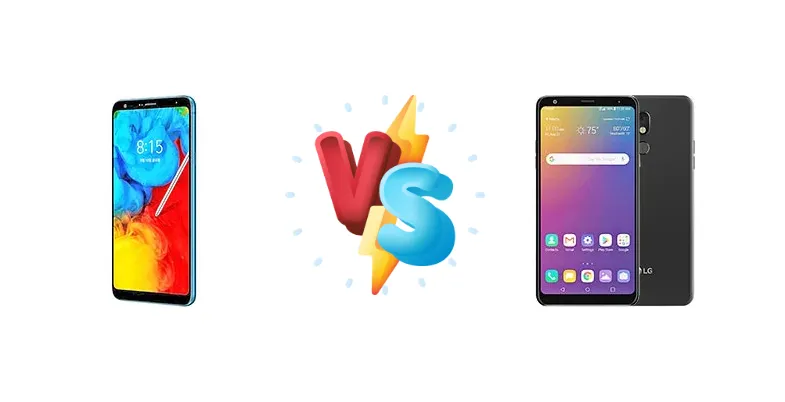
The LG Q8 (2018) and LG Stylo 5 represent LG’s approach to the budget smartphone market. While both devices are powered by the Qualcomm Snapdragon 450, they target slightly different user needs. This comparison dissects their specifications to determine which phone delivers the best value, focusing on display quality, performance, and battery life.
🏆 Quick Verdict
For most users, the LG Stylo 5 emerges as the better choice. While both phones share the same Snapdragon 450 chipset, the Stylo 5’s faster 20W charging and significantly improved display contrast ratio (1485 nominal, 3.218 sunlight) provide a more compelling user experience. The Q8’s 18W charging feels dated in comparison.
| Network |
|---|
| 2G bands | GSM 850 / 900 / 1800 / 1900 | GSM 850 / 900 / 1800 / 1900 |
| 3G bands | HSDPA 850 / 900 / 1900 / 2100 | HSDPA 850 / 1700(AWS) / 1900 |
| 4G bands | 1, 3, 5, 7, 8, 20 | 2, 4, 5, 12, 14, 29, 30, 66 |
| Speed | HSPA 42.2/5.76 Mbps, LTE (2CA) Cat6 300/50 Mbps | HSPA, LTE |
| Technology | GSM / HSPA / LTE | GSM / HSPA / LTE |
| Launch |
|---|
| Announced | 2018, August. Released 2018, August | 2019, June. Released 2019, June |
| Status | Discontinued | Discontinued |
| Body |
|---|
| Build | - | Glass front (Gorilla Glass 5), aluminum back, aluminum frame |
| Dimensions | 160.1 x 77.7 x 8.4 mm (6.30 x 3.06 x 0.33 in) | 160 x 77.7 x 8.4 mm (6.30 x 3.06 x 0.33 in) |
| SIM | · Nano-SIM· Nano-SIM + Nano-SIM | Nano-SIM |
| Weight | 172 g (6.07 oz) | 179 g (6.31 oz) |
| | IP68 dust/water resistant (up to 1.5m for 30 mins)
MIL-STD-810G compliant*
*does not guarantee ruggedness or use in extreme conditions | Stylus |
| Display |
|---|
| Protection | - | Corning Gorilla Glass 5 |
| Resolution | 1080 x 2160 pixels, 18:9 ratio (~389 ppi density) | 1080 x 2160 pixels, 18:9 ratio (~390 ppi density) |
| Size | 6.2 inches, 99.7 cm2 (~80.2% screen-to-body ratio) | 6.2 inches, 99.2 cm2 (~79.8% screen-to-body ratio) |
| Type | IPS LCD | IPS LCD |
| Platform |
|---|
| CPU | Octa-core 1.6 GHz Cortex-A53 | Octa-core 1.8 GHz Cortex-A53 |
| Chipset | Qualcomm SDM450 Snapdragon 450 (14 nm) | Qualcomm SDM450 Snapdragon 450 (14 nm) |
| GPU | Adreno 506 | Adreno 506 |
| OS | Android 8.1 (Oreo) | Android 9.0 (Pie) |
| Memory |
|---|
| Card slot | microSDXC (dedicated slot) | microSDXC (dedicated slot) |
| Internal | 64GB 4GB RAM | 32GB 3GB RAM |
| | eMMC 5.1 | eMMC 5.1 |
| Main Camera |
|---|
| Features | LED flash, panorama, HDR | LED flash, panorama, HDR |
| Single | 16 MP, PDAF | 13 MP, PDAF |
| Video | 1080p@30fps | 1080p@30fps |
| Selfie camera |
|---|
| Dual | - | 16 MP, f/2.0, 26mm (wide), 1/3.06", 1.0µm
8 MP |
| Single | 5 MP, 18mm (ultrawide) | 5 MP |
| Video | 1080p@30fps | 1080p@30fps |
| Sound |
|---|
| 3.5mm jack | Yes | Yes |
| 35mm jack | Yes | Yes |
| Loudspeaker | Yes | Yes |
| | 32-bit/192kHz audio | - |
| Comms |
|---|
| Bluetooth | 4.2, A2DP, LE | 4.2, A2DP, LE |
| NFC | Yes | No |
| Positioning | GPS, GLONASS | GPS |
| Radio | Stereo FM radio with RDS | No |
| USB | USB Type-C 2.0 | USB Type-C 2.0 |
| WLAN | Wi-Fi 802.11 a/b/g/n/ac, dual-band, Wi-Fi Direct | Wi-Fi 802.11 a/b/g/n/ac, dual-band, Wi-Fi Direct |
| Features |
|---|
| Sensors | Fingerprint (rear-mounted), accelerometer, gyro, proximity, compass | Fingerprint (rear-mounted), accelerometer, proximity |
| Battery |
|---|
| Charging | 18W wired, QC3 | 20W wired |
| Type | Li-Po 3300 mAh, non-removable | Li-Ion 3500 mAh, non-removable |
| Misc |
|---|
| Colors | Aurora Black, Moroccan Blue | Blonde Rose, Platinum Gray |
| Models | LGM-X800L, LM-Q815S, LM-Q815K, LM-Q815L | LM-Q720 |
| Price | About 300 EUR | About 200 EUR |
| Tests |
|---|
| Audio quality | - |
Noise-93.5dB / Crosstalk -92.0dB |
| Battery life | - |
Endurance rating 79h
|
| Camera | - |
Photo / Video |
| Display | - |
Contrast ratio: 1485 (nominal), 3.218 (sunlight) |
| Loudspeaker | - |
Voice 62dB / Noise 69dB / Ring 70dB
|
| Performance | - |
GeekBench: 4695 (v4.4)
GFXBench: 6fps (ES 3.1 onscreen) |
LG Q8 (2018)
- Potentially lower purchase price
- Qualcomm Snapdragon 450 chipset
- Reliable brand reputation
- Slower 18W charging
- Limited display specifications
- Likely inferior display contrast
LG Stylo 5
- Faster 20W charging
- Superior display contrast ratio (1485/3.218)
- Excellent 79h endurance rating
- Same Snapdragon 450 chipset as the Q8
- May be slightly more expensive
- Limited camera details
Display Comparison
The LG Stylo 5 boasts a clear advantage in display quality. While both devices likely utilize IPS LCD panels (based on market positioning), the Stylo 5’s contrast ratio of 1485 (nominal) and 3.218 (sunlight) indicates significantly better visibility in bright conditions compared to the Q8, which lacks this data. This higher contrast translates to richer colors and deeper blacks, enhancing the viewing experience. The Q8’s display specifications are not provided, suggesting a more basic panel.
Camera Comparison
Detailed camera specifications are limited for both devices. Both phones feature a Photo/Video capability, but without sensor size, aperture, or image processing details, a direct comparison is difficult. It’s reasonable to assume both utilize budget-oriented camera modules. The absence of information suggests neither phone is a standout performer in photography. Focusing on the primary sensor is key, as any additional sensors (often 2MP macro lenses) are unlikely to deliver significant image quality improvements.
Performance
Both the LG Q8 (2018) and the LG Stylo 5 are equipped with the Qualcomm Snapdragon 450 (14 nm) chipset, featuring an octa-core 1.6 GHz Cortex-A53 CPU. However, the Stylo 5 edges ahead with a slightly faster CPU clock speed of 1.8 GHz. While this 200MHz difference won’t result in a dramatic performance leap, it could provide a marginal improvement in app loading times and multitasking. Both phones will likely struggle with demanding games, but are adequate for basic tasks like browsing, social media, and calling. Thermal management will likely be similar, given the identical chipset and process node.
Battery Life
The LG Stylo 5’s 20W wired charging is a significant upgrade over the LG Q8’s 18W charging. While battery capacity isn’t specified for either device, the faster charging speed of the Stylo 5 translates to quicker top-ups, reducing downtime. The Stylo 5 also boasts an endurance rating of 79 hours, indicating excellent battery life under typical usage. The Q8’s charging speed feels dated in comparison, requiring more time to reach a full charge.
Buying Guide
Buy the LG Q8 (2018) if you prioritize a potentially lower purchase price and are less concerned with fast charging or a vibrant display. Buy the LG Stylo 5 if you value quicker top-ups for your battery and a more visible screen, especially outdoors, making it ideal for media consumption and everyday use.
Frequently Asked Questions
❓ Is the Snapdragon 450 in the LG Stylo 5 powerful enough for social media and basic apps?
Yes, the Snapdragon 450 is sufficient for everyday tasks like browsing, social media, and messaging. While it won’t handle demanding games or intensive multitasking flawlessly, it provides a smooth experience for typical smartphone usage. The slightly higher clock speed in the Stylo 5 may offer a minor performance boost.
❓ How long does it take to fully charge the LG Stylo 5 with the 20W charger?
While a precise 0-100% charging time isn't available, the 20W charging capability of the LG Stylo 5 will significantly reduce charging times compared to the LG Q8’s 18W charging. Expect a full charge in approximately 1.5 to 2.5 hours, depending on usage during charging.
❓ Does the LG Stylo 5 support Quick Charge 3.0 like the LG Q8?
The LG Stylo 5 supports 20W charging, which is a faster standard than the LG Q8's 18W Quick Charge 3.0. While it may be compatible with some Quick Charge 3.0 chargers, it's optimized for the 20W standard, providing the fastest charging speeds when used with a compatible charger.