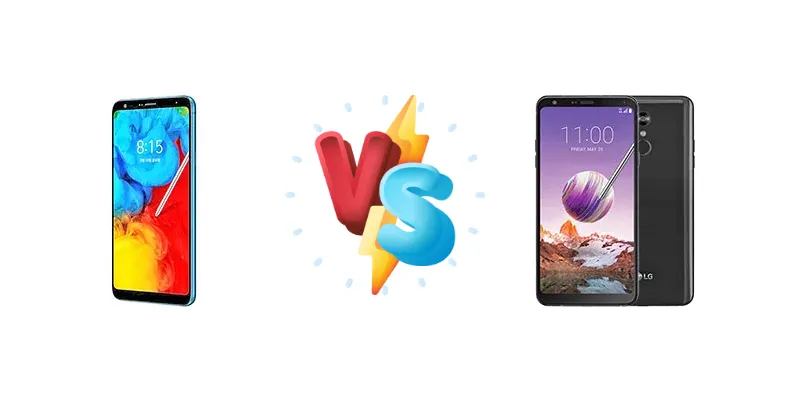
The LG Q8 (2018) and LG Q Stylo 4 represent LG’s attempts to deliver capable smartphones at accessible price points. While both devices share the same Qualcomm Snapdragon 450 chipset, subtle differences in CPU clock speed and charging capabilities, alongside a shared $240 display price, create distinct user experiences. This comparison dissects these nuances to determine which phone offers the best value.
🏆 Quick Verdict
For the average user prioritizing slightly faster performance and quicker charging, the LG Q Stylo 4 emerges as the better choice. Its 1.8 GHz CPU offers a marginal speed boost over the Q8’s 1.6 GHz, and while both use the Snapdragon 450, the faster clock speed translates to a snappier experience. However, the difference is minimal, making the Q8 a viable option for those seeking a similar experience at potentially lower cost.
| Network |
|---|
| 2G bands | GSM 850 / 900 / 1800 / 1900 | GSM 850 / 900 / 1800 / 1900 |
| 3G bands | HSDPA 850 / 900 / 1900 / 2100 | HSDPA 850 / 900 / 1900 / 2100 |
| 4G bands | 1, 3, 5, 7, 8, 20 | 1, 2, 3, 4, 5, 7, 12, 13, 20, 38, 41, 66, 71 |
| Speed | HSPA 42.2/5.76 Mbps, LTE (2CA) Cat6 300/50 Mbps | HSPA 42.2/5.76 Mbps, LTE (2CA) Cat6 300/50 Mbps |
| Technology | GSM / HSPA / LTE | GSM / HSPA / LTE |
| Launch |
|---|
| Announced | 2018, August. Released 2018, August | 2018, June. Released 2018, June |
| Status | Discontinued | Discontinued |
| Body |
|---|
| Dimensions | 160.1 x 77.7 x 8.4 mm (6.30 x 3.06 x 0.33 in) | 160 x 77.7 x 8.1 mm (6.30 x 3.06 x 0.32 in) |
| SIM | · Nano-SIM· Nano-SIM + Nano-SIM | Nano-SIM |
| Weight | 172 g (6.07 oz) | 172 g (6.07 oz) |
| | IP68 dust/water resistant (up to 1.5m for 30 mins)
MIL-STD-810G compliant*
*does not guarantee ruggedness or use in extreme conditions | Stylus |
| Display |
|---|
| Resolution | 1080 x 2160 pixels, 18:9 ratio (~389 ppi density) | 1080 x 2160 pixels, 18:9 ratio (~390 ppi density) |
| Size | 6.2 inches, 99.7 cm2 (~80.2% screen-to-body ratio) | 6.2 inches, 99.2 cm2 (~79.8% screen-to-body ratio) |
| Type | IPS LCD | IPS LCD |
| Platform |
|---|
| CPU | Octa-core 1.6 GHz Cortex-A53 | Octa-core 1.8 GHz Cortex-A53 |
| Chipset | Qualcomm SDM450 Snapdragon 450 (14 nm) | Qualcomm SDM450 Snapdragon 450 (14 nm) |
| GPU | Adreno 506 | Adreno 506 |
| OS | Android 8.1 (Oreo) | Android 8.1 (Oreo), LG UX 7 |
| Memory |
|---|
| Card slot | microSDXC (dedicated slot) | microSDXC (dedicated slot) |
| Internal | 64GB 4GB RAM | 32GB 2GB RAM |
| | eMMC 5.1 | eMMC 5.1 |
| Main Camera |
|---|
| Features | LED flash, panorama, HDR | LED flash, panorama, HDR |
| Single | 16 MP, PDAF | 13 MP, f/2.4, PDAF |
| Video | 1080p@30fps | 1080p@30fps |
| Selfie camera |
|---|
| Single | 5 MP, 18mm (ultrawide) | 5 MP |
| Video | 1080p@30fps | 720p |
| Sound |
|---|
| 3.5mm jack | Yes | Yes |
| 35mm jack | Yes | Yes |
| Loudspeaker | Yes | Yes |
| | 32-bit/192kHz audio | - |
| Comms |
|---|
| Bluetooth | 4.2, A2DP, LE | 4.2, A2DP, LE |
| NFC | Yes | Yes |
| Positioning | GPS, GLONASS | GPS, GLONASS |
| Radio | Stereo FM radio with RDS | No |
| USB | USB Type-C 2.0 | USB Type-C 2.0 |
| WLAN | Wi-Fi 802.11 a/b/g/n/ac, dual-band, Wi-Fi Direct | Wi-Fi 802.11 a/b/g/n/ac, dual-band, Wi-Fi Direct, DLNA |
| Features |
|---|
| Sensors | Fingerprint (rear-mounted), accelerometer, gyro, proximity, compass | Fingerprint (rear-mounted), accelerometer, gyro, proximity, compass |
| Battery |
|---|
| Charging | 18W wired, QC3 | 10W wired |
| Type | Li-Po 3300 mAh, non-removable | Li-Ion 3300 mAh, non-removable |
| Misc |
|---|
| Colors | Aurora Black, Moroccan Blue | Aurora Black |
| Models | LGM-X800L, LM-Q815S, LM-Q815K, LM-Q815L | LM-Q710(FGN), LM-Q710.FGN, Q710AL, LML713DL, Q710PL |
| Price | About 300 EUR | About 250 EUR |
| SAR | - | 1.12 W/kg (head) 1.22 W/kg (body) |
LG Q8 (2018)
- Potentially lower purchase price
- 18W Quick Charge 3.0 support for faster charging (with compatible charger)
- Identical Snapdragon 450 chipset for core functionality
- Slower 1.6 GHz CPU clock speed
- May require a separate charger to utilize 18W charging
LG Q Stylo 4
- Faster 1.8 GHz CPU clock speed for snappier performance
- Simpler 10W charging standard
- Identical Snapdragon 450 chipset for core functionality
- Slower 10W charging speed
- Potentially higher purchase price
Display Comparison
Both the LG Q8 (2018) and LG Q Stylo 4 share a $240 display cost, suggesting similar panel technology and quality. However, specific details like resolution, brightness (nits), and color gamut coverage are missing. Given the budget nature of both devices, it’s reasonable to assume they utilize IPS LCD panels. Without further data, it’s difficult to determine if one display offers superior viewing angles or color accuracy. The shared cost suggests a similar level of investment in display quality.
Camera Comparison
Detailed camera specifications are absent for both devices. Given their market segment, it’s likely both feature a primary camera with a modest resolution and a secondary depth sensor. Without knowing sensor sizes, lens apertures, or image processing algorithms, a direct comparison is impossible. The presence of a 2MP macro camera on either device would likely offer limited practical benefit due to its low resolution. Image quality will likely be comparable, with performance heavily reliant on software optimization.
Performance
Both phones are powered by the Qualcomm Snapdragon 450 (14 nm) chipset, indicating comparable overall processing capabilities. However, the LG Q Stylo 4 boasts an octa-core CPU clocked at 1.8 GHz, while the Q8’s CPU runs at 1.6 GHz. This 200 MHz difference, while seemingly small, can result in slightly faster app launch times and smoother multitasking on the Stylo 4. The Snapdragon 450’s Adreno 506 GPU is identical in both devices, meaning gaming performance will be largely the same. Thermal management will likely be similar, given the identical chipset and manufacturing process.
Battery Life
Battery capacity is not specified for either device. However, the LG Q Stylo 4 supports 10W wired charging, while the Q8 supports 18W wired charging with Quick Charge 3.0 compatibility. This suggests the Q8 has the potential for significantly faster charging speeds, assuming it’s paired with a compatible charger. Even with a smaller battery, the Q8’s faster charging could result in less downtime. Without knowing the battery capacities, it’s difficult to assess overall battery life, but the Q8’s charging advantage is a clear benefit.
Buying Guide
Buy the LG Q8 (2018) if you prioritize a potentially lower purchase price and are comfortable with slightly slower application loading times and a slower charging experience. Buy the LG Q Stylo 4 if you prefer a marginally more responsive user interface and the convenience of faster 10W charging, even if it means potentially spending a bit more upfront.
Frequently Asked Questions
❓ Will I notice a significant difference in performance between the 1.6 GHz and 1.8 GHz CPUs?
The difference is subtle but noticeable. The 1.8 GHz CPU in the Q Stylo 4 will likely result in slightly faster app launch times and smoother multitasking, especially when running multiple applications simultaneously. However, for basic tasks like browsing and social media, the difference will be minimal.
❓ Does the LG Q8 (2018)'s 18W charging actually make a difference if I don't have a Quick Charge 3.0 charger?
No, the 18W charging will be limited to standard charging speeds (typically 5W) if you use a non-Quick Charge compatible charger. To benefit from the faster charging, you'll need to purchase a separate Quick Charge 3.0 wall adapter.
❓ Are either of these phones suitable for playing demanding mobile games like PUBG or Fortnite?
Both phones utilize the Adreno 506 GPU, which is capable of running PUBG and Fortnite, but at lower graphics settings. Expect frame rate drops and occasional lag, especially during intense action sequences. These phones are better suited for less demanding games.