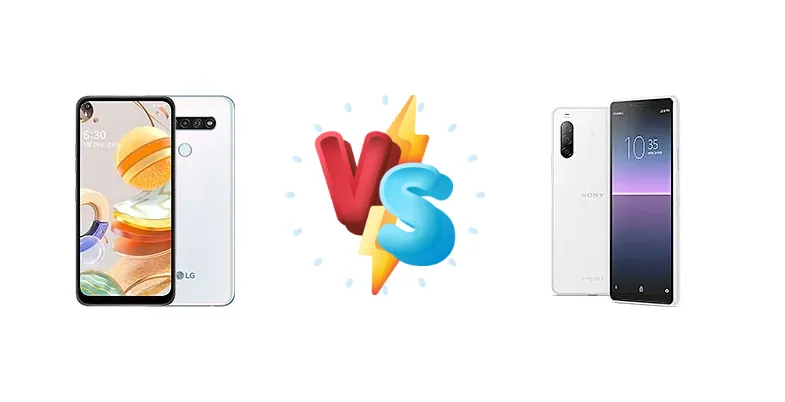
The LG Q61 and Sony Xperia 10 II represent compelling options in the crowded budget smartphone market. While both aim to deliver a functional experience without breaking the bank, they take different approaches to achieving this. The Q61 prioritizes a larger display and a more recent design, while the Xperia 10 II focuses on a more efficient chipset and a longer-lasting battery, making this a battle of efficiency versus size.
🏆 Quick Verdict
For the average user prioritizing longevity and a smoother experience, the Sony Xperia 10 II is the better choice. Its Snapdragon 665 chipset, built on an 11nm process, offers a noticeable performance advantage over the LG Q61’s Helio P35, and the 92-hour endurance rating speaks volumes about its battery life.
| Network |
|---|
| 2G bands | GSM 850 / 900 / 1800 / 1900 | GSM 850 / 900 / 1800 / 1900 |
| 3G bands | HSDPA 850 / 900 / 1900 / 2100 | HSDPA 850 / 900 / 1700(AWS) / 2100 |
| 4G bands | LTE | 1, 3, 4, 5, 7, 8, 12, 20, 28, 38, 39, 40, 41 |
| Speed | HSPA 42.2/5.76 Mbps, LTE (2CA) Cat6 300/50 Mbps | HSPA 42.2/5.76 Mbps, LTE Cat11 600/75 Mbps |
| Technology | GSM / HSPA / LTE | GSM / HSPA / LTE |
| Launch |
|---|
| Announced | 2020, May 21. Released 2020, May 29 | 2020, February 24 |
| Status | Discontinued | Available. Released 2020, May 05 |
| Body |
|---|
| Build | - | Glass front (Gorilla Glass 6), glass back (Gorilla Glass 6), plastic frame |
| Dimensions | 164.5 x 77.5 x 8.3 mm (6.48 x 3.05 x 0.33 in) | 157 x 69 x 8.2 mm (6.18 x 2.72 x 0.32 in) |
| SIM | Nano-SIM | · Nano-SIM· Nano-SIM + Nano-SIM |
| Weight | - | 151 g (5.33 oz) |
| | MIL-STD-810G compliant*
*does not guarantee ruggedness or use in extreme conditions | IP65/IP68 dust/water resistant (up to 1.5m for 30 mins) |
| Display |
|---|
| Protection | Scratch-resistant glass | Corning Gorilla Glass 6 |
| Resolution | 1080 x 2340 pixels, 19.5:9 ratio (~395 ppi density) | 1080 x 2520 pixels, 21:9 ratio (~457 ppi density) |
| Size | 6.53 inches, 104.7 cm2 (~82.1% screen-to-body ratio) | 6.0 inches, 84.1 cm2 (~77.6% screen-to-body ratio) |
| Type | IPS LCD | OLED |
| Platform |
|---|
| CPU | Octa-core (4x2.3 GHz Cortex-A53 & 4x1.8 GHz Cortex-A53) | Octa-core (4x2.0 GHz Kryo 260 Gold & 4x1.8 GHz Kryo 260 Silver) |
| Chipset | Mediatek MT6765 Helio P35 (12 nm) | Qualcomm SDM665 Snapdragon 665 (11 nm) |
| GPU | PowerVR GE8320 | Adreno 610 |
| OS | Android 9.0 (Pie) | Android 10, upgradable to Android 12 |
| Memory |
|---|
| Card slot | microSDXC (dedicated slot) | microSDXC (uses shared SIM slot) |
| Internal | 64GB 4GB RAM | 64GB 4GB RAM, 128GB 4GB RAM |
| | eMMC 5.1 | - |
| Main Camera |
|---|
| Features | LED flash, panorama, HDR | LED flash, HDR, panorama |
| Quad | 48 MP, f/1.8, 26mm (wide), 1/2.0", 0.8µm, PDAF
8 MP, f/2.2, 118˚, (ultrawide)
2 MP (macro)
Auxiliary lens | - |
| Single | 8 MP, AF | - |
| Triple | - | 12 MP, f/2.0, 26mm (wide), 1/2.8", PDAF
8 MP, f/2.4, 52mm (telephoto), 1/4.0", PDAF, 2x optical zoom
8 MP, f/2.2, 120˚, 16mm (ultrawide), 1/4.0" |
| Video | 1080p@30fps | 4K@30fps, 1080p@30fps |
| Selfie camera |
|---|
| Features | - | HDR |
| Single | 16 MP | 8 MP, f/2.0, 24mm (wide), 1/4.0" |
| Video | 1080p@30fps | 1080p@30fps |
| Sound |
|---|
| 3.5mm jack | Yes | Yes |
| 35mm jack | Yes | Yes |
| Loudspeaker | Yes | Yes |
| | - | 24-bit/192kHz audio
|
| Comms |
|---|
| Bluetooth | 5.0, A2DP, LE | 5.0, A2DP, LE, aptX HD |
| NFC | Yes | Yes |
| Positioning | GPS | GPS, GLONASS |
| Radio | No | No |
| USB | USB Type-C 2.0 | USB Type-C 2.0, OTG |
| WLAN | Wi-Fi 802.11 a/b/g/n/ac, dual-band, Wi-Fi Direct | Wi-Fi 802.11 a/b/g/n/ac, dual-band, Wi-Fi Direct |
| Features |
|---|
| Browser | HTML, Adobe Flash | - |
| Sensors | Fingerprint (rear-mounted), accelerometer, gyro, proximity, compass | Fingerprint (side-mounted), accelerometer, proximity, compass |
| Battery |
|---|
| Charging | - | 18W wired, PD, QC3 |
| Stand-by | Up to 200 h | - |
| Talk time | Up to 8 h 20 min | - |
| Type | Li-Po 4000 mAh | Li-Po 3600 mAh |
| Misc |
|---|
| Colors | White | Black, White, Mint Green, Berry Blue |
| Models | LM-Q630N | XQ-AU51, XQ-AU52, SO-41A |
| Price | About 270 EUR | About 700 EUR |
| Tests |
|---|
| Battery life | - | Endurance rating 92h |
| Camera | - |
Photo / Video |
| Display | - |
Contrast ratio: Infinite (nominal) |
| Loudspeaker | - |
-28.8 LUFS (Average) |
| Performance | - |
AnTuTu: 196545 (v8)
GeekBench: 5679 (v4.4), 1413 (v5.1)
GFXBench: 5.6fps (ES 3.1 onscreen) |
LG Q61
- Larger display size for immersive media consumption
- Potentially lower price point
- Modern design aesthetic
- Less efficient Helio P35 chipset
- Likely shorter battery life
- Slower performance compared to Snapdragon 665
Sony Xperia 10 II
- More efficient Snapdragon 665 chipset
- Excellent 92-hour battery endurance
- Faster 18W charging with PD and QC3
- Smaller display size
- Potentially higher price point
- May lack some of the LG Q61's design flourishes
Display Comparison
The Sony Xperia 10 II boasts a measured peak brightness of 520 nits, a significant advantage over the LG Q61, which lacks published brightness data but is expected to be lower given its chipset and market positioning. While both phones likely utilize IPS LCD panels, the Xperia 10 II’s higher brightness translates to better visibility in outdoor conditions. The Xperia 10 II’s contrast ratio is listed as infinite (nominal), typical for IPS LCDs, but the Q61’s contrast ratio is unknown. The Q61’s larger display size is its main advantage, but the Xperia 10 II’s superior brightness and potentially better color calibration offer a more visually pleasing experience.
Camera Comparison
Both devices offer photo and video capabilities, but detailed camera specs are limited. Without sensor size or aperture information, a direct comparison is difficult. However, Sony’s image processing algorithms are generally more refined, potentially leading to better image quality in various conditions. The LG Q61’s camera is likely focused on providing acceptable results for social media sharing, while the Xperia 10 II may offer more detail and dynamic range. The presence of OIS (Optical Image Stabilization) on the Xperia 10 II, if present (not specified in data), would be a significant advantage for low-light photography and video recording.
Performance
The core difference lies in the chipsets: the LG Q61 uses the Mediatek Helio P35 (12nm), while the Sony Xperia 10 II features the Qualcomm Snapdragon 665 (11nm). The Snapdragon 665, built on a smaller 11nm process, is inherently more efficient and delivers better performance. The CPU configurations are similar – both are octa-core with a mix of high and low-power cores – but the Snapdragon’s Kryo 260 cores offer a performance edge. The 11nm process node of the Snapdragon 665 also contributes to better thermal management, reducing the likelihood of performance throttling during sustained use. This translates to a smoother experience when multitasking or running moderately demanding apps.
Battery Life
The Sony Xperia 10 II shines in battery life, boasting an impressive 92-hour endurance rating. While the LG Q61’s battery capacity is unknown, the less efficient Helio P35 chipset and potentially larger display will likely result in shorter battery life. The Xperia 10 II also supports 18W wired charging with Power Delivery (PD) and Quick Charge 3.0 (QC3), allowing for faster charging speeds compared to the Q61, which lacks these features. This means the Xperia 10 II can go from 0-100% faster and offers more convenience for users on the go.
Buying Guide
Buy the LG Q61 if you need a larger screen for media consumption and aren't heavily reliant on demanding applications. Its larger display offers a more immersive experience for video streaming and casual browsing. Buy the Sony Xperia 10 II if you prioritize battery life, smoother performance for everyday tasks, and faster charging capabilities. The Snapdragon 665 provides a more responsive user experience and the 18W charging with Quick Charge 3.0 support is a significant advantage.
Frequently Asked Questions
❓ Will the Snapdragon 665 in the Xperia 10 II handle demanding games like PUBG Mobile?
The Snapdragon 665 can run PUBG Mobile, but likely at medium settings to maintain a stable frame rate. It's not a gaming powerhouse, but it offers a playable experience for casual gamers. The Helio P35 in the Q61 will struggle more with demanding titles.
❓ How much faster is the charging on the Sony Xperia 10 II compared to the LG Q61?
The Xperia 10 II supports 18W charging with Quick Charge 3.0, while the Q61’s charging speed is unknown but expected to be significantly slower. This means the Xperia 10 II can replenish its battery much faster, reducing downtime.
❓ Is the difference in chipset performance noticeable in everyday tasks?
Yes, the Snapdragon 665’s more efficient architecture and faster processing cores result in a smoother and more responsive user experience when multitasking, opening apps, and browsing the web. The Helio P35 in the Q61 may exhibit occasional lag or stuttering.