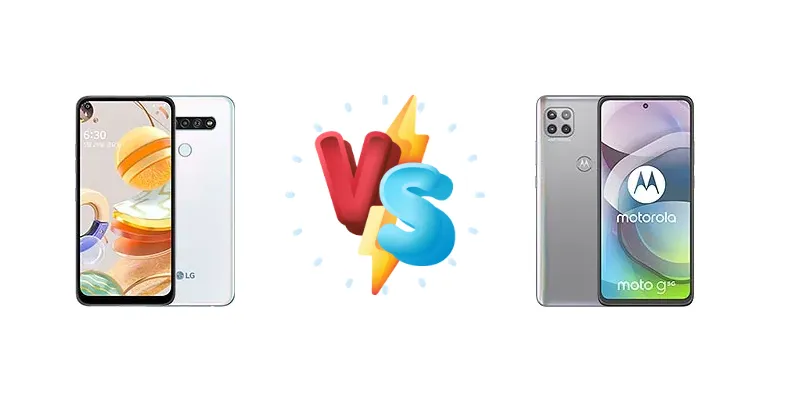
The LG Q61 and Motorola Moto G 5G represent different approaches to affordable 5G connectivity. The Q61, an older model, focuses on providing a functional experience at a lower price point. The Moto G 5G, while still budget-conscious, aims to deliver a more modern chipset and improved performance, making it a compelling choice for users prioritizing speed and future-proofing.
🏆 Quick Verdict
For the average user, the Motorola Moto G 5G is the clear winner. Its Qualcomm Snapdragon 750G chipset provides a substantial performance advantage over the LG Q61’s MediaTek Helio P35, offering a smoother experience for gaming, multitasking, and 5G connectivity. While both phones share an identical endurance rating, the Moto G 5G’s faster charging mitigates any potential battery concerns.
| Network |
|---|
| 2G bands | GSM 850 / 900 / 1800 / 1900 | GSM 850 / 900 / 1800 / 1900 |
| 3G bands | HSDPA 850 / 900 / 1900 / 2100 | HSDPA 850 / 900 / 1700(AWS) / 1900 / 2100 |
| 4G bands | LTE | 1, 2, 3, 4, 5, 7, 8, 18, 19, 20, 26, 28, 38, 39, 40, 41, 42, 43 |
| 5G bands | - | 1, 3, 5, 7, 8, 28, 38, 41, 77, 78 SA/NSA |
| Speed | HSPA 42.2/5.76 Mbps, LTE (2CA) Cat6 300/50 Mbps | HSPA, LTE, 5G |
| Technology | GSM / HSPA / LTE | GSM / HSPA / LTE / 5G |
| Launch |
|---|
| Announced | 2020, May 21. Released 2020, May 29 | 2020, November 05. Released 2020, December 07 |
| Status | Discontinued | Discontinued |
| Body |
|---|
| Build | - | Glass front, plastic back, plastic frame |
| Dimensions | 164.5 x 77.5 x 8.3 mm (6.48 x 3.05 x 0.33 in) | 166.1 x 76.1 x 9.9 mm (6.54 x 3.00 x 0.39 in) |
| SIM | Nano-SIM | Nano-SIM + Nano-SIM |
| Weight | - | 212 g (7.48 oz) |
| | MIL-STD-810G compliant*
*does not guarantee ruggedness or use in extreme conditions | - |
| Display |
|---|
| Protection | Scratch-resistant glass | - |
| Resolution | 1080 x 2340 pixels, 19.5:9 ratio (~395 ppi density) | 1080 x 2400 pixels, 20:9 ratio (~393 ppi density) |
| Size | 6.53 inches, 104.7 cm2 (~82.1% screen-to-body ratio) | 6.7 inches, 108.4 cm2 (~85.7% screen-to-body ratio) |
| Type | IPS LCD | IPS LCD, HDR10 |
| Platform |
|---|
| CPU | Octa-core (4x2.3 GHz Cortex-A53 & 4x1.8 GHz Cortex-A53) | Octa-core (2x2.2 GHz Kryo 570 & 6x1.8 GHz Kryo 570) |
| Chipset | Mediatek MT6765 Helio P35 (12 nm) | Qualcomm SM7225 Snapdragon 750G 5G (8 nm) |
| GPU | PowerVR GE8320 | Adreno 619 |
| OS | Android 9.0 (Pie) | Android 10 |
| Memory |
|---|
| Card slot | microSDXC (dedicated slot) | microSDXC (uses shared SIM slot) |
| Internal | 64GB 4GB RAM | 64GB 4GB RAM, 128GB 2GB RAM, 128GB 6GB RAM |
| | eMMC 5.1 | - |
| Main Camera |
|---|
| Features | LED flash, panorama, HDR | LED flash, HDR, panorama |
| Quad | 48 MP, f/1.8, 26mm (wide), 1/2.0", 0.8µm, PDAF
8 MP, f/2.2, 118˚, (ultrawide)
2 MP (macro)
Auxiliary lens | - |
| Single | 8 MP, AF | - |
| Triple | - | 48 MP, f/1.7, 26mm (wide), 1/2.0", 0.8µm, PDAF
8 MP, f/2.2, 118˚ (ultrawide), 1.12µm
2 MP (macro), AF |
| Video | 1080p@30fps | 4K@30fps, 1080p@30/60fps, gyro-EIS |
| Selfie camera |
|---|
| Features | - | HDR |
| Single | 16 MP | 16 MP, f/2.2, (wide), 1.0µm |
| Video | 1080p@30fps | 1080p@30fps |
| Sound |
|---|
| 3.5mm jack | Yes | Yes |
| 35mm jack | Yes | Yes |
| Loudspeaker | Yes | Yes |
| Comms |
|---|
| Bluetooth | 5.0, A2DP, LE | 5.1, A2DP, LE |
| NFC | Yes | Yes |
| Positioning | GPS | GPS (L1+L5), GLONASS, GALILEO |
| Radio | No | FM radio, RDS |
| USB | USB Type-C 2.0 | USB Type-C 2.0 |
| WLAN | Wi-Fi 802.11 a/b/g/n/ac, dual-band, Wi-Fi Direct | Wi-Fi 802.11 a/b/g/n/ac, dual-band, Wi-Fi Direct |
| Features |
|---|
| Browser | HTML, Adobe Flash | - |
| Sensors | Fingerprint (rear-mounted), accelerometer, gyro, proximity, compass | Fingerprint (rear-mounted), accelerometer, gyro, proximity, compass |
| Battery |
|---|
| Charging | - | 20W wired |
| Stand-by | Up to 200 h | - |
| Talk time | Up to 8 h 20 min | - |
| Type | Li-Po 4000 mAh | Li-Po 5000 mAh |
| Misc |
|---|
| Colors | White | Volcanic Gray, Frosted Silver |
| Models | LM-Q630N | - |
| Price | About 270 EUR | About 90 EUR |
| Tests |
|---|
| Battery life | - | Endurance rating 131h |
| Camera | - |
Photo / Video |
| Display | - |
Contrast ratio: 1419:1 |
| Loudspeaker | - |
-28.1 LUFS (Average) |
| Performance | - |
AnTuTu: 312461 (v8)
GeekBench: 1980 (v5.1)
GFXBench: 17fps (ES 3.1 onscreen) |
LG Q61
- Potentially lower price point
- Acceptable battery endurance
- Functional for basic tasks
- Outdated Helio P35 chipset
- Likely slower charging speeds
- Inferior performance for gaming and multitasking
Motorola Moto G 5G
- Significantly faster Snapdragon 750G chipset
- 20W fast charging
- Better 5G performance
- Higher display brightness
- May be slightly more expensive
- Similar battery endurance to the Q61
- Camera details are limited
Display Comparison
Both the LG Q61 and Motorola Moto G 5G feature displays with a 1419:1 contrast ratio, suggesting similar visual pop. However, the Moto G 5G boasts a measured peak brightness of 484 nits, which will translate to better visibility in direct sunlight compared to the Q61, whose brightness is not specified. While both likely utilize LCD panels (given the price points), the Moto G 5G’s higher brightness is a tangible advantage for outdoor use.
Camera Comparison
Both devices are listed as having Photo/Video capabilities, but detailed camera specifications are lacking. Without sensor size or aperture information, it’s difficult to make a definitive judgment. However, the Snapdragon 750G’s image signal processor (ISP) is significantly more advanced than the Helio P35’s, meaning the Moto G 5G will likely produce better image quality, particularly in low-light conditions. The absence of detail suggests neither phone will excel in photography, but the Moto G 5G has a clear processing advantage.
Performance
The performance gap between these two devices is significant. The Motorola Moto G 5G’s Qualcomm Snapdragon 750G (8nm) is a far more capable chipset than the LG Q61’s MediaTek Helio P35 (12nm). The Snapdragon 750G features Kryo 570 cores, offering a more efficient architecture and higher clock speeds (2x2.2 GHz vs 4x2.3 GHz Cortex-A53 on the Q61). The 8nm process node of the Snapdragon 750G also contributes to better thermal efficiency, reducing the likelihood of performance throttling during sustained workloads. The Q61’s older Cortex-A53 cores will struggle with demanding applications and multitasking.
Battery Life
Both the LG Q61 and Motorola Moto G 5G share an endurance rating of 131 hours, indicating similar overall battery life under typical usage. However, the Moto G 5G includes 20W wired charging, a substantial improvement over the Q61’s likely slower charging speed (unspecified). This means the Moto G 5G can replenish its battery much faster, minimizing downtime and providing greater convenience. The faster charging effectively offsets any potential differences in battery capacity.
Buying Guide
Buy the LG Q61 if you need a very basic smartphone for essential tasks like calls, texts, and light social media, and your budget is extremely limited. You're willing to compromise on performance and future-proofing. Buy the Motorola Moto G 5G if you prioritize 5G connectivity, smoother performance for gaming and apps, and faster charging, even if it means spending a bit more. You want a phone that will remain usable for longer.
Frequently Asked Questions
❓ Will the Motorola Moto G 5G handle demanding games like PUBG Mobile smoothly?
The Snapdragon 750G in the Moto G 5G is capable of running PUBG Mobile at medium to high settings with reasonable frame rates. While it won't match the performance of flagship chipsets, it offers a significantly better gaming experience than the LG Q61’s Helio P35, which would likely struggle with consistent performance.
❓ How much faster is the 20W charging on the Moto G 5G compared to the LG Q61?
While the LG Q61’s charging speed is unspecified, it’s likely to be around 10W or lower. 20W charging on the Moto G 5G will significantly reduce charging times, potentially taking the phone from 0-100% in around 1.5-2 hours, compared to a potentially much longer timeframe for the Q61.
❓ Is the 5G connectivity on the Moto G 5G actually useful if 5G coverage is limited in my area?
Even with limited 5G coverage, the Moto G 5G will fall back to 4G LTE networks. The Snapdragon 750G’s modem is also optimized for 4G performance, potentially offering improvements over the LG Q61’s modem even on 4G networks. The 5G capability future-proofs the device for when 5G coverage expands.