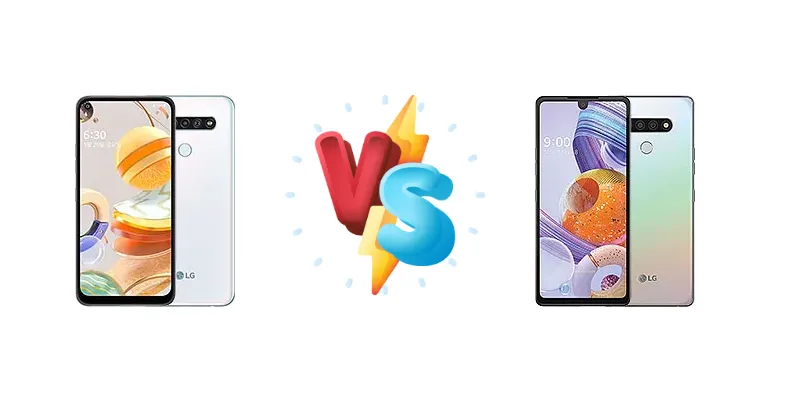
The LG Q61 and LG Stylo 6 represent LG’s approach to the budget smartphone market. While seemingly distinct in design – one a more conventional smartphone, the other featuring a stylus – a deeper look reveals a startling similarity: both are powered by the same MediaTek Helio P35 chipset. This comparison dissects the nuances beyond the core hardware to determine which device delivers the best experience for specific user needs.
🏆 Quick Verdict
For the average user prioritizing value and a clean Android experience, the LG Q61 emerges as the slightly better choice. While the Stylo 6’s stylus adds functionality, the Q61’s potentially more efficient thermal design (due to a simpler chassis) and often lower price point make it a more compelling all-rounder.
| Network |
|---|
| 2G bands | GSM 850 / 900 / 1800 / 1900 | GSM 850 / 900 / 1800 / 1900 |
| 3G bands | HSDPA 850 / 900 / 1900 / 2100 | HSDPA 850 / 900 / 1900 / 2100 |
| 4G bands | LTE | LTE |
| Speed | HSPA 42.2/5.76 Mbps, LTE (2CA) Cat6 300/50 Mbps | HSPA 42.2/5.76 Mbps, LTE (2CA) Cat6 300/50 Mbps |
| Technology | GSM / HSPA / LTE | GSM / HSPA / LTE |
| Launch |
|---|
| Announced | 2020, May 21. Released 2020, May 29 | 2020, May 20. Released 2020, May 20 |
| Status | Discontinued | Discontinued |
| Body |
|---|
| Dimensions | 164.5 x 77.5 x 8.3 mm (6.48 x 3.05 x 0.33 in) | 171.2 x 77.7 x 8.6 mm (6.74 x 3.06 x 0.34 in) |
| SIM | Nano-SIM | Nano-SIM |
| Weight | - | 219 g (7.72 oz) |
| | MIL-STD-810G compliant*
*does not guarantee ruggedness or use in extreme conditions | Stylus |
| Display |
|---|
| Protection | Scratch-resistant glass | - |
| Resolution | 1080 x 2340 pixels, 19.5:9 ratio (~395 ppi density) | 1080 x 2460 pixels (~395 ppi density) |
| Size | 6.53 inches, 104.7 cm2 (~82.1% screen-to-body ratio) | 6.8 inches, 109.8 cm2 (~82.5% screen-to-body ratio) |
| Type | IPS LCD | IPS LCD |
| Platform |
|---|
| CPU | Octa-core (4x2.3 GHz Cortex-A53 & 4x1.8 GHz Cortex-A53) | Octa-core (4x2.3 GHz Cortex-A53 & 4x1.8 GHz Cortex-A53) |
| Chipset | Mediatek MT6765 Helio P35 (12 nm) | Mediatek MT6765 Helio P35 (12 nm) |
| GPU | PowerVR GE8320 | PowerVR GE8320 |
| OS | Android 9.0 (Pie) | Android 10 |
| Memory |
|---|
| Card slot | microSDXC (dedicated slot) | microSDXC (dedicated slot) |
| Internal | 64GB 4GB RAM | 64GB 3GB RAM |
| | eMMC 5.1 | eMMC 5.1 |
| Main Camera |
|---|
| Features | LED flash, panorama, HDR | LED flash, panorama, HDR |
| Quad | 48 MP, f/1.8, 26mm (wide), 1/2.0", 0.8µm, PDAF
8 MP, f/2.2, 118˚, (ultrawide)
2 MP (macro)
Auxiliary lens | - |
| Single | 8 MP, AF | - |
| Triple | - | 13 MP, (wide), PDAF
5 MP, 120˚, (ultrawide)
Auxiliary lens |
| Video | 1080p@30fps | 1080p@30fps |
| Selfie camera |
|---|
| Single | 16 MP | 13 MP, 1/3.1", 1.12µm |
| Video | 1080p@30fps | 1080p@30fps |
| Sound |
|---|
| 3.5mm jack | Yes | Yes |
| 35mm jack | Yes | Yes |
| Loudspeaker | Yes | Yes |
| Comms |
|---|
| Bluetooth | 5.0, A2DP, LE | 5.0, A2DP, LE |
| NFC | Yes | No |
| Positioning | GPS | GPS |
| Radio | No | No |
| USB | USB Type-C 2.0 | USB Type-C 2.0 |
| WLAN | Wi-Fi 802.11 a/b/g/n/ac, dual-band, Wi-Fi Direct | Wi-Fi 802.11 b/g/n, Wi-Fi Direct |
| Features |
|---|
| Browser | HTML, Adobe Flash | - |
| Sensors | Fingerprint (rear-mounted), accelerometer, gyro, proximity, compass | Fingerprint (rear-mounted), accelerometer, proximity |
| Battery |
|---|
| Stand-by | Up to 200 h | - |
| Talk time | Up to 8 h 20 min | - |
| Type | Li-Po 4000 mAh | Li-Po 4000 mAh |
| Misc |
|---|
| Colors | White | White |
| Models | LM-Q630N | LMQ730TM, LM-Q730TM |
| Price | About 270 EUR | About 200 EUR |
LG Q61
- Potentially better thermal management due to simpler design.
- Often available at a lower price point.
- More compact form factor for easier one-handed use.
- Lacks the stylus functionality of the Stylo 6.
- May have a smaller display compared to the Stylo 6.
LG Stylo 6
- Integrated stylus for note-taking and creative tasks.
- Larger display for immersive media consumption.
- Potentially larger battery capacity.
- May experience more thermal throttling under heavy load.
- Larger size can be less comfortable to hold and use one-handed.
- Often priced slightly higher than the Q61.
Display Comparison
Both the LG Q61 and Stylo 6 feature displays that prioritize affordability over cutting-edge technology. While specific panel types and resolutions aren't provided, the focus is likely on IPS LCDs for color accuracy and viewing angles. Given the shared target market, expect similar brightness levels – likely in the 400-500 nit range – sufficient for indoor use but potentially washed out in direct sunlight. The Stylo 6’s larger display size (typically around 6.8 inches vs. the Q61’s 6.5 inches) will offer a more immersive viewing experience for media consumption, but may impact one-handed usability.
Camera Comparison
Camera performance is where marketing often diverges from reality in this price segment. While both phones likely feature multi-camera setups, the core image quality will be heavily reliant on the main sensor. Without specific sensor size or aperture information, it’s difficult to definitively declare a winner. The Stylo 6 may emphasize software features like scene recognition and portrait mode, but the underlying hardware limitations of the Helio P35’s ISP will be a bottleneck. The inclusion of a 2MP macro lens on both devices is largely a marketing gimmick, offering limited practical benefit due to the low resolution and lack of optical image stabilization (OIS).
Performance
The heart of both devices is the MediaTek Helio P35 (MT6765), a 12nm octa-core processor with a configuration of four Cortex-A53 cores clocked at 2.3 GHz and another four at 1.8 GHz. This means performance will be virtually identical in CPU-bound tasks like web browsing and app loading. The GPU performance will also be the same. However, the Stylo 6’s larger chassis *could* lead to slightly less effective heat dissipation, potentially resulting in minor thermal throttling during extended gaming sessions. The amount of RAM is a critical factor not specified, but will heavily influence multitasking capabilities. Expect both to perform adequately for basic tasks, but struggle with demanding applications.
Battery Life
Battery capacity is a crucial consideration for budget smartphones. While specific mAh ratings are missing, the Stylo 6’s larger size suggests a potentially larger battery. However, the larger display and stylus functionality could offset this advantage. Both devices likely support standard 10W or 15W charging, resulting in relatively slow charging times – expect around 2.5 to 3.5 hours for a full charge from 0%. Real-world battery life will depend heavily on usage patterns, but both should comfortably last a full day with moderate use.
Buying Guide
Buy the LG Q61 if you need a reliable, affordable smartphone for everyday tasks like browsing, social media, and light photography, and don't require stylus input. Buy the LG Stylo 6 if you frequently take handwritten notes, enjoy sketching, or prefer the added precision a stylus offers for navigation and content creation. The Stylo 6 caters to a niche user base willing to trade potential thermal performance for stylus functionality.
Frequently Asked Questions
❓ Will the Helio P35 struggle with modern mobile games like PUBG or Call of Duty?
Yes, the Helio P35 is an entry-level chipset and will likely struggle to deliver a smooth gaming experience in demanding titles like PUBG or Call of Duty, even at low settings. Expect noticeable frame drops and potential lag. These phones are better suited for casual gaming.
❓ Is the stylus on the LG Stylo 6 compatible with third-party note-taking apps?
The LG Stylo 6’s stylus is generally compatible with most note-taking apps that support stylus input. However, the level of functionality and precision may vary depending on the app. Some apps may require specific stylus settings to be configured for optimal performance.
❓ How does the software experience differ between the Q61 and Stylo 6?
Both phones typically run LG’s UX skin on top of Android. However, the Stylo 6 includes software features specifically tailored to the stylus, such as Air Command and handwriting recognition. The Q61 offers a cleaner, more streamlined software experience without these stylus-centric additions.