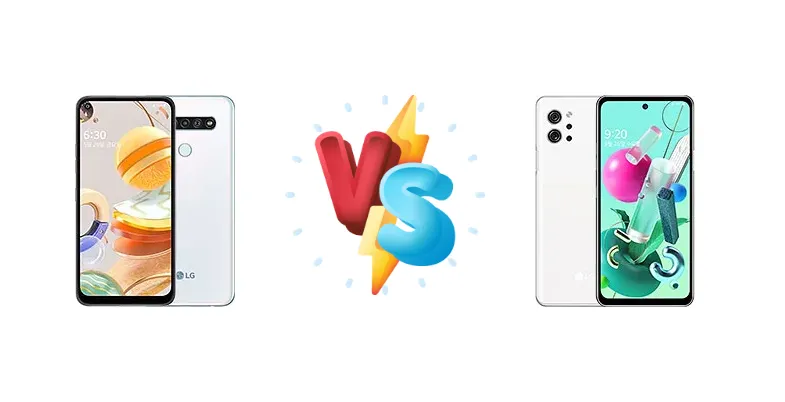
The LG Q61 and Q92 5G represent different tiers within LG’s budget-focused smartphone lineup. The Q61, released earlier, aimed for affordability, while the Q92 5G brought 5G connectivity and a substantial performance upgrade to a more accessible price point. This comparison dissects the key differences between these two devices, focusing on how the chipset impacts everyday use and future-proofing.
🏆 Quick Verdict
For the average user, the LG Q92 5G is the clear winner. Its Snapdragon 765G chipset delivers significantly faster performance and 5G connectivity, making it a more future-proof investment despite the slightly higher price. The Q61 remains a viable option for basic tasks, but struggles with demanding applications.
| Network |
|---|
| 2G bands | GSM 850 / 900 / 1800 / 1900 | GSM 850 / 900 / 1800 / 1900 |
| 3G bands | HSDPA 850 / 900 / 1900 / 2100 | HSDPA 850 / 900 / 1900 / 2100 |
| 4G bands | LTE | LTE |
| 5G bands | - | SA/NSA |
| Speed | HSPA 42.2/5.76 Mbps, LTE (2CA) Cat6 300/50 Mbps | HSPA, LTE, 5G |
| Technology | GSM / HSPA / LTE | GSM / HSPA / LTE / 5G |
| Launch |
|---|
| Announced | 2020, May 21. Released 2020, May 29 | 2020, August 24. Released 2020, August 26 |
| Status | Discontinued | Discontinued |
| Body |
|---|
| Dimensions | 164.5 x 77.5 x 8.3 mm (6.48 x 3.05 x 0.33 in) | 166.5 x 77.3 x 8.5 mm (6.56 x 3.04 x 0.33 in) |
| SIM | Nano-SIM | Nano-SIM + Nano-SIM |
| Weight | - | 193 g (6.81 oz) |
| | MIL-STD-810G compliant*
*does not guarantee ruggedness or use in extreme conditions | IP68 dust/water resistant (up to 1.5m for 30 mins)
MIL-STD-810G compliant*
*does not guarantee ruggedness or use in extreme conditions |
| Display |
|---|
| Protection | Scratch-resistant glass | - |
| Resolution | 1080 x 2340 pixels, 19.5:9 ratio (~395 ppi density) | 1080 x 2400 pixels, 20:9 ratio (~395 ppi density) |
| Size | 6.53 inches, 104.7 cm2 (~82.1% screen-to-body ratio) | 6.67 inches, 107.4 cm2 (~83.5% screen-to-body ratio) |
| Type | IPS LCD | IPS LCD |
| Platform |
|---|
| CPU | Octa-core (4x2.3 GHz Cortex-A53 & 4x1.8 GHz Cortex-A53) | Octa-core (1x2.4 GHz Kryo 475 Prime & 1x2.2 GHz Kryo 475 Gold & 6x1.8 GHz Kryo 475 Silver) |
| Chipset | Mediatek MT6765 Helio P35 (12 nm) | Qualcomm SM7250 Snapdragon 765G 5G (7 nm) |
| GPU | PowerVR GE8320 | Adreno 620 |
| OS | Android 9.0 (Pie) | Android 10 |
| Memory |
|---|
| Card slot | microSDXC (dedicated slot) | microSDXC |
| Internal | 64GB 4GB RAM | 128GB 6GB RAM |
| | eMMC 5.1 | - |
| Main Camera |
|---|
| Features | LED flash, panorama, HDR | LED flash, panorama, HDR |
| Quad | 48 MP, f/1.8, 26mm (wide), 1/2.0", 0.8µm, PDAF
8 MP, f/2.2, 118˚, (ultrawide)
2 MP (macro)
Auxiliary lens | 48 MP, f/1.8, 26mm (wide), 1/2.0", 0.8µm, PDAF
8 MP, f/2.2, 120˚, 15mm (ultrawide), 1/4.0", 1.12µm
2 MP (macro)
Auxiliary lens |
| Single | 8 MP, AF | - |
| Video | 1080p@30fps | 4K@30fps, 1080p@30fps |
| Selfie camera |
|---|
| Features | - | HDR |
| Single | 16 MP | 32 MP, f/1.9, 26mm (wide), 1/2.8", 0.8µm |
| Video | 1080p@30fps | 1080p@30fps |
| Sound |
|---|
| 3.5mm jack | Yes | Yes |
| 35mm jack | Yes | Yes |
| Loudspeaker | Yes | Yes, with stereo speakers |
| Comms |
|---|
| Bluetooth | 5.0, A2DP, LE | 5.0, A2DP, LE |
| NFC | Yes | Yes |
| Positioning | GPS | GPS, GLONASS, GALILEO, BDS |
| Radio | No | No |
| USB | USB Type-C 2.0 | USB Type-C 2.0 |
| WLAN | Wi-Fi 802.11 a/b/g/n/ac, dual-band, Wi-Fi Direct | Wi-Fi 802.11 a/b/g/n/ac, dual-band, Wi-Fi Direct, DLNA |
| Features |
|---|
| Browser | HTML, Adobe Flash | - |
| Sensors | Fingerprint (rear-mounted), accelerometer, gyro, proximity, compass | Fingerprint (side-mounted), accelerometer, gyro, proximity, compass |
| Battery |
|---|
| Charging | - | 15W wired |
| Stand-by | Up to 200 h | - |
| Talk time | Up to 8 h 20 min | - |
| Type | Li-Po 4000 mAh | Li-Po 4000 mAh |
| Misc |
|---|
| Colors | White | White, Dark Blue, Red |
| Models | LM-Q630N | LM-Q920N |
| Price | About 270 EUR | About 360 EUR |
LG Q61
- More affordable price point
- Sufficient for basic smartphone tasks
- Potentially longer battery life with light usage
- Significantly slower performance
- Lacks 5G connectivity
- Struggles with demanding apps and games
LG Q92 5G
- Much faster performance with Snapdragon 765G
- 5G connectivity for faster data speeds
- Improved image processing capabilities
- 15W fast charging
- Higher price than the Q61
- May experience some throttling under heavy load
Display Comparison
While both devices likely feature LCD panels (specific panel details are unavailable), the core difference lies in the processing power driving them. The Q92 5G’s Snapdragon 765G allows for smoother animations and faster app loading, enhancing the perceived visual experience. We can assume both displays target a 60Hz refresh rate, common in this price bracket. The Q61's Helio P35 will struggle to maintain consistent frame rates in graphically intensive apps, impacting the fluidity of the display.
Camera Comparison
Without detailed camera specs beyond the chipsets, it’s difficult to make precise comparisons. However, the Snapdragon 765G includes a more advanced Image Signal Processor (ISP) capable of faster image processing and better noise reduction. This suggests the Q92 5G will likely produce higher-quality photos, particularly in low-light conditions. The Q61’s Helio P35 ISP will be more limited in its capabilities. While both phones likely feature multiple rear cameras, the Q92 5G’s processing power will be crucial for leveraging those sensors effectively.
Performance
The performance gap between these phones is substantial. The LG Q92 5G’s Qualcomm Snapdragon 765G (7nm) is a significant leap over the Q61’s MediaTek Helio P35 (12nm). The Snapdragon 765G utilizes a tri-cluster architecture – 1x2.4 GHz Kryo 475 Prime, 1x2.2 GHz Kryo 475 Gold, and 6x1.8 GHz Kryo 475 Silver – offering a more efficient and powerful processing experience. The Helio P35’s octa-core configuration (4x2.3 GHz Cortex-A53 & 4x1.8 GHz Cortex-A53) relies on older, less efficient Cortex-A53 cores. This translates to noticeably slower app launch times, stuttering during multitasking, and reduced gaming performance on the Q61. The 7nm process node of the Snapdragon 765G also contributes to better thermal efficiency, reducing throttling under sustained load.
Battery Life
Battery capacity is not specified, but the Q92 5G’s more efficient Snapdragon 765G (7nm) will likely deliver comparable or better battery life than the Q61’s Helio P35 (12nm), despite potentially having a similar battery size. The Q92 5G also supports 15W wired charging, which, while not exceptionally fast, is a standard offering. The Q61’s charging speed is unknown, but likely slower. The Snapdragon’s efficiency means less power is consumed during typical usage, extending the time between charges.
Buying Guide
Buy the LG Q61 if you prioritize extreme affordability and only need a phone for basic communication – calls, texts, and light social media. It’s suitable for users who rarely play games or use resource-intensive apps. Buy the LG Q92 5G if you want a smoother, more responsive experience, the benefit of 5G connectivity for faster data speeds where available, and the ability to handle more demanding tasks like gaming and video editing without significant slowdown.
Frequently Asked Questions
❓ Will the LG Q92 5G's 5G connectivity actually make a difference in my daily use?
5G's impact depends on your location and carrier coverage. If you live in an area with robust 5G infrastructure, you'll experience significantly faster download and upload speeds, especially for streaming, gaming, and large file transfers. However, if 5G coverage is limited, the phone will fall back to 4G LTE, and the benefit will be less noticeable.
❓ Is the Snapdragon 765G in the Q92 5G powerful enough for modern mobile games like PUBG or Call of Duty?
Yes, the Snapdragon 765G is capable of running popular mobile games like PUBG and Call of Duty at medium to high settings. While it won't match the performance of flagship Snapdragon 8-series chips, it provides a smooth and enjoyable gaming experience. The Q61's Helio P35 will struggle with these titles, likely requiring significant graphics settings reductions and still experiencing frame drops.
❓ How much of a real-world performance difference will I notice between the Helio P35 and the Snapdragon 765G?
The difference is substantial. Expect significantly faster app launch times, smoother multitasking, and a more responsive user interface on the Q92 5G. The Q61 will feel sluggish in comparison, especially when switching between apps or running demanding tasks. The Snapdragon 765G's superior CPU and GPU architecture provide a much more fluid and enjoyable experience.