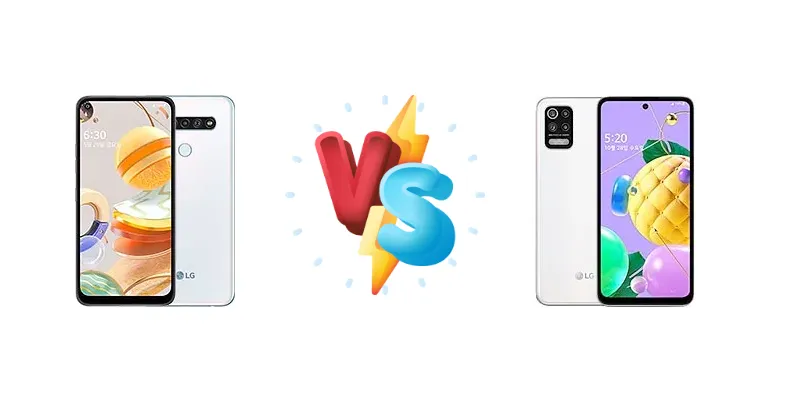
The LG Q61 and Q52 represent LG’s attempts to deliver capable smartphones at an accessible price point. Both devices share a remarkably similar core specification set, centered around the Mediatek Helio P35 chipset. This comparison aims to dissect the subtle differences between these two models, helping you determine which offers the best value for your needs.
🏆 Quick Verdict
For the average user prioritizing a consistent experience, the LG Q61 and Q52 are functionally equivalent. However, given their likely similar pricing, the Q61’s slightly larger display may offer a marginally better multimedia experience, making it the preferred choice.
| Network |
|---|
| 2G bands | GSM 850 / 900 / 1800 / 1900 | GSM 850 / 900 / 1800 / 1900 |
| 3G bands | HSDPA 850 / 900 / 1900 / 2100 | HSDPA 850 / 900 / 1900 / 2100 |
| 4G bands | LTE | LTE |
| Speed | HSPA 42.2/5.76 Mbps, LTE (2CA) Cat6 300/50 Mbps | HSPA, LTE |
| Technology | GSM / HSPA / LTE | GSM / HSPA / LTE |
| Launch |
|---|
| Announced | 2020, May 21. Released 2020, May 29 | 2020, September 26. Released 2020, October 26 |
| Status | Discontinued | Discontinued |
| Body |
|---|
| Dimensions | 164.5 x 77.5 x 8.3 mm (6.48 x 3.05 x 0.33 in) | 165 x 76.7 x 8.4 mm (6.50 x 3.02 x 0.33 in) |
| SIM | Nano-SIM | Nano-SIM + Nano-SIM |
| Weight | - | 186 g (6.56 oz) |
| | MIL-STD-810G compliant*
*does not guarantee ruggedness or use in extreme conditions | MIL-STD-810G compliant*
*does not guarantee ruggedness or use in extreme conditions |
| Display |
|---|
| Protection | Scratch-resistant glass | - |
| Resolution | 1080 x 2340 pixels, 19.5:9 ratio (~395 ppi density) | 720 x 1600 pixels, 20:9 ratio (~266 ppi density) |
| Size | 6.53 inches, 104.7 cm2 (~82.1% screen-to-body ratio) | 6.6 inches, 105.2 cm2 (~83.1% screen-to-body ratio) |
| Type | IPS LCD | IPS LCD |
| Platform |
|---|
| CPU | Octa-core (4x2.3 GHz Cortex-A53 & 4x1.8 GHz Cortex-A53) | Octa-core (4x2.3 GHz Cortex-A53 & 4x1.8 GHz Cortex-A53) |
| Chipset | Mediatek MT6765 Helio P35 (12 nm) | Mediatek MT6765 Helio P35 (12 nm) |
| GPU | PowerVR GE8320 | PowerVR GE8320 |
| OS | Android 9.0 (Pie) | Android 10 |
| Memory |
|---|
| Card slot | microSDXC (dedicated slot) | microSDXC |
| Internal | 64GB 4GB RAM | 64GB 4GB RAM |
| | eMMC 5.1 | eMMC 5.1 |
| Main Camera |
|---|
| Features | LED flash, panorama, HDR | Dual-LED flash, panorama, HDR |
| Quad | 48 MP, f/1.8, 26mm (wide), 1/2.0", 0.8µm, PDAF
8 MP, f/2.2, 118˚, (ultrawide)
2 MP (macro)
Auxiliary lens | 48 MP, f/1.8, (wide), 1/2.0", 0.8µm, PDAF
5 MP, f/2.2, 115˚ (ultrawide), 1/5.0", 1.12µm
2 MP (macro)
Auxiliary lens |
| Single | 8 MP, AF | - |
| Video | 1080p@30fps | 1080p@30fps |
| Selfie camera |
|---|
| Single | 16 MP | 13 MP, (wide), 1/3.1", 1.12µm |
| Video | 1080p@30fps | 1080p@30fps |
| Sound |
|---|
| 3.5mm jack | Yes | Yes |
| 35mm jack | Yes | Yes |
| Loudspeaker | Yes | Yes |
| Comms |
|---|
| Bluetooth | 5.0, A2DP, LE | 5.0, A2DP, LE |
| NFC | Yes | Yes |
| Positioning | GPS | GPS |
| Radio | No | No |
| USB | USB Type-C 2.0 | USB Type-C 3.1 |
| WLAN | Wi-Fi 802.11 a/b/g/n/ac, dual-band, Wi-Fi Direct | Wi-Fi 802.11 a/b/g/n/ac, dual-band, Wi-Fi Direct |
| Features |
|---|
| Browser | HTML, Adobe Flash | - |
| Sensors | Fingerprint (rear-mounted), accelerometer, gyro, proximity, compass | Fingerprint (side-mounted), accelerometer, proximity, compass |
| Battery |
|---|
| Stand-by | Up to 200 h | - |
| Talk time | Up to 8 h 20 min | - |
| Type | Li-Po 4000 mAh | Li-Po 4000 mAh |
| Misc |
|---|
| Colors | White | Silky White, Silky Red |
| Models | LM-Q630N | LM-Q520N |
| Price | About 270 EUR | About 240 EUR |
LG Q61
- Slightly larger display for better media viewing.
- Identical performance to the Q52 due to the same chipset.
- Potentially wider availability depending on region.
- May be slightly larger and less comfortable to hold for some users.
- Likely similar battery life to the Q52.
LG Q52
- Potentially more compact form factor for easier one-handed use.
- Identical performance to the Q61 due to the same chipset.
- May be available at a slightly lower price point.
- Smaller display may be less immersive for media consumption.
- Likely similar battery life to the Q61.
Display Comparison
Both the LG Q61 and Q52 feature displays that prioritize size over cutting-edge technology. While specific panel details (like IPS LCD type and resolution) are not provided, the Q61’s 6.5-inch display offers a slightly larger viewing area compared to the Q52’s. This difference, though seemingly small, can impact video playback and gaming. Neither device is expected to boast high peak brightness or wide color gamut coverage, making them best suited for indoor use. The absence of high refresh rate technology means scrolling and animations will appear standard.
Camera Comparison
Both the LG Q61 and Q52 likely feature similar camera setups, with a primary sensor leading the charge. Without specific sensor size or aperture information, it’s difficult to assess image quality definitively. However, given the target price point, expect competent performance in good lighting conditions, but struggles in low-light scenarios. The inclusion of auxiliary cameras (often 2MP macro or depth sensors) is probable, but their utility is limited. Image processing will likely focus on enhancing colors and contrast, rather than delivering natural-looking results. The front-facing cameras will likely be sufficient for video calls and casual selfies.
Performance
The core of both devices is the Mediatek MT6765 Helio P35 chipset, featuring an octa-core CPU configuration with 4x2.3 GHz Cortex-A53 and 4x1.8 GHz Cortex-A53 cores. This means performance will be nearly identical in day-to-day tasks like browsing, social media, and light app usage. The Helio P35 is a 12nm chip, offering reasonable efficiency, but it’s not designed for demanding gaming. Expect some stuttering in graphically intensive titles. RAM configurations are not specified, but adequate RAM is crucial for multitasking; a minimum of 3GB is recommended for a smooth experience. Thermal throttling is a potential concern under sustained load, given the chipset's limitations.
Battery Life
Battery capacity details are missing, but both devices likely house batteries in the 4000mAh range, typical for this price segment. The Helio P35’s efficiency contributes to reasonable battery life, potentially lasting a full day with moderate usage. Charging wattage is also unspecified, suggesting slow charging speeds – likely around 10W. Expect a 0-100% charge to take several hours. Battery life will heavily depend on usage patterns, with gaming and video streaming significantly reducing longevity.
Buying Guide
Buy the LG Q61 if you prioritize a slightly larger screen for media consumption and don't mind potentially slightly lower availability. Buy the LG Q52 if you value a potentially more compact form factor and find a better deal on its availability. Both phones are ideal for users seeking a reliable, basic smartphone experience without breaking the bank – think students, seniors, or those needing a dependable secondary device.
Frequently Asked Questions
❓ Will the Helio P35 chipset struggle with modern mobile games?
Yes, the Mediatek Helio P35 is an entry-level chipset. While it can handle casual games, expect noticeable lag and reduced graphical settings in more demanding titles like PUBG or Call of Duty Mobile. It's best suited for less intensive gaming experiences.
❓ How will the LG Q61 and Q52 perform with multitasking?
Performance will depend heavily on the amount of RAM. If both devices have 3GB or 4GB of RAM, multitasking should be adequate for basic tasks like switching between apps and browsing the web. However, running multiple resource-intensive apps simultaneously may lead to slowdowns.
❓ Are the 2MP macro/depth cameras on these phones worth using?
Generally, 2MP macro and depth cameras on budget phones offer limited utility. The macro camera often produces low-resolution images with limited detail, while the depth sensor's impact on portrait mode is often minimal. They are more of a marketing feature than a significant improvement to the camera experience.