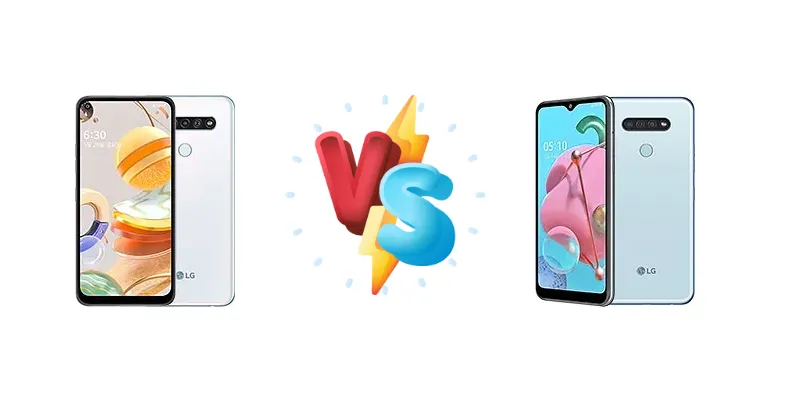
The LG Q61 and Q51 represent LG’s attempts to deliver affordable smartphones with a focus on essential features. Both devices share a similar aesthetic, but a key difference lies under the hood: their chipsets. This comparison dissects the performance implications of the Mediatek Helio P35 in the Q61 versus the Helio P22 in the Q51, helping you determine which phone best suits your needs.
🏆 Quick Verdict
For most users, the LG Q61 is the better choice. Its Helio P35 chipset, with its faster core clock speeds and more refined architecture, provides a noticeably smoother experience for multitasking and moderately demanding apps. While the Q51 remains a functional device, the Q61 offers a tangible performance upgrade for a potentially small price difference.
| Network |
|---|
| 2G bands | GSM 850 / 900 / 1800 / 1900 | GSM 850 / 900 / 1800 / 1900 |
| 3G bands | HSDPA 850 / 900 / 1900 / 2100 | HSDPA 850 / 900 / 1900 / 2100 |
| 4G bands | LTE | 1, 3, 7, 8, 20 |
| Speed | HSPA 42.2/5.76 Mbps, LTE (2CA) Cat6 300/50 Mbps | HSPA 42.2/5.76 Mbps, LTE (2CA) Cat6 300/75 Mbps |
| Technology | GSM / HSPA / LTE | GSM / HSPA / LTE |
| Launch |
|---|
| Announced | 2020, May 21. Released 2020, May 29 | 2020, February 25. Released 2020, February 26 |
| Status | Discontinued | Discontinued |
| Body |
|---|
| Dimensions | 164.5 x 77.5 x 8.3 mm (6.48 x 3.05 x 0.33 in) | 164.5 x 77.5 x 8.4 mm (6.48 x 3.05 x 0.33 in) |
| SIM | Nano-SIM | Nano-SIM + Nano-SIM |
| Weight | - | - |
| | MIL-STD-810G compliant*
*does not guarantee ruggedness or use in extreme conditions | MIL-STD-810G compliant*
*does not guarantee ruggedness or use in extreme conditions |
| Display |
|---|
| Protection | Scratch-resistant glass | - |
| Resolution | 1080 x 2340 pixels, 19.5:9 ratio (~395 ppi density) | 720 x 1520 pixels, 19:9 ratio (~259 ppi density) |
| Size | 6.53 inches, 104.7 cm2 (~82.1% screen-to-body ratio) | 6.5 inches, 105.5 cm2 (~82.7% screen-to-body ratio) |
| Type | IPS LCD | IPS LCD |
| Platform |
|---|
| CPU | Octa-core (4x2.3 GHz Cortex-A53 & 4x1.8 GHz Cortex-A53) | Octa-core 2.0 GHz Cortex-A53 |
| Chipset | Mediatek MT6765 Helio P35 (12 nm) | Mediatek MT6762 Helio P22 (12 nm) |
| GPU | PowerVR GE8320 | PowerVR GE8320 |
| OS | Android 9.0 (Pie) | Android 10 |
| Memory |
|---|
| Card slot | microSDXC (dedicated slot) | microSDXC (dedicated slot) |
| Internal | 64GB 4GB RAM | 32GB 3GB RAM |
| | eMMC 5.1 | eMMC 5.1 |
| Main Camera |
|---|
| Features | LED flash, panorama, HDR | LED flash, panorama, HDR |
| Quad | 48 MP, f/1.8, 26mm (wide), 1/2.0", 0.8µm, PDAF
8 MP, f/2.2, 118˚, (ultrawide)
2 MP (macro)
Auxiliary lens | - |
| Single | 8 MP, AF | - |
| Triple | - | 13 MP, (wide), PDAF
5 MP, 13mm (ultrawide)
Auxiliary lens |
| Video | 1080p@30fps | 1080p@30fps |
| Selfie camera |
|---|
| Single | 16 MP | 13 MP, (wide), 1/3.1", 1.12µm |
| Video | 1080p@30fps | 1080p@30fps |
| Sound |
|---|
| 3.5mm jack | Yes | Yes |
| 35mm jack | Yes | Yes |
| Loudspeaker | Yes | Yes, with stereo speakers |
| Comms |
|---|
| Bluetooth | 5.0, A2DP, LE | 5.0, A2DP, LE |
| NFC | Yes | Yes |
| Positioning | GPS | GPS |
| Radio | No | No |
| USB | USB Type-C 2.0 | USB Type-C 2.0 |
| WLAN | Wi-Fi 802.11 a/b/g/n/ac, dual-band, Wi-Fi Direct | Wi-Fi 802.11 a/b/g/n/ac, dual-band, Wi-Fi Direct, DLNA |
| Features |
|---|
| Browser | HTML, Adobe Flash | - |
| Sensors | Fingerprint (rear-mounted), accelerometer, gyro, proximity, compass | Fingerprint (rear-mounted), accelerometer, proximity, compass |
| Battery |
|---|
| Stand-by | Up to 200 h | - |
| Talk time | Up to 8 h 20 min | - |
| Type | Li-Po 4000 mAh | Li-Po 4000 mAh |
| Misc |
|---|
| Colors | White | Frozen White, Moonlight Titanium |
| Models | LM-Q630N | LM-Q510N |
| Price | About 270 EUR | About 240 EUR |
LG Q61
- Faster processor for smoother performance
- Potentially better camera image processing
- Slightly more efficient chipset
- May be slightly more expensive than the Q51
- Detailed display specs are unknown
LG Q51
- Likely more affordable
- Functional for basic smartphone tasks
- Similar physical design to the Q61
- Slower processor leads to lag and sluggishness
- Inferior image processing capabilities
- Less responsive user experience
Display Comparison
Both the LG Q61 and Q51 feature 6.5-inch displays with HD+ resolution. However, detailed display specs like brightness and color gamut are not provided. Given their market positioning, it’s reasonable to assume both utilize IPS LCD panels. The real difference lies in the processing power driving the display; a smoother UI on the Q61 will translate to a more pleasant visual experience, even on an identical panel.
Camera Comparison
Camera specifications beyond the presence of multiple sensors are not provided. It’s likely both phones feature a primary camera alongside depth and macro sensors. However, the image signal processor (ISP) within the Helio P35 is likely more capable than the one in the Helio P22, resulting in better image processing, particularly in low-light conditions. The Q61’s chipset can handle more complex algorithms for noise reduction and dynamic range optimization, leading to superior photo quality. The usefulness of any included 2MP macro sensors on either device is questionable.
Performance
The core distinction between these phones is their chipsets. The LG Q61’s Mediatek Helio P35 utilizes an octa-core configuration split into 4x2.3 GHz Cortex-A53 cores and 4x1.8 GHz Cortex-A53 cores. This contrasts with the LG Q51’s Helio P22, which features an octa-core 2.0 GHz Cortex-A53 setup. The P35’s higher clock speeds on its performance cores provide a significant advantage in CPU-intensive tasks. While both are based on the Cortex-A53 architecture, the P35’s faster clock speed translates to quicker app loading times and a more responsive user interface. The P35 also benefits from a slightly more efficient 12nm process, potentially leading to better thermal management under sustained load.
Battery Life
Battery capacity details are missing. Assuming similar battery sizes (around 4000mAh is typical for this segment), the Helio P35’s slightly improved power efficiency could translate to marginally longer battery life on the Q61. However, the difference will likely be minimal. Charging wattage is also unknown; both phones likely support standard 10W or 15W charging, meaning 0-100% charge times will be comparable – likely exceeding 2 hours.
Buying Guide
Buy the LG Q61 if you prioritize responsiveness and smoother performance for everyday tasks like social media, browsing, and light gaming. The Q61 is ideal for users who want a phone that feels less sluggish and can handle a bit more multitasking. Buy the LG Q51 if your primary needs are basic communication – calls, texts, and very light app usage – and you are on an extremely tight budget. The Q51 will suffice for minimal smartphone use, but expect compromises in speed and fluidity.
Frequently Asked Questions
❓ Will the LG Q61 handle popular games like PUBG Mobile or Call of Duty?
While the Helio P35 can run these games, expect to play at low to medium settings to maintain a playable frame rate. The GPU isn't powerful enough for high settings, and sustained gaming may lead to some thermal throttling. The Q51 would struggle significantly with these titles.
❓ Is the difference in performance between the Q61 and Q51 noticeable for everyday tasks like browsing and social media?
Yes, the difference is quite noticeable. The Q61’s faster processor results in quicker app loading times, smoother scrolling, and a more responsive overall experience. The Q51 can feel sluggish when switching between apps or loading complex web pages.
❓ Does either phone support fast charging?
Neither phone is officially advertised with fast charging support. They likely utilize standard 10W or 15W charging, resulting in relatively slow charging times – expect over 2 hours for a full charge.