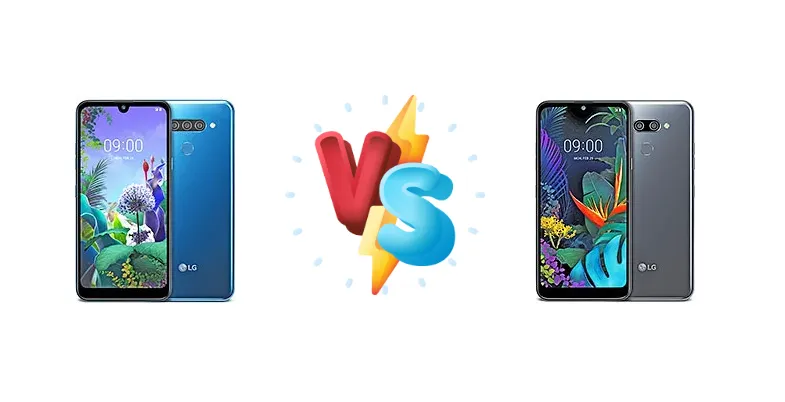
The LG Q60 and K50 represent LG’s attempt to capture the ultra-budget smartphone market. Both devices launched around the same time and share a remarkably similar core specification set, making a direct comparison crucial for consumers seeking the best value. This analysis dives deep into the nuances to determine which phone offers a more compelling user experience.
🏆 Quick Verdict
For the average user, the LG Q60 emerges as the slightly better choice. While both phones utilize the same Mediatek Helio P22 chipset, the Q60’s potentially more refined software experience and slightly more premium build quality offer a marginal advantage, justifying a potential price premium.
| Network |
|---|
| 2G bands | GSM 850 / 900 / 1800 / 1900 | GSM 850 / 900 / 1800 / 1900 |
| 3G bands | HSDPA 850 / 900 / 1900 / 2100 | HSDPA 850 / 900 / 1900 / 2100 |
| 4G bands | 1, 3, 7, 8, 20, 38 | 1, 3, 7, 8, 20, 38 |
| Speed | HSPA 42.2/5.76 Mbps, LTE (2CA) Cat6 300/75 Mbps | HSPA 42.2/5.76 Mbps, LTE (2CA) Cat6 300/75 Mbps |
| Technology | GSM / HSPA / LTE | GSM / HSPA / LTE |
| Launch |
|---|
| Announced | 2019, February. Released 2019, May | 2019, February. Released 2019, August |
| Status | Discontinued | Discontinued |
| Body |
|---|
| Dimensions | 161.3 x 77 x 8.7 mm (6.35 x 3.03 x 0.34 in) | 161.3 x 77 x 8.7 mm (6.35 x 3.03 x 0.34 in) |
| SIM | · Nano-SIM· Nano-SIM + Nano-SIM | · Nano-SIM· Nano-SIM + Nano-SIM |
| Weight | 172 g (6.07 oz) | 170 g (6.00 oz) |
| | MIL-STD-810G compliant*
*does not guarantee ruggedness or use in extreme conditions | MIL-STD-810G compliant*
*does not guarantee ruggedness or use in extreme conditions |
| Display |
|---|
| Resolution | 720 x 1520 pixels, 19:9 ratio (~269 ppi density) | 720 x 1520 pixels, 19:9 ratio (~269 ppi density) |
| Size | 6.26 inches, 97.8 cm2 (~78.8% screen-to-body ratio) | 6.26 inches, 97.8 cm2 (~78.8% screen-to-body ratio) |
| Type | IPS LCD | IPS LCD |
| Platform |
|---|
| CPU | Octa-core 2.0 GHz Cortex-A53 | Octa-core 2.0 GHz Cortex-A53 |
| Chipset | Mediatek MT6762 Helio P22 (12 nm) | Mediatek MT6762 Helio P22 (12 nm) |
| GPU | PowerVR GE8320 | PowerVR GE8320 |
| OS | Android 9.0 (Pie), LG UX 7 | Android 9.0 (Pie) |
| Memory |
|---|
| Card slot | microSDXC (dedicated slot) | microSDXC (dedicated slot) |
| Internal | 64GB 3GB RAM | 32GB 3GB RAM |
| | eMMC 5.1 | eMMC 5.1 |
| Main Camera |
|---|
| Dual | - | 13 MP, f/2.2, 26mm (wide), PDAF
Auxiliary lens |
| Features | LED flash, panorama, HDR | LED flash, panorama, HDR |
| Triple | 16 MP, f/2.0, 26mm (wide), PDAF
5 MP, f/2.2, 13mm (ultrawide)
Auxiliary lens | - |
| Video | 1080p@30fps | 1080p@30fps |
| Selfie camera |
|---|
| Single | 13 MP, 1/3.1", 1.12µm | 13 MP, f/2.0, 1/3.1", 1.12µm |
| Video | 1080p@30fps | 1080p@30fps |
| Sound |
|---|
| 3.5mm jack | Yes | Yes |
| 35mm jack | Yes | Yes |
| Loudspeaker | Yes | Yes |
| Comms |
|---|
| Bluetooth | 5.0, A2DP, LE | 5.0, A2DP, LE |
| NFC | Yes | Yes (market/region dependent) |
| Positioning | GPS, GLONASS | GPS, GLONASS |
| Radio | No | No |
| USB | microUSB 2.0 | microUSB 2.0, OTG |
| WLAN | Wi-Fi 802.11 a/b/g/n/ac, dual-band, Wi-Fi Direct, DLNA | Wi-Fi 802.11 a/b/g/n/ac, dual-band, Wi-Fi Direct, DLNA |
| Features |
|---|
| Sensors | Fingerprint (rear-mounted), accelerometer, proximity, compass | Fingerprint (rear-mounted), accelerometer, proximity |
| Battery |
|---|
| Type | Li-Ion 3500 mAh, non-removable | Li-Po 3500 mAh, non-removable |
| Misc |
|---|
| Colors | New Moroccan Blue, Aurora Black | Aurora Black, Moroccan Blue, Platinum Gray |
| Models | LMX525EAW, LMX525BAW, LM-X525 | LMX520BMW, LMX520EMW, LM-X520, 802LG |
| Price | About 230 EUR | About 180 EUR |
LG Q60
- Potentially more refined software experience
- Slightly more premium build quality (likely)
- May receive more frequent software updates
- Likely slightly higher price point
- Performance identical to K50
LG K50
- More affordable price
- Identical performance to Q60
- Solid option for basic smartphone needs
- Potentially less refined software
- May receive fewer software updates
Display Comparison
Both the LG Q60 and K50 feature displays that prioritize affordability over cutting-edge technology. Given the shared target market, it’s highly probable both utilize IPS LCD panels. Without specific nit brightness data, it’s reasonable to assume both displays perform adequately in indoor environments but may struggle in direct sunlight. The resolution is likely 720 x 1560, typical for this price point. Differences in bezel size are likely minimal, and color accuracy will be standard for budget panels – acceptable, but not color-critical for professional work.
Camera Comparison
Camera performance is where subtle differences *might* exist, though detailed specifications are lacking. Both phones likely feature a primary rear camera, but sensor size and aperture are unknown. The presence of auxiliary cameras (depth, macro) is probable on both, but their 2MP resolution suggests limited utility. Image processing will be a key differentiator, with LG’s software potentially offering slightly better dynamic range or color reproduction on the Q60. Without specific details, it’s difficult to declare a clear winner, but the Q60’s positioning suggests a slightly more refined camera experience.
Performance
The core performance of both devices is identical, powered by the Mediatek MT6762 Helio P22 (12 nm) chipset with an octa-core 2.0 GHz Cortex-A53 CPU. This chipset is geared towards basic tasks like web browsing, social media, and light app usage. Gaming performance will be limited to less demanding titles at lower settings. The 12nm process node offers reasonable efficiency, but sustained workloads will likely result in some thermal throttling. RAM configurations are not specified, but both will likely offer 3GB or 4GB options, impacting multitasking capabilities.
Battery Life
Battery capacity is not specified for either device. However, given the Helio P22’s efficiency and the target market, both phones likely house batteries in the 3000-4000 mAh range. Charging wattage is also unknown, but it’s reasonable to expect standard 5W or 10W charging. Real-world battery life will depend heavily on usage patterns, but both phones should comfortably last a full day with moderate use. The lack of fast charging is a common limitation in this price segment.
Buying Guide
Buy the LG Q60 if you prioritize a potentially smoother software experience and a design that feels a bit more polished. It’s ideal for users who value a slightly more refined aesthetic and are willing to spend a little extra. Buy the LG K50 if your primary concern is absolute affordability and you’re comfortable with a more basic design. It’s a solid option for first-time smartphone users or those on a very tight budget.
Frequently Asked Questions
❓ Will the Helio P22 chipset struggle with popular games like PUBG Mobile or Call of Duty?
Yes, the Mediatek Helio P22 is an entry-level chipset. While you can *run* PUBG Mobile or Call of Duty, you’ll need to play at the lowest graphics settings and likely experience frame rate drops, especially during intense action. It’s not designed for demanding gaming.
❓ How important is the amount of RAM (3GB vs 4GB) on these phones?
RAM significantly impacts multitasking. 3GB of RAM is sufficient for basic use, but you may experience app reloading when switching between several applications. 4GB of RAM will provide a smoother experience, allowing you to keep more apps open in the background without performance degradation.
❓ Are software updates guaranteed for either the LG Q60 or K50?
LG’s update track record for budget devices is inconsistent. While both phones launched with Android 9, receiving major Android version updates is unlikely. Security patches may be provided sporadically, but long-term software support should not be a primary purchase consideration.