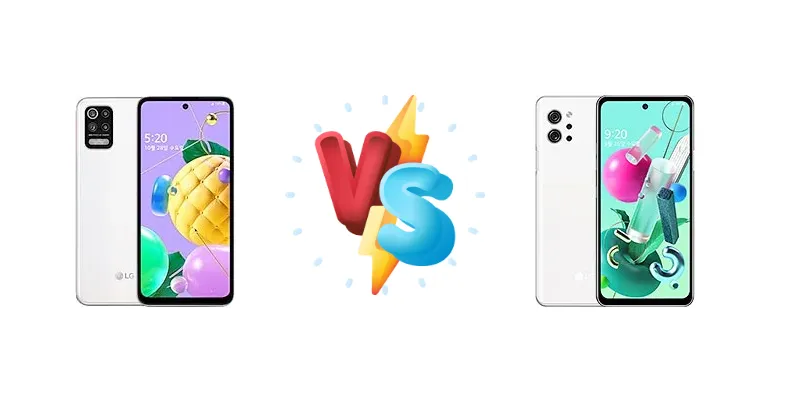
The LG Q52 and Q92 5G represent LG’s attempts to deliver value in the mid-range smartphone market. While both share the LG branding and a similar aesthetic, they diverge significantly under the hood. The Q52 focuses on affordability, while the Q92 5G aims to bridge the gap between budget and mainstream with 5G connectivity and a more powerful processor. This comparison will dissect the key differences to help you determine which device best suits your needs.
🏆 Quick Verdict
For the average user, the LG Q92 5G is the clear winner. Its Snapdragon 765G chipset delivers substantially better performance and future-proofs the device with 5G connectivity. While the Q52 remains a viable option for basic tasks, the Q92 5G offers a significantly improved user experience for a relatively modest price increase.
| Network |
|---|
| 2G bands | GSM 850 / 900 / 1800 / 1900 | GSM 850 / 900 / 1800 / 1900 |
| 3G bands | HSDPA 850 / 900 / 1900 / 2100 | HSDPA 850 / 900 / 1900 / 2100 |
| 4G bands | LTE | LTE |
| 5G bands | - | SA/NSA |
| Speed | HSPA, LTE | HSPA, LTE, 5G |
| Technology | GSM / HSPA / LTE | GSM / HSPA / LTE / 5G |
| Launch |
|---|
| Announced | 2020, September 26. Released 2020, October 26 | 2020, August 24. Released 2020, August 26 |
| Status | Discontinued | Discontinued |
| Body |
|---|
| Dimensions | 165 x 76.7 x 8.4 mm (6.50 x 3.02 x 0.33 in) | 166.5 x 77.3 x 8.5 mm (6.56 x 3.04 x 0.33 in) |
| SIM | Nano-SIM + Nano-SIM | Nano-SIM + Nano-SIM |
| Weight | 186 g (6.56 oz) | 193 g (6.81 oz) |
| | MIL-STD-810G compliant*
*does not guarantee ruggedness or use in extreme conditions | IP68 dust/water resistant (up to 1.5m for 30 mins)
MIL-STD-810G compliant*
*does not guarantee ruggedness or use in extreme conditions |
| Display |
|---|
| Resolution | 720 x 1600 pixels, 20:9 ratio (~266 ppi density) | 1080 x 2400 pixels, 20:9 ratio (~395 ppi density) |
| Size | 6.6 inches, 105.2 cm2 (~83.1% screen-to-body ratio) | 6.67 inches, 107.4 cm2 (~83.5% screen-to-body ratio) |
| Type | IPS LCD | IPS LCD |
| Platform |
|---|
| CPU | Octa-core (4x2.3 GHz Cortex-A53 & 4x1.8 GHz Cortex-A53) | Octa-core (1x2.4 GHz Kryo 475 Prime & 1x2.2 GHz Kryo 475 Gold & 6x1.8 GHz Kryo 475 Silver) |
| Chipset | Mediatek MT6765 Helio P35 (12 nm) | Qualcomm SM7250 Snapdragon 765G 5G (7 nm) |
| GPU | PowerVR GE8320 | Adreno 620 |
| OS | Android 10 | Android 10 |
| Memory |
|---|
| Card slot | microSDXC | microSDXC |
| Internal | 64GB 4GB RAM | 128GB 6GB RAM |
| | eMMC 5.1 | - |
| Main Camera |
|---|
| Features | Dual-LED flash, panorama, HDR | LED flash, panorama, HDR |
| Quad | 48 MP, f/1.8, (wide), 1/2.0", 0.8µm, PDAF
5 MP, f/2.2, 115˚ (ultrawide), 1/5.0", 1.12µm
2 MP (macro)
Auxiliary lens | 48 MP, f/1.8, 26mm (wide), 1/2.0", 0.8µm, PDAF
8 MP, f/2.2, 120˚, 15mm (ultrawide), 1/4.0", 1.12µm
2 MP (macro)
Auxiliary lens |
| Video | 1080p@30fps | 4K@30fps, 1080p@30fps |
| Selfie camera |
|---|
| Features | - | HDR |
| Single | 13 MP, (wide), 1/3.1", 1.12µm | 32 MP, f/1.9, 26mm (wide), 1/2.8", 0.8µm |
| Video | 1080p@30fps | 1080p@30fps |
| Sound |
|---|
| 3.5mm jack | Yes | Yes |
| 35mm jack | Yes | Yes |
| Loudspeaker | Yes | Yes, with stereo speakers |
| Comms |
|---|
| Bluetooth | 5.0, A2DP, LE | 5.0, A2DP, LE |
| NFC | Yes | Yes |
| Positioning | GPS | GPS, GLONASS, GALILEO, BDS |
| Radio | No | No |
| USB | USB Type-C 3.1 | USB Type-C 2.0 |
| WLAN | Wi-Fi 802.11 a/b/g/n/ac, dual-band, Wi-Fi Direct | Wi-Fi 802.11 a/b/g/n/ac, dual-band, Wi-Fi Direct, DLNA |
| Features |
|---|
| Sensors | Fingerprint (side-mounted), accelerometer, proximity, compass | Fingerprint (side-mounted), accelerometer, gyro, proximity, compass |
| Battery |
|---|
| Charging | - | 15W wired |
| Type | Li-Po 4000 mAh | Li-Po 4000 mAh |
| Misc |
|---|
| Colors | Silky White, Silky Red | White, Dark Blue, Red |
| Models | LM-Q520N | LM-Q920N |
| Price | About 240 EUR | About 360 EUR |
LG Q52
- More affordable price point
- Potentially longer battery life due to less powerful processor (depending on battery capacity)
- Sufficient for basic smartphone tasks
- Significantly slower performance
- Lacks 5G connectivity
- Limited multitasking capabilities
LG Q92 5G
- Faster and more responsive performance
- 5G connectivity for faster data speeds
- Improved gaming experience
- 15W fast charging
- Higher price compared to the Q52
- Potentially slightly shorter battery life (offset by efficiency)
- May require a 5G data plan
Display Comparison
Unfortunately, detailed display specifications like brightness and color accuracy are unavailable for both devices. However, given their market positioning, it’s reasonable to assume both utilize LCD panels. The Q92 5G’s larger size (likely) may translate to a more immersive viewing experience. Bezels are expected to be comparable, reflecting the budget nature of both phones. The absence of high-end panel technology like LTPO suggests neither device will offer adaptive refresh rates.
Camera Comparison
Without detailed sensor information, a direct camera comparison is challenging. However, the Q92 5G’s higher processing power likely contributes to better image processing and noise reduction. While both phones likely feature a multi-camera setup, the Q92 5G’s chipset allows for more advanced computational photography features. It’s reasonable to assume the Q92 5G will deliver superior image quality, particularly in low-light conditions. The presence of 5G also enables faster uploads of photos and videos.
Performance
The core difference lies in the chipsets. The LG Q52’s MediaTek Helio P35, built on a 12nm process, features an octa-core CPU with a split configuration of Cortex-A53 cores clocked at 2.3GHz and 1.8GHz. This is a power-efficient but ultimately limited processor. In contrast, the LG Q92 5G boasts the Qualcomm Snapdragon 765G, fabricated on a more efficient 7nm node. Its CPU configuration – a Kryo 475 Prime core at 2.4GHz, a Kryo 475 Gold core at 2.2GHz, and six Kryo 475 Silver cores at 1.8GHz – offers a significant performance advantage. The 7nm process and more sophisticated core architecture translate to faster app loading times, smoother multitasking, and improved gaming performance. The Q92 5G also benefits from a more capable GPU, making it the preferred choice for graphically demanding applications.
Battery Life
Battery capacity details are missing for both devices. However, the Snapdragon 765G’s 7nm process is inherently more power-efficient than the Helio P35’s 12nm process. This means the Q92 5G is likely to offer comparable or even better battery life despite potentially having a similar battery capacity. The Q92 5G also supports 15W wired charging, which, while not exceptionally fast, is a standard offering in this price range. The Q52’s charging speed is unknown, but likely similar.
Buying Guide
Buy the LG Q52 if you prioritize extreme affordability and only need a phone for basic communication, light social media, and occasional web browsing. Its Helio P35 chipset is sufficient for these tasks. Buy the LG Q92 5G if you value performance, 5G connectivity for faster data speeds, and a smoother overall experience, especially if you enjoy mobile gaming or multitasking. The Snapdragon 765G provides a noticeable upgrade in responsiveness and capability.
Frequently Asked Questions
❓ Will the Snapdragon 765G in the Q92 5G handle demanding games like PUBG Mobile smoothly?
Yes, the Snapdragon 765G is a capable chipset for gaming. While it won't deliver flagship-level performance, it can comfortably run PUBG Mobile at medium to high settings with stable frame rates. The Q52’s Helio P35 would struggle with consistent performance in demanding titles.
❓ Does the LG Q92 5G's 5G connectivity require a special SIM card?
Generally, no. Most modern SIM cards are 5G compatible. However, you will need to ensure your mobile carrier offers 5G service in your area and that your data plan supports 5G access. Check with your carrier for specific requirements.
❓ Is the difference in performance between the Helio P35 and Snapdragon 765G noticeable for everyday tasks like browsing and social media?
Yes, the difference is noticeable. While both phones can handle basic tasks, the Snapdragon 765G provides a much smoother and more responsive experience when switching between apps, loading web pages, and scrolling through social media feeds. The Q52 may exhibit occasional lag or stuttering.