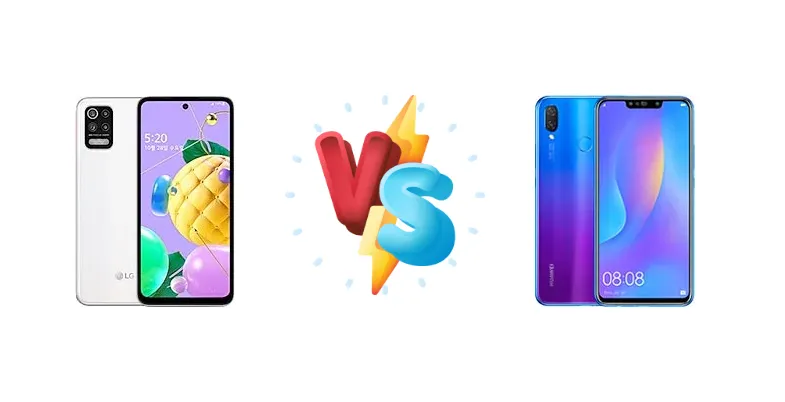
The LG Q52 and Huawei nova 3i represent a fascinating intersection in the budget smartphone market. Both devices, released around the same time, aimed to deliver a solid experience without breaking the bank. However, they took different approaches under the hood, relying on MediaTek’s Helio P35 and Huawei’s Kirin 710 respectively. This comparison dives deep into the architectural differences and real-world implications of these chipsets, helping you determine which phone offers the best value.
🏆 Quick Verdict
For the average user prioritizing smoother multitasking and a slightly more responsive experience, the Huawei nova 3i emerges as the better choice. The Kirin 710’s Cortex-A73 cores provide a noticeable performance edge over the Q52’s all-Cortex-A53 configuration, despite both being fabricated on a 12nm process. However, the Q52 remains a viable option for basic tasks and users on a very tight budget.
| Network |
|---|
| 2G bands | GSM 850 / 900 / 1800 / 1900 | GSM 850 / 900 / 1800 / 1900 |
| 3G bands | HSDPA 850 / 900 / 1900 / 2100 | HSDPA 850 / 900 / 2100 |
| 4G bands | LTE | 1, 3, 5, 7, 8, 28, 38, 40, 41 |
| Speed | HSPA, LTE | HSPA 42.2/5.76 Mbps, LTE (3CA) Cat12 600/150 Mbps |
| Technology | GSM / HSPA / LTE | GSM / HSPA / LTE |
| Launch |
|---|
| Announced | 2020, September 26. Released 2020, October 26 | 2018, July 18. Released 2018, July 27 |
| Status | Discontinued | Discontinued |
| Body |
|---|
| Build | - | Glass front, plastic back, plastic frame |
| Dimensions | 165 x 76.7 x 8.4 mm (6.50 x 3.02 x 0.33 in) | 157.6 x 75.2 x 7.6 mm (6.20 x 2.96 x 0.30 in) |
| SIM | Nano-SIM + Nano-SIM | Nano-SIM + Nano-SIM |
| Weight | 186 g (6.56 oz) | 169 g (5.96 oz) |
| | MIL-STD-810G compliant*
*does not guarantee ruggedness or use in extreme conditions | - |
| Display |
|---|
| Resolution | 720 x 1600 pixels, 20:9 ratio (~266 ppi density) | 1080 x 2340 pixels, 19.5:9 ratio (~409 ppi density) |
| Size | 6.6 inches, 105.2 cm2 (~83.1% screen-to-body ratio) | 6.3 inches, 97.4 cm2 (~82.2% screen-to-body ratio) |
| Type | IPS LCD | IPS LCD |
| Platform |
|---|
| CPU | Octa-core (4x2.3 GHz Cortex-A53 & 4x1.8 GHz Cortex-A53) | Octa-core (4x2.2 GHz Cortex-A73 & 4x1.7 GHz Cortex-A53) |
| Chipset | Mediatek MT6765 Helio P35 (12 nm) | Kirin 710 (12 nm) |
| GPU | PowerVR GE8320 | Mali-G51 MP4 |
| OS | Android 10 | Android 8.1 (Oreo), upgradable to Android 9.0 (Pie), EMUI 9.0 |
| Memory |
|---|
| Card slot | microSDXC | microSDXC (uses shared SIM slot) |
| Internal | 64GB 4GB RAM | 64GB 4GB RAM, 128GB 4GB RAM, 128GB 6GB RAM |
| | eMMC 5.1 | eMMC 5.1 |
| Main Camera |
|---|
| Dual | - | 16 MP, f/2.2, PDAF
Auxiliary lens |
| Features | Dual-LED flash, panorama, HDR | LED flash, HDR, panorama |
| Quad | 48 MP, f/1.8, (wide), 1/2.0", 0.8µm, PDAF
5 MP, f/2.2, 115˚ (ultrawide), 1/5.0", 1.12µm
2 MP (macro)
Auxiliary lens | - |
| Video | 1080p@30fps | 1080p@30fps |
| Selfie camera |
|---|
| Dual | - | 24 MP, f/2.0, 26mm (wide), 1/2.8", 0.9µm
2 MP, depth sensor |
| Features | - | HDR |
| Single | 13 MP, (wide), 1/3.1", 1.12µm | - |
| Video | 1080p@30fps | 1080p@30fps |
| Sound |
|---|
| 3.5mm jack | Yes | Yes |
| 35mm jack | Yes | Yes |
| Loudspeaker | Yes | Yes |
| Comms |
|---|
| Bluetooth | 5.0, A2DP, LE | 4.2, A2DP, LE, EDR, aptX HD |
| NFC | Yes | No |
| Positioning | GPS | GPS, GLONASS, BDS |
| Radio | No | FM radio |
| USB | USB Type-C 3.1 | microUSB 2.0, OTG |
| WLAN | Wi-Fi 802.11 a/b/g/n/ac, dual-band, Wi-Fi Direct | Wi-Fi 802.11 b/g/n, Wi-Fi Direct |
| Features |
|---|
| Sensors | Fingerprint (side-mounted), accelerometer, proximity, compass | Fingerprint (rear-mounted), accelerometer, gyro, proximity, compass |
| Battery |
|---|
| Charging | - | 10W wired |
| Type | Li-Po 4000 mAh | Li-Ion 3340 mAh, non-removable |
| Misc |
|---|
| Colors | Silky White, Silky Red | Black, Pearl White, Iris Purple |
| Models | LM-Q520N | INE-LX1, INE-LX1r, INE-LX1, Sydney 6353, INE-LX2r, INE-AL00, INE-TL00 |
| Price | About 240 EUR | About 220 EUR |
LG Q52
- Potentially lower price point
- Functional for basic tasks
- May offer slightly longer battery life due to less demanding chipset
- Noticeably slower performance in multitasking and gaming
- Less efficient CPU architecture
- Likely inferior camera image processing
Huawei nova 3i
- Superior CPU performance with Cortex-A73 cores
- More responsive user experience
- Potentially better camera image quality
- May be slightly more expensive
- 10W charging is relatively slow
- Potentially slightly shorter battery life under heavy load
Display Comparison
Neither LG nor Huawei provided detailed display specifications in the provided data. However, given the market segment, both likely feature LCD panels. The key difference will likely lie in color calibration and brightness. Without specific nit ratings, it’s difficult to declare a winner, but Huawei’s brand history suggests a slightly more refined display experience. Bezels are also likely comparable, typical of phones in this price range.
Camera Comparison
Without detailed sensor information, a direct camera comparison is challenging. However, the market positioning suggests both phones likely feature similar primary camera resolutions. The Kirin 710’s image signal processor (ISP) is likely more advanced than the Helio P35’s, potentially leading to better dynamic range and noise reduction in photos. The presence of a dedicated Neural Processing Unit (NPU) in the Kirin 710 could also enhance scene recognition and AI-powered camera features. The 10W charging on the nova 3i suggests a focus on efficiency rather than rapid charging, a common trait in this segment.
Performance
The core of the difference lies in the chipsets. The Huawei nova 3i’s Kirin 710 utilizes a big.LITTLE architecture with four Cortex-A73 cores clocked at 2.2 GHz, paired with four Cortex-A53 cores at 1.7 GHz. This provides a significant boost in single-core performance compared to the LG Q52’s Helio P35, which relies solely on four Cortex-A53 cores at 2.3 GHz and another four at 1.8 GHz. While the Q52’s cores are clocked slightly higher, the A73 cores in the Kirin 710 are architecturally superior, offering more instructions per clock cycle. This translates to faster app loading times and smoother multitasking on the nova 3i. Both are built on a 12nm process, suggesting similar power efficiency, but the Kirin 710’s architecture will likely handle demanding tasks more gracefully.
Battery Life
Battery capacity isn’t specified for either device. However, the Kirin 710’s more efficient architecture, despite its higher performance, could potentially offset a slightly smaller battery capacity compared to the Q52. The nova 3i’s 10W wired charging is a standard offering for this price point, and users should expect a 2-3 hour charge time from 0-100%. The Q52’s charging speed is unknown, but likely falls within the same range.
Buying Guide
Buy the LG Q52 if you need a functional, no-frills smartphone for essential tasks like calling, texting, and light social media browsing, and your budget is extremely limited. Buy the Huawei nova 3i if you prefer a more fluid user experience, enjoy occasional gaming, and value the slightly improved performance offered by its more powerful chipset, even if it means a slightly higher price point.
Frequently Asked Questions
❓ Will the Huawei nova 3i handle popular games like PUBG Mobile smoothly?
The Kirin 710 is capable of running PUBG Mobile, but likely at medium settings to maintain a stable frame rate. Expect some occasional frame drops during intense action. The LG Q52’s Helio P35 will struggle with PUBG Mobile, requiring significantly lower settings and potentially resulting in a less enjoyable experience.
❓ Does the Kirin 710 in the nova 3i offer any advantages for AI-powered features?
Yes, the Kirin 710 includes a dedicated Neural Processing Unit (NPU) which accelerates AI tasks. This can improve scene recognition in the camera, enhance voice assistant performance, and potentially optimize battery usage based on your usage patterns. The Helio P35 lacks a dedicated NPU, limiting its AI capabilities.
❓ Is the 10W charging on the Huawei nova 3i a significant drawback?
10W charging is relatively slow by today's standards, taking around 2-3 hours for a full charge. However, it's typical for phones in this price range. The focus is on efficient charging rather than speed, and it won't damage the battery over time. If fast charging is a priority, you'll need to consider a more expensive device.