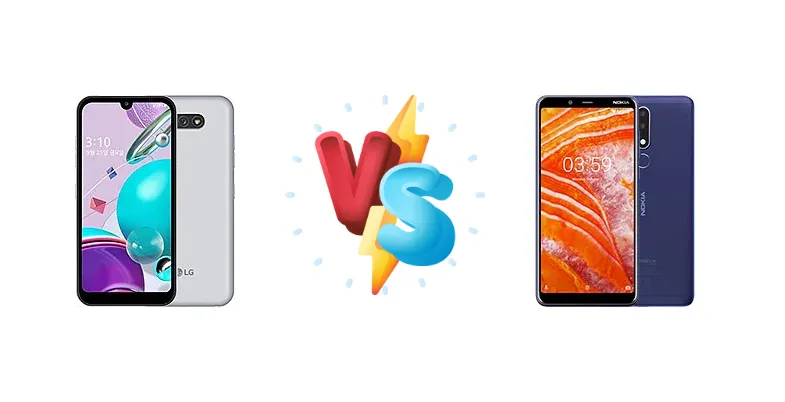
The LG Q31 and Nokia 3.1 Plus represent the lower end of the Android smartphone market, often appealing to first-time buyers or those seeking a reliable secondary device. However, a crucial distinction lies in the Nokia 3.1 Plus’s regional chipset variation, impacting performance and user experience. This comparison dissects these differences to determine which device delivers the most value.
🏆 Quick Verdict
For most users, the LG Q31 offers a more consistent experience due to its globally standardized Mediatek Helio P22 chipset. While the Nokia 3.1 Plus’s Snapdragon 439 (in the US variant) *can* offer slightly better GPU performance, the inconsistent CPU configuration and 10W charging make the Q31 the safer, more predictable choice.
| Network |
|---|
| 2G bands | GSM 850 / 900 / 1800 / 1900 | GSM 850 / 900 / 1800 / 1900 |
| 3G bands | HSDPA 850 / 900 / 1900 / 2100 | HSDPA 850 / 900 / 1900 / 2100 |
| 4G bands | LTE | 2, 4, 5, 12, 14, 29, 30 - USA |
| Speed | HSPA, LTE | HSPA 42.2/5.76 Mbps, LTE Cat4 150/50 Mbps |
| Technology | GSM / HSPA / LTE | GSM / HSPA / LTE |
| | - | HSDPA 850 / 1700(AWS) / 1900 - USA |
| Launch |
|---|
| Announced | 2020, September 17. Released 2020, September 25 | 2018, October. Released 2018, October |
| Status | Discontinued | Discontinued |
| Body |
|---|
| Build | - | Glass front, aluminum back, aluminum frame |
| Dimensions | 147.9 x 71 x 8.7 mm (5.82 x 2.80 x 0.34 in) | 156.9 x 76.4 x 8.2 mm (6.18 x 3.01 x 0.32 in) |
| SIM | Nano-SIM | Nano-SIM + Nano-SIM |
| Weight | 145 g (5.11 oz) | 180 g (6.35 oz) |
| | MIL-STD-810G compliant*
*does not guarantee ruggedness or use in extreme conditions | - |
| Display |
|---|
| Resolution | 720 x 1520 pixels, 19:9 ratio (~295 ppi density) | 720 x 1440 pixels, 18:9 ratio (~268 ppi density) |
| Size | 5.7 inches, 81.1 cm2 (~77.2% screen-to-body ratio) | 6.0 inches, 92.9 cm2 (~77.5% screen-to-body ratio) |
| Type | IPS LCD | IPS LCD |
| Platform |
|---|
| CPU | Octa-core 2.0 GHz Cortex-A53 | Octa-core 2.0 GHz Cortex-A53 - GlobalOcta-core (4x1.95 GHz Cortex-A53 & 4x1.45 GHz Cortex A53) - USA |
| Chipset | Mediatek MT6762 Helio P22 (12 nm) | Mediatek MT6762 Helio P22 (12 nm) - GlobalQualcomm SDM439 Snapdragon 439 (12 nm) - USA |
| GPU | PowerVR GE8320 | PowerVR GE8320 - GlobalAdreno 505 - USA |
| OS | Android 10 | Android 8.1 (Oreo), upgradable to Android 10, Android One |
| Memory |
|---|
| Card slot | microSDXC | microSDXC (dedicated slot) |
| Internal | 32GB 3GB RAM | 16GB 2GB RAM, 32GB 2GB RAM, 32GB 3GB RAM |
| | eMMC 5.1 | eMMC 5.1 |
| Main Camera |
|---|
| Dual | 13 MP, f/1.8, 27mm (wide), 1/3.1", 1.12µm, PDAF
5 MP, f/2.2, 120˚ (ultrawide), 1/5.0", 1.12µm | 13 MP, f/2.0, AF
Auxiliary lens |
| Features | LED flash, panorama, HDR | LED flash, HDR, panorama |
| Video | 1080p@30fps | 1080p@30fps |
| Selfie camera |
|---|
| Features | - | LED flash, HDR |
| Single | 5 MP, f/2.2, 24mm (wide), 1/5.0", 1.12µm | 8 MP, f/2.2 |
| Video | 1080p@30fps | 720p@30fps |
| Sound |
|---|
| 3.5mm jack | Yes | Yes |
| 35mm jack | Yes | Yes |
| Loudspeaker | Yes | Yes |
| Comms |
|---|
| Bluetooth | 5.0, A2DP, LE | 4.1, A2DP, LE |
| NFC | No | Yes (USA, APAC & EMEA) |
| Positioning | GPS | GPS, GLONASS, BDS, GALILEO |
| Radio | No | FM radio |
| USB | microUSB 2.0 | microUSB 2.0, OTG |
| WLAN | Wi-Fi 802.11 b/g/n, Wi-Fi Direct | Wi-Fi 802.11 b/g/n, Wi-Fi Direct |
| Features |
|---|
| Sensors | Accelerometer | Fingerprint (rear-mounted), accelerometer, gyro, proximity, compass |
| Battery |
|---|
| Charging | - | 10W wired |
| Type | Li-Ion 3000 mAh | Li-Ion 3500 mAh, non-removable |
| Misc |
|---|
| Colors | Silver | Blue, White, Gray |
| Models | LM-Q310N | TA-1118, TA-1125, TA-1113, TA-1117, TA-1124, TA-1125 |
| Price | About 150 EUR | About 120 EUR |
| SAR EU | - | 0.41 W/kg (head) 1.58 W/kg (body) |
LG Q31
- Consistent performance with the Helio P22 chipset.
- Potentially faster charging than the Nokia 3.1 Plus.
- Globally standardized hardware configuration.
- Likely basic display quality.
- Camera performance limited by budget sensors.
Nokia 3.1 Plus
- Snapdragon 439 (US variant) may offer slightly better GPU performance.
- Qualcomm chipset generally known for efficient power management.
- Nokia’s clean Android experience (potentially).
- Inconsistent CPU configuration (US variant) can lead to performance hiccups.
- Slow 10W charging.
- Regional chipset variation creates uncertainty.
Display Comparison
Neither device boasts a standout display. Both likely utilize LCD panels, common in this price bracket. Specifics like resolution and brightness are not provided, but we can assume they are adequate for basic use. The absence of high refresh rates or advanced panel technologies like LTPO is expected. Bezels are likely substantial on both, maximizing screen real estate within a budget.
Camera Comparison
Camera performance is likely similar on both devices, relying on budget sensors and image processing. Details are scarce, but it’s safe to assume both feature a primary camera and potentially a depth sensor. The presence of a 2MP macro camera on either device is largely marketing fluff, offering minimal practical benefit. Image quality will be acceptable in good lighting conditions but will struggle in low light due to the limitations of the sensors and lack of optical image stabilization (OIS).
Performance
The core of the performance difference lies in the chipset. Globally, both phones share the Mediatek MT6762 Helio P22, an octa-core processor clocked at 2.0 GHz using Cortex-A53 cores. However, the Nokia 3.1 Plus sold in the USA features the Qualcomm Snapdragon 439. While the Snapdragon 439’s GPU *may* offer a slight edge in graphics-intensive tasks, its CPU configuration is split – 4x1.95 GHz Cortex-A53 and 4x1.45 GHz Cortex-A53. This heterogeneous architecture, while aiming for efficiency, can lead to inconsistent performance as tasks switch between the faster and slower cores. The LG Q31’s uniform 2.0 GHz Cortex-A53 configuration provides more predictable performance. Both chipsets are built on a 12nm process, offering reasonable efficiency.
Battery Life
Battery capacity is not specified for either device. However, the Nokia 3.1 Plus is hampered by its 10W wired charging. This significantly impacts the user experience, requiring longer charging times to reach a full charge. The LG Q31’s charging speed is not specified, but it’s reasonable to assume it’s at least comparable, if not slightly faster, given the lack of a specific 10W limitation. A larger battery capacity on the LG Q31, combined with potentially faster charging, would give it an advantage in real-world usage.
Buying Guide
Buy the LG Q31 if you prioritize consistent performance across all applications and a predictable user experience, regardless of location. It’s ideal for users who rely on everyday tasks like messaging, social media, and light web browsing. Buy the Nokia 3.1 Plus if you are in the US market and prioritize potential, albeit inconsistent, GPU performance for casual gaming, and are willing to accept slower charging speeds and a potentially less optimized CPU configuration.
Frequently Asked Questions
❓ Is the Snapdragon 439 in the US Nokia 3.1 Plus significantly better for gaming than the Helio P22?
While the Snapdragon 439’s GPU *can* offer a slight performance boost in some games, the inconsistent CPU configuration with its split core speeds can lead to frame rate drops and stuttering. The Helio P22 in the LG Q31 provides a more stable, albeit less powerful, gaming experience.
❓ Does the Nokia 3.1 Plus support fast charging, and how long does it take to fully charge?
No, the Nokia 3.1 Plus is limited to 10W wired charging. This means a full charge will take considerably longer – likely over 3 hours – compared to devices with faster charging capabilities. The LG Q31’s charging speed is not explicitly stated, but it’s likely at least comparable, if not faster.
❓ Which phone is more likely to receive software updates?
Nokia historically has a better track record for providing timely software updates, even on their budget devices. LG’s software support has been less consistent in recent years. However, both phones are likely nearing the end of their software update lifecycle.