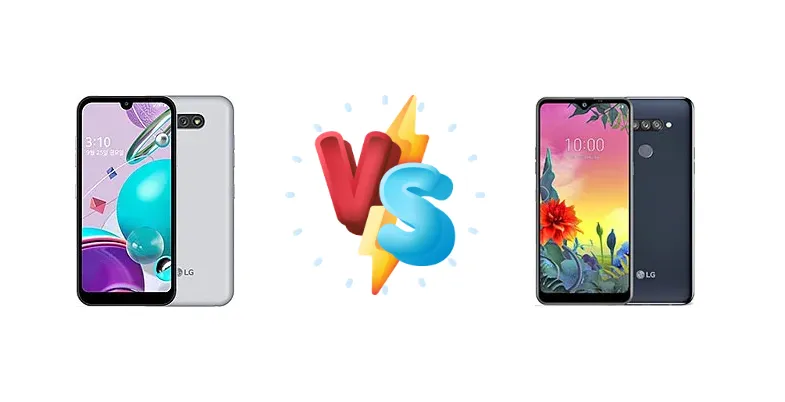
The LG Q31 and LG K50S represent LG’s approach to the ultra-budget smartphone market. Both devices are powered by the Mediatek Helio P22 chipset, making a direct performance comparison less about raw power and more about how LG optimizes the experience. This comparison dives deep into the nuances between these two models, helping you determine which offers the best value for your needs.
🏆 Quick Verdict
For the average user prioritizing a potentially more refined software experience and a slightly more modern design, the LG Q31 emerges as the better choice. While both phones share the same Helio P22 chipset, the Q31’s positioning suggests a more recent software build and potentially better long-term support, despite the minimal hardware differences.
| Network |
|---|
| 2G bands | GSM 850 / 900 / 1800 / 1900 | GSM 850 / 900 / 1800 / 1900 |
| 3G bands | HSDPA 850 / 900 / 1900 / 2100 | HSDPA 850 / 900 / 1900 / 2100 |
| 4G bands | LTE | 1, 3, 7, 8, 20 |
| Speed | HSPA, LTE | HSPA 42.2/5.76 Mbps, LTE (2CA) Cat6 300/50 Mbps |
| Technology | GSM / HSPA / LTE | GSM / HSPA / LTE |
| Launch |
|---|
| Announced | 2020, September 17. Released 2020, September 25 | 2019, August. Released 2019, September |
| Status | Discontinued | Discontinued |
| Body |
|---|
| Dimensions | 147.9 x 71 x 8.7 mm (5.82 x 2.80 x 0.34 in) | 165.8 x 77.5 x 8.2 mm (6.53 x 3.05 x 0.32 in) |
| SIM | Nano-SIM | · Nano-SIM· Nano-SIM + Nano-SIM |
| Weight | 145 g (5.11 oz) | 194 g (6.84 oz) |
| | MIL-STD-810G compliant*
*does not guarantee ruggedness or use in extreme conditions | MIL-STD-810G compliant*
*does not guarantee ruggedness or use in extreme conditions |
| Display |
|---|
| Resolution | 720 x 1520 pixels, 19:9 ratio (~295 ppi density) | 720 x 1520 pixels, 19:9 ratio (~259 ppi density) |
| Size | 5.7 inches, 81.1 cm2 (~77.2% screen-to-body ratio) | 6.5 inches, 105.5 cm2 (~82.1% screen-to-body ratio) |
| Type | IPS LCD | IPS LCD |
| Platform |
|---|
| CPU | Octa-core 2.0 GHz Cortex-A53 | Octa-core 2.0 GHz Cortex-A53 |
| Chipset | Mediatek MT6762 Helio P22 (12 nm) | Mediatek MT6762 Helio P22 (12 nm) |
| GPU | PowerVR GE8320 | PowerVR GE8320 |
| OS | Android 10 | Android 9.0 (Pie) |
| Memory |
|---|
| Card slot | microSDXC | microSDXC (dedicated slot) |
| Internal | 32GB 3GB RAM | 32GB 3GB RAM |
| | eMMC 5.1 | eMMC 5.1 |
| Main Camera |
|---|
| Dual | 13 MP, f/1.8, 27mm (wide), 1/3.1", 1.12µm, PDAF
5 MP, f/2.2, 120˚ (ultrawide), 1/5.0", 1.12µm | - |
| Features | LED flash, panorama, HDR | LED flash, panorama, HDR |
| Triple | - | 13 MP, f/2.2, 26mm (wide), PDAF
5 MP, f/2.2, 115˚ (ultrawide)
Auxiliary lens |
| Video | 1080p@30fps | 1080p@30fps |
| Selfie camera |
|---|
| Single | 5 MP, f/2.2, 24mm (wide), 1/5.0", 1.12µm | 13 MP, f/2.0, 1/3.1", 1.12µm |
| Video | 1080p@30fps | 1080p@30fps |
| Sound |
|---|
| 3.5mm jack | Yes | Yes |
| 35mm jack | Yes | Yes |
| Loudspeaker | Yes | Yes |
| Comms |
|---|
| Bluetooth | 5.0, A2DP, LE | 5.0, A2DP, LE |
| NFC | No | Yes (market/region dependent) |
| Positioning | GPS | GPS, GLONASS |
| Radio | No | FM radio |
| USB | microUSB 2.0 | USB Type-C 2.0, OTG |
| WLAN | Wi-Fi 802.11 b/g/n, Wi-Fi Direct | Wi-Fi 802.11 a/b/g/n/ac, dual-band, Wi-Fi Direct, DLNA |
| Features |
|---|
| Sensors | Accelerometer | Fingerprint (rear-mounted), accelerometer, proximity |
| Battery |
|---|
| Type | Li-Ion 3000 mAh | Li-Po 4000 mAh, non-removable |
| Misc |
|---|
| Colors | Silver | New Aurora Black, New Moroccan Blue |
| Models | LM-Q310N | LMX540HM, LM-X540, LM-X540BMW, LMX540BMW |
| Price | About 150 EUR | About 200 EUR |
LG Q31
- Potentially newer software version
- Slightly more modern design (speculative)
- May receive longer software support
- Shares the same Helio P22 chipset as the K50S
- Camera performance limited by ISP
LG K50S
- Likely lower price point
- Shares the same Helio P22 chipset as the Q31
- Adequate for basic smartphone tasks
- Potentially older software version
- May have limited long-term software support
Display Comparison
Both the LG Q31 and K50S utilize displays that are typical for their price bracket. Given the lack of specific display specs beyond the chipset, we can infer both likely feature LCD panels. The user experience will be similar, with color accuracy and brightness being moderate. Bezels are expected to be noticeable on both devices, reflecting their budget nature. The Q31, being a slightly newer model, *may* benefit from minor display calibration improvements, but this is speculative without detailed panel specifications.
Camera Comparison
Camera performance on both the LG Q31 and K50S will be limited by the Helio P22’s image signal processor (ISP). While megapixel counts may differ (data not provided), the ISP is the bottleneck. Expect decent results in well-lit conditions, but image quality will degrade significantly in low light. The presence of a 2MP macro camera on either device is largely a marketing tactic; the small sensor size and lack of optical image stabilization (OIS) will result in limited detail and usability. Focusing on the main sensor’s quality (if available) is crucial when evaluating camera performance.
Performance
The core of both devices is the Mediatek MT6762 Helio P22, featuring an octa-core 2.0 GHz Cortex-A53 CPU. This chipset is designed for basic smartphone tasks – web browsing, social media, and light app usage. Performance will be virtually identical between the two phones for everyday tasks. The Helio P22’s integrated GPU is adequate for casual gaming, but demanding titles will require significant graphical settings reductions. Thermal management is unlikely to be a concern with this chipset, as it’s known for its efficiency rather than raw power. The RAM configuration (not specified) will be a key factor in multitasking performance; more RAM will benefit both devices.
Battery Life
Battery capacity (not specified) is a critical factor for budget smartphones. Given the power efficiency of the Helio P22, both the Q31 and K50S should be able to deliver a full day of moderate use. Charging wattage (not specified) will determine how quickly the battery can be replenished. Faster charging is a significant convenience, but it’s unlikely either device will support rapid charging technologies. The Q31, potentially benefiting from software optimizations, *might* exhibit slightly better battery life through more aggressive background app management.
Buying Guide
Buy the LG Q31 if you need a phone with a potentially cleaner software experience and are looking for a device that might receive slightly more frequent updates within LG’s budget range. Buy the LG K50S if you prioritize finding the absolute lowest price point and are comfortable with a potentially older software version, accepting that long-term support may be limited.
Frequently Asked Questions
❓ Will the Helio P22 chipset struggle with popular apps like Facebook and WhatsApp?
The Helio P22 is capable of running apps like Facebook and WhatsApp without significant issues. However, expect some loading times and occasional lag when multitasking or using resource-intensive features within these apps. It's designed for basic smartphone functionality, not heavy multitasking.
❓ Is the camera on either of these phones suitable for taking photos of fast-moving subjects?
Neither the LG Q31 nor the LG K50S is well-suited for capturing photos of fast-moving subjects. The Helio P22's ISP and the likely lack of advanced camera features like fast autofocus will result in blurry images. These cameras are best used for static scenes in good lighting conditions.
❓ How long will software updates be supported on the LG Q31 compared to the K50S?
The LG Q31, being a slightly newer model, is likely to receive software updates for a longer period than the LG K50S. However, given both phones fall into the ultra-budget category, don't expect extensive or frequent updates. Security patches are the most important updates to look for.