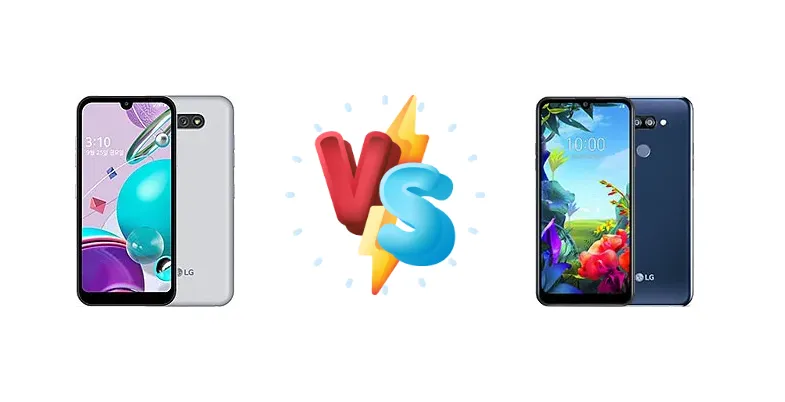
The LG Q31 and LG K40S represent LG's entry into the ultra-budget smartphone market. While both devices target cost-conscious consumers, they aren't entirely identical. This comparison dives deep into their specifications to determine which offers the best value, considering their shared Mediatek Helio P22 chipset.
🏆 Quick Verdict
For the average user, the LG K40S is likely the better choice, assuming comparable pricing. While both phones share the same chipset and CPU, the K40S often benefits from wider availability and potentially more aggressive carrier deals, making it easier to acquire. The performance will be nearly indistinguishable in everyday tasks.
| Network |
|---|
| 2G bands | GSM 850 / 900 / 1800 / 1900 | GSM 850 / 900 / 1800 / 1900 |
| 3G bands | HSDPA 850 / 900 / 1900 / 2100 | HSDPA 850 / 900 / 1900 / 2100 |
| 4G bands | LTE | 1, 3, 7, 8, 20 |
| Speed | HSPA, LTE | HSPA 42.2/5.76 Mbps, LTE (2CA) Cat6 300/50 Mbps |
| Technology | GSM / HSPA / LTE | GSM / HSPA / LTE |
| Launch |
|---|
| Announced | 2020, September 17. Released 2020, September 25 | 2019, August. Released 2019, September |
| Status | Discontinued | Discontinued |
| Body |
|---|
| Dimensions | 147.9 x 71 x 8.7 mm (5.82 x 2.80 x 0.34 in) | 156.3 x 73.9 x 8.6 mm (6.15 x 2.91 x 0.34 in) |
| SIM | Nano-SIM | · Nano-SIM· Nano-SIM + Nano-SIM |
| Weight | 145 g (5.11 oz) | 186 g (6.56 oz) |
| | MIL-STD-810G compliant*
*does not guarantee ruggedness or use in extreme conditions | MIL-STD-810G compliant*
*does not guarantee ruggedness or use in extreme conditions |
| Display |
|---|
| Resolution | 720 x 1520 pixels, 19:9 ratio (~295 ppi density) | 720 x 1520 pixels, 19:9 ratio (~276 ppi density) |
| Size | 5.7 inches, 81.1 cm2 (~77.2% screen-to-body ratio) | 6.1 inches, 92.9 cm2 (~80.4% screen-to-body ratio) |
| Type | IPS LCD | IPS LCD |
| Platform |
|---|
| CPU | Octa-core 2.0 GHz Cortex-A53 | Octa-core 2.0 GHz Cortex-A53 |
| Chipset | Mediatek MT6762 Helio P22 (12 nm) | Mediatek MT6762 Helio P22 (12 nm) |
| GPU | PowerVR GE8320 | PowerVR GE8320 |
| OS | Android 10 | Android 9.0 (Pie), upgradable to Android 10 |
| Memory |
|---|
| Card slot | microSDXC | microSDXC (dedicated slot) |
| Internal | 32GB 3GB RAM | 32GB 2GB RAM, 32GB 3GB RAM |
| | eMMC 5.1 | eMMC 5.1 |
| Main Camera |
|---|
| Dual | 13 MP, f/1.8, 27mm (wide), 1/3.1", 1.12µm, PDAF
5 MP, f/2.2, 120˚ (ultrawide), 1/5.0", 1.12µm | 13 MP, f/2.2, 26mm (wide), PDAF
5 MP, (ultrawide) |
| Features | LED flash, panorama, HDR | LED flash, panorama, HDR |
| Video | 1080p@30fps | 1080p@30fps |
| Selfie camera |
|---|
| Single | 5 MP, f/2.2, 24mm (wide), 1/5.0", 1.12µm | 13 MP, f/2.0, 1/3.1", 1.12µm |
| Video | 1080p@30fps | 1080p@30fps |
| Sound |
|---|
| 3.5mm jack | Yes | Yes |
| 35mm jack | Yes | Yes |
| Loudspeaker | Yes | Yes |
| Comms |
|---|
| Bluetooth | 5.0, A2DP, LE | 5.0, A2DP, LE |
| NFC | No | Yes (market/region dependent) |
| Positioning | GPS | GPS, GLONASS |
| Radio | No | No |
| USB | microUSB 2.0 | microUSB 2.0, OTG |
| WLAN | Wi-Fi 802.11 b/g/n, Wi-Fi Direct | Wi-Fi 802.11 a/b/g/n/ac, dual-band, Wi-Fi Direct, DLNA |
| Features |
|---|
| Sensors | Accelerometer | Fingerprint (rear-mounted), accelerometer, proximity |
| Battery |
|---|
| Type | Li-Ion 3000 mAh | Li-Po 3500 mAh, non-removable |
| Misc |
|---|
| Colors | Silver | New Aurora Black, New Moroccan Blue |
| Models | LM-Q310N | LMX430HM, LM-X430 |
| Price | About 150 EUR | About 160 EUR |
LG Q31
- Potentially cleaner software experience (depending on carrier)
- Shared Helio P22 chipset offers adequate performance for basic tasks
- Likely a cost-effective option
- Limited availability compared to the K40S
- Camera performance likely to be average
LG K40S
- Wider availability and potential carrier deals
- Reliable performance for essential smartphone functions
- Shared Helio P22 chipset offers adequate performance for basic tasks
- Camera performance likely to be average
- May come with pre-installed bloatware depending on carrier
Display Comparison
Both the LG Q31 and K40S utilize displays that are likely IPS LCD panels, given their price bracket. However, specific details like resolution and peak brightness are not provided. The shared target market suggests similar display quality – adequate for everyday viewing but not exceptional. Expect standard 60Hz refresh rates. The absence of higher refresh rates or advanced panel technologies like LTPO is typical for this segment, meaning users won't experience smoother scrolling or improved power efficiency in that regard.
Camera Comparison
Camera specifications are not detailed beyond the presence of cameras. Given the price point, expect modest camera performance. Image quality will likely be acceptable in good lighting conditions, but suffer in low light. The inclusion of a 2MP macro camera on either device is largely a marketing tactic, as the image quality from such sensors is typically poor. The aperture sizes and sensor sizes are unknown, but larger apertures and sensors generally capture more light and produce better images. Image processing will likely be basic, with limited dynamic range and detail.
Performance
The core of both devices is the Mediatek MT6762 Helio P22 (12 nm) chipset, paired with an Octa-core 2.0 GHz Cortex-A53 CPU. This means performance will be virtually identical. The Helio P22 is a capable processor for basic tasks like calling, texting, social media, and light web browsing. However, it will struggle with demanding games or heavy multitasking. The 12nm manufacturing process is relatively efficient, but don't expect sustained peak performance due to potential thermal throttling under load. RAM configurations are not specified, but lower RAM (2GB or 3GB) will significantly impact multitasking capabilities.
Battery Life
Battery capacity and charging wattage are not specified for either device. However, given the Helio P22's efficiency and the target market, both phones likely feature batteries in the 3000-4000 mAh range. Expect all-day battery life with moderate usage. Charging speeds will likely be slow, potentially taking several hours to fully charge from 0-100% using the included charger. The lack of fast charging support is typical for this price segment.
Buying Guide
Buy the LG Q31 if you prioritize a potentially cleaner software experience and find it at a significantly lower price point. It's a solid option for basic smartphone functionality. Buy the LG K40S if you value broader availability, potentially better carrier support, and are looking for a reliable, no-frills device for essential communication and light app usage. Both are suited for first-time smartphone users or those needing a secondary device.
Frequently Asked Questions
❓ Will the Helio P22 chipset handle popular games like PUBG Mobile?
The Mediatek Helio P22 is not designed for demanding games like PUBG Mobile. While you might be able to run it at the lowest settings, expect significant frame rate drops and lag, making the experience less than ideal. It's better suited for casual gaming.
❓ How much storage do these phones typically come with, and can it be expanded?
While not specified, these phones likely come with 32GB or 64GB of internal storage. Crucially, both the LG Q31 and K40S almost certainly feature a microSD card slot, allowing you to expand the storage capacity to accommodate more photos, videos, and apps. This is essential given the limited internal storage.
❓ Are these phones compatible with 4G LTE networks in the US?
Compatibility with US 4G LTE networks depends on the specific carrier and bands supported by each device. It's crucial to check the specifications and ensure that the phone supports the bands used by your carrier before purchasing. Both phones are designed for global markets, so compatibility isn't guaranteed.