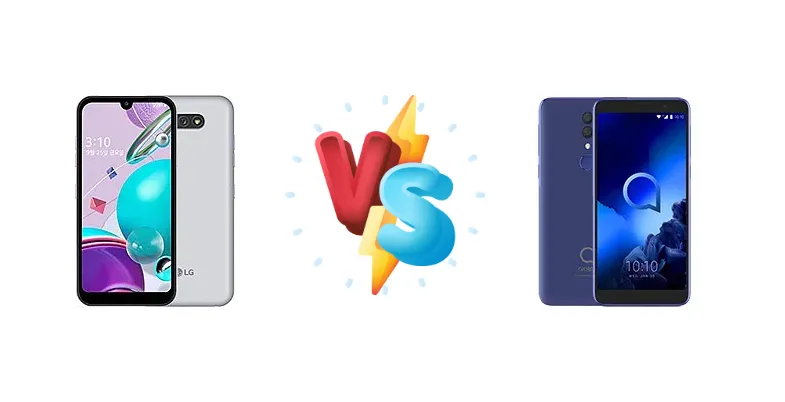
The LG Q31 and alcatel 1x (2019) represent the extreme end of the smartphone price spectrum. Both aim to deliver basic smartphone functionality at the lowest possible cost, but they achieve this with significantly different hardware. This comparison dissects those differences, focusing on how the chipset impacts real-world usability for those seeking an affordable Android experience.
🏆 Quick Verdict
For most users, the LG Q31 is the superior choice. Its Mediatek Helio P22 chipset, built on a 12nm process, offers a substantial performance advantage over the alcatel 1x’s older, 28nm Mediatek MT6739. While both phones are limited, the Q31 provides a smoother, more responsive experience, justifying the likely price premium.
| Network |
|---|
| 2G bands | GSM 850 / 900 / 1800 / 1900 | GSM 850 / 900 / 1800 / 1900 |
| 3G bands | HSDPA 850 / 900 / 1900 / 2100 | HSDPA 850 / 900 / 1700(AWS) / 1900 / 2100 - 5059A |
| 4G bands | LTE | 1, 3, 5, 7, 8, 28, 38, 40 - 5008T |
| Speed | HSPA, LTE | HSPA 42.2/5.76 Mbps, LTE Cat4 150/50 Mbps |
| Technology | GSM / HSPA / LTE | GSM / HSPA / LTE |
| | - | 1, 3, 7, 8, 20, 28 - 5008Y |
| Launch |
|---|
| Announced | 2020, September 17. Released 2020, September 25 | 2019, January. Released 2019, Q1 |
| Status | Discontinued | Discontinued |
| Body |
|---|
| Dimensions | 147.9 x 71 x 8.7 mm (5.82 x 2.80 x 0.34 in) | 146.4 x 68.8 x 8.3 mm (5.76 x 2.71 x 0.33 in) |
| SIM | Nano-SIM | · Nano-SIM· Nano-SIM + Nano-SIM |
| Weight | 145 g (5.11 oz) | 130 g (4.59 oz) |
| | MIL-STD-810G compliant*
*does not guarantee ruggedness or use in extreme conditions | - |
| Display |
|---|
| Resolution | 720 x 1520 pixels, 19:9 ratio (~295 ppi density) | 720 x 1440 pixels, 18:9 ratio (~293 ppi density) |
| Size | 5.7 inches, 81.1 cm2 (~77.2% screen-to-body ratio) | 5.5 inches, 78.1 cm2 (~77.5% screen-to-body ratio) |
| Type | IPS LCD | IPS LCD |
| Platform |
|---|
| CPU | Octa-core 2.0 GHz Cortex-A53 | Quad-core 1.5 GHz Cortex-A53 |
| Chipset | Mediatek MT6762 Helio P22 (12 nm) | Mediatek MT6739 (28 nm) |
| GPU | PowerVR GE8320 | PowerVR GE8100 |
| OS | Android 10 | Android 8.1 (Oreo) |
| Memory |
|---|
| Card slot | microSDXC | microSDXC |
| Internal | 32GB 3GB RAM | 16GB 2GB RAM |
| | eMMC 5.1 | eMMC 5.1 |
| Main Camera |
|---|
| Dual | 13 MP, f/1.8, 27mm (wide), 1/3.1", 1.12µm, PDAF
5 MP, f/2.2, 120˚ (ultrawide), 1/5.0", 1.12µm | 13 MP
2 MP |
| Features | LED flash, panorama, HDR | LED flash, HDR |
| Video | 1080p@30fps | 1080p@30fps |
| Selfie camera |
|---|
| Features | - | LED flash |
| Single | 5 MP, f/2.2, 24mm (wide), 1/5.0", 1.12µm | 5 MP |
| Video | 1080p@30fps | 720p |
| Sound |
|---|
| 3.5mm jack | Yes | Yes |
| 35mm jack | Yes | Yes |
| Loudspeaker | Yes | Yes |
| Comms |
|---|
| Bluetooth | 5.0, A2DP, LE | 4.2, A2DP, LE |
| NFC | No | No |
| Positioning | GPS | GPS |
| Radio | No | FM radio |
| USB | microUSB 2.0 | microUSB 2.0 |
| WLAN | Wi-Fi 802.11 b/g/n, Wi-Fi Direct | Wi-Fi 802.11 b/g/n, Wi-Fi Direct |
| Features |
|---|
| Sensors | Accelerometer | Fingerprint (rear-mounted, 5008T only), accelerometer, proximity |
| Battery |
|---|
| Type | Li-Ion 3000 mAh | Li-Ion 3000 mAh, removable |
| Misc |
|---|
| Colors | Silver | Pebble Blue, Pebble Black |
| Models | LM-Q310N | 5008T, 5008Y, 5008U, 5008R, 5008D_EEA, 5008Y_EEA, 5008D |
| Price | About 150 EUR | About 120 EUR |
LG Q31
- Significantly faster processor (Helio P22)
- More efficient 12nm fabrication process
- Better multitasking capabilities
- Likely smoother user experience
- May be more expensive than the alcatel 1x
- Still an entry-level device with limitations
alcatel 1x (2019)
- Extremely affordable
- Functional for basic communication
- Lightweight and portable
- Simple and easy to use
- Slow and laggy performance
- Inefficient 28nm processor
- Limited multitasking capabilities
- Poor camera quality
Display Comparison
Neither device is expected to boast a high-quality display. Details on panel type and resolution are missing, but given the price point, both likely utilize LCD panels. The key difference lies in the processing power needed to drive the display; the Q31’s more capable chipset will handle UI animations and video playback more smoothly. Bezels are likely substantial on both, reflecting cost-cutting measures.
Camera Comparison
Camera performance on both devices is expected to be basic. Without specific sensor details, it’s safe to assume both feature low-resolution primary sensors. The alcatel 1x (2019) is known to include a 2MP macro lens, which is largely ineffective due to its low resolution and lack of autofocus. The LG Q31 likely offers a slightly better image processing pipeline thanks to its more powerful chipset, but don’t expect flagship-level results from either. Image quality will be heavily dependent on lighting conditions.
Performance
The core difference between these phones is the chipset. The LG Q31’s Mediatek Helio P22 (12nm) features an octa-core CPU clocked at 2.0 GHz, while the alcatel 1x (2019) uses the Mediatek MT6739 (28nm) with a quad-core CPU at 1.5 GHz. The 12nm fabrication process of the Helio P22 is significantly more efficient, leading to better thermal management and sustained performance. The octa-core configuration also provides a clear advantage in multitasking. The MT6739, being older and built on a larger node, will struggle with even moderate workloads, resulting in noticeable lag and slowdowns. The Q31 will offer a more fluid experience when switching between apps or browsing the web.
Battery Life
Battery capacity details are missing for both devices. However, the Helio P22’s 12nm process offers a significant advantage in power efficiency. This means the LG Q31 will likely achieve comparable or better battery life than the alcatel 1x (2019) even with a similar battery capacity. Charging wattage is also likely to be low on both, meaning full charges will take several hours.
Buying Guide
Buy the LG Q31 if you prioritize a more responsive user experience, even for basic tasks like web browsing and social media. The Helio P22 chipset will handle multitasking and light gaming better than the alcatel 1x. Buy the alcatel 1x (2019) if your budget is *extremely* tight and you only need a phone for essential communication – calls, texts, and very light app usage. It’s a functional device, but expect noticeable lag and limitations.
Frequently Asked Questions
❓ Will the LG Q31 be able to run popular social media apps like Facebook and Instagram smoothly?
Yes, the LG Q31’s Helio P22 chipset is capable of running most popular social media apps without significant lag. While it won’t offer a high-end experience, it will provide a usable and responsive experience for browsing feeds and posting updates. The alcatel 1x (2019) may struggle with these apps, especially when multitasking.
❓ Is the alcatel 1x (2019) suitable for a first-time smartphone user?
The alcatel 1x (2019) can be suitable for a first-time smartphone user who only needs basic functionality like calls, texts, and simple apps. However, be aware that the performance is limited, and the user experience will be noticeably slower compared to more modern smartphones. It's best for those with very minimal smartphone needs.
❓ Can either of these phones handle basic mobile games?
The LG Q31 is better suited for basic mobile games. While it won’t run graphically demanding titles smoothly, it can handle simpler games like Candy Crush or Angry Birds. The alcatel 1x (2019) will struggle even with these less demanding games, experiencing significant frame rate drops and lag.