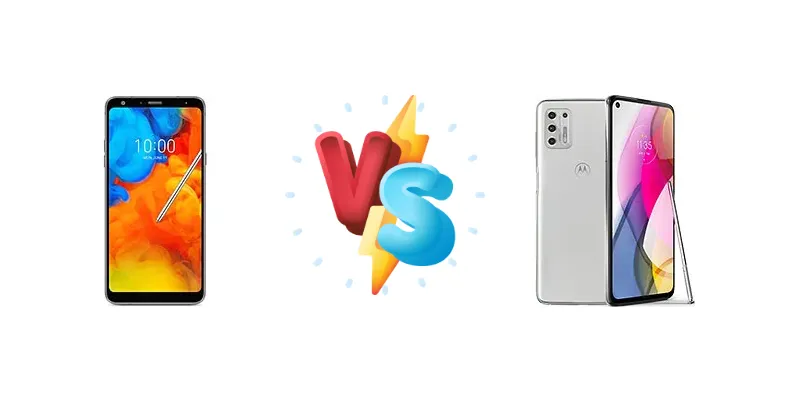
Both the LG Q Stylus and the Motorola Moto G Stylus (2021) cater to users seeking the productivity of a stylus without the flagship price tag. However, a significant gap exists in their underlying hardware, impacting performance and overall user experience. This comparison dives deep into the specifications to determine which stylus phone delivers the best value.
🏆 Quick Verdict
For the average user, the Motorola Moto G Stylus (2021) is the superior choice. Its Qualcomm Snapdragon 678 chipset provides a noticeable performance boost over the LG Q Stylus’s Mediatek MT6750, translating to smoother multitasking and a more responsive user interface. While both offer 10W charging, the Moto G Stylus’s more modern architecture provides a better foundation for future software updates.
| Network |
|---|
| 2G bands | GSM 850 / 900 / 1800 / 1900 | GSM 850 / 900 / 1800 / 1900 |
| 3G bands | HSDPA 850 / 900 / 1900 / 2100 | HSDPA 850 / 900 / 1700(AWS) / 1900 / 2100 |
| 4G bands | 1, 3, 5, 7, 8, 28, 38, 39, 40, 41 | 1, 2, 3, 4, 5, 7, 8, 12, 13, 14, 17, 20, 25, 26, 29, 38, 40, 41, 66, 71 |
| Speed | HSPA, LTE | HSPA, LTE |
| Technology | GSM / HSPA / LTE | GSM / CDMA / HSPA / LTE |
| | - | CDMA 800 / 1900 |
| Launch |
|---|
| Announced | 2018, June. Released 2018, August | 2021, January 08 |
| Status | Discontinued | Available. Released 2021, January 14 |
| Body |
|---|
| Build | Glass front, plastic back, aluminum frame | Glass front, plastic frame, plastic back |
| Dimensions | 160.1 x 77.7 x 8.1 mm (6.30 x 3.06 x 0.32 in) | 169.8 x 77.9 x 9 mm (6.69 x 3.07 x 0.35 in) |
| SIM | · Nano-SIM· Nano-SIM + Nano-SIM | Nano-SIM |
| Weight | 171 g (6.03 oz) | 213 g (7.51 oz) |
| | Stylus
IP68 dust/water resistant (up to 1.5m for 30 mins)
MIL-STD-810G compliant*
*does not guarantee ruggedness or use in extreme conditions | Stylus
Water-repellent coating |
| Display |
|---|
| Resolution | 1080 x 2160 pixels, 18:9 ratio (~389 ppi density) | 1080 x 2400 pixels, 20:9 ratio (~386 ppi density) |
| Size | 6.2 inches, 99.7 cm2 (~80.2% screen-to-body ratio) | 6.8 inches, 112.2 cm2 (~84.8% screen-to-body ratio) |
| Type | IPS LCD | IPS LCD |
| Platform |
|---|
| CPU | Octa-core (4x1.5 GHz Cortex-A53 & 4x1.0 GHz Cortex-A53) - Q Stylus/Q Stylus αOcta-core 1.8 GHz | Octa-core (2x2.2 GHz Kryo 460 Gold & 6x1.7 GHz Kryo 460 Silver) |
| Chipset | Mediatek MT6750 - Q Stylus/Q Stylus α | Qualcomm SDM678 Snapdragon 678 (11 nm) |
| GPU | Mali-T860MP2 - Q Stylus/Q Stylus α | Adreno 612 |
| OS | Android 8.1 (Oreo) | Android 10 |
| Memory |
|---|
| Card slot | microSDXC (dedicated slot) | microSDXC (dedicated slot) |
| Internal | 32GB 3GB RAM, 64GB 4GB RAM | 128GB 4GB RAM |
| | eMMC 5.1 | - |
| Main Camera |
|---|
| Features | LED flash, panorama, HDR | LED flash, HDR, panorama |
| Quad | - | 48 MP, f/1.7, 26mm (wide), 1/2.0", 0.8µm, PDAF
8 MP, f/2.2, 118˚ (ultrawide), 1/4.0, 1.12µm
2 MP (macro)
Auxiliary lens |
| Single | 13 MP, PDAF (Q Stylus α)
16 MP, PDAF (Q Stylus/ Q Stylus+) | - |
| Video | 1080p@30fps | 4K@30fps, 1080p@30/60fps; gyro-EIS |
| Selfie camera |
|---|
| Features | - | HDR |
| Single | 8 MP or 5 MP - Q Stylus/Q Stylus+
5 MP - Q Stylus α | 16 MP, f/2.0, (wide), 1/3.06", 1.0µm |
| Video | - | 1080p@30fps, gyro-EIS |
| Sound |
|---|
| 3.5mm jack | Yes | Yes |
| 35mm jack | Yes | Yes |
| Loudspeaker | Yes | Yes |
| Comms |
|---|
| Bluetooth | 4.2, A2DP, LE | 5.0, A2DP, LE |
| NFC | Yes | No |
| Positioning | GPS, GLONASS, BDS, GALILEO | GPS, GLONASS, BDS, GALILEO |
| Radio | FM radio | Unspecified |
| USB | USB Type-C 2.0 | USB Type-C 2.0 |
| WLAN | Wi-Fi 802.11 b/g/n, Wi-Fi Direct, DLNA | Wi-Fi 802.11 a/b/g/n/ac, dual-band, Wi-Fi Direct |
| Features |
|---|
| Sensors | Fingerprint (rear-mounted), accelerometer, gyro, proximity, compass | Fingerprint (side-mounted), accelerometer, gyro, proximity |
| Battery |
|---|
| Charging | 10W wired | 10W wired |
| Type | Li-Ion 3300 mAh, non-removable | Li-Po 4000 mAh |
| Misc |
|---|
| Colors | Aurora Black, Moroccan Blue, Lavender Violet | Aurora Black, Aurora White |
| Models | Q710, LM-Q710.FG | XT2115, XT2115-1 |
| Price | About 300 EUR | About 90 EUR |
LG Q Stylus
- Potentially lower price point
- Stylus functionality for note-taking and drawing
- Familiar LG user interface (for existing LG users)
- Outdated Mediatek MT6750 chipset
- Slower performance and multitasking
- Likely less efficient battery life
Motorola Moto G Stylus (2021)
- More powerful Qualcomm Snapdragon 678 chipset
- Smoother performance and multitasking
- Better thermal management
- Potentially better camera image processing
- 10W charging is slow
- May be slightly more expensive than the LG Q Stylus
- Motorola’s software can include bloatware
Display Comparison
Neither device boasts a standout display. Both likely feature LCD panels, common in this price bracket. The key difference lies under the hood. While specific display specs (resolution, brightness) are unavailable for the LG Q Stylus, the Moto G Stylus benefits from a more efficient chipset that can handle display tasks without significant strain. The lack of high refresh rates on either device is standard for the segment, but the Snapdragon 678’s GPU will provide a smoother experience when scrolling through content.
Camera Comparison
Without detailed camera specifications, a direct comparison is difficult. However, both phones likely feature modest camera setups geared towards casual photography. The LG Q Stylus’s camera performance will be limited by the older chipset’s image signal processor (ISP). The Moto G Stylus, with its Snapdragon 678, benefits from a more capable ISP, potentially resulting in better image processing, dynamic range, and low-light performance. Focusing on the main sensor is crucial; the often-included 2MP macro lenses on both devices offer limited practical value.
Performance
The Motorola Moto G Stylus (2021) holds a clear advantage in performance. Its Qualcomm Snapdragon 678 (11nm) utilizes a more modern architecture and faster Kryo 460 cores (2x2.2 GHz Gold & 6x1.7 GHz Silver) compared to the LG Q Stylus’s Mediatek MT6750 (likely 28nm). The MT6750’s Cortex-A53 cores, while octa-core, are significantly less efficient and slower than the Kryo 460s. This translates to noticeable lag in app loading times and multitasking on the LG Q Stylus. The 11nm process node of the Snapdragon 678 also contributes to better thermal management, reducing the likelihood of performance throttling during sustained use.
Battery Life
Both devices are equipped with 10W wired charging, a slow standard in today’s market. Battery capacity is not specified for either device, but the Moto G Stylus’s more efficient Snapdragon 678 chipset will likely result in better battery life despite potentially having a similar capacity. The 11nm process node consumes less power than the MT6750’s likely 28nm node, extending usage time between charges. The slower charging speed means a full charge will take a considerable amount of time on both devices.
Buying Guide
Buy the LG Q Stylus if you prioritize a potentially lower price point and are primarily focused on basic smartphone tasks like calling, texting, and light web browsing. The Q Stylus might appeal to users already invested in the LG ecosystem. Buy the Motorola Moto G Stylus (2021) if you value performance, smoother multitasking, and a more future-proof device. It’s the better option for users who frequently use demanding apps or enjoy mobile gaming.
Frequently Asked Questions
❓ Will the LG Q Stylus struggle with modern apps like TikTok or Instagram?
Yes, the Mediatek MT6750 chipset in the LG Q Stylus is likely to exhibit noticeable lag and slowdown when running demanding apps like TikTok or Instagram, especially when multitasking. The older architecture and slower cores will struggle to keep up with the processing demands of these applications.
❓ Does the Motorola Moto G Stylus (2021) support software updates beyond Android 11?
Motorola’s software update policy is historically inconsistent. While the Moto G Stylus (2021) launched with Android 11, it has received updates to Android 12. Future updates are uncertain, but the Snapdragon 678 provides a more robust platform for potential future software support compared to the older Mediatek chipset.
❓ Is the stylus on either phone replaceable?
Stylus replacement availability varies. While both phones include a stylus, finding official replacements can be challenging. Third-party stylus options may be available, but compatibility and functionality are not guaranteed. It's advisable to handle the stylus with care to avoid loss or damage.