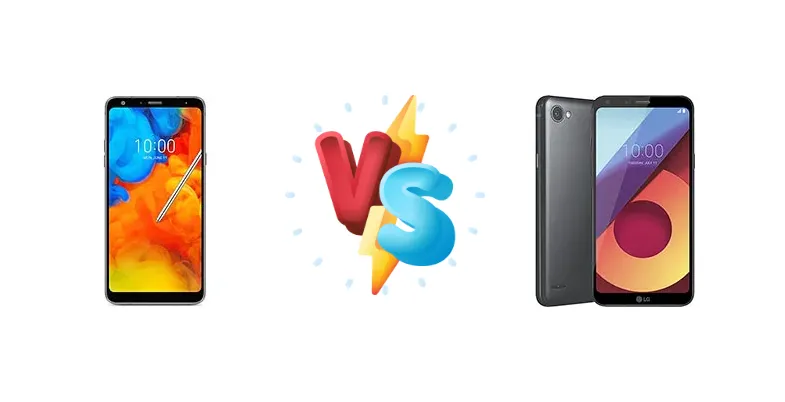
The LG Q Stylus and LG Q6 represent LG’s attempt to deliver feature-rich smartphones at accessible price points. While both phones share a similar aesthetic and target budget-conscious consumers, they diverge significantly in their core offerings – namely, the integrated stylus of the Q Stylus and the more streamlined experience of the Q6. This comparison dissects these differences, focusing on performance, battery life, and the practical benefits of each device.
🏆 Quick Verdict
For the average user prioritizing a smooth, responsive experience and solid battery life, the LG Q6 emerges as the better choice. Its Qualcomm Snapdragon 435 chipset, while not a powerhouse, offers a more consistent performance profile than the Mediatek MT6750 in the Q Stylus, and both phones share identical battery endurance ratings.
| Network |
|---|
| 2G bands | GSM 850 / 900 / 1800 / 1900 | GSM 850 / 900 / 1800 / 1900 - SIM 1 & SIM 2 (dual-SIM model only) |
| 3G bands | HSDPA 850 / 900 / 1900 / 2100 | HSDPA 850 / 900 / 1900 / 2100 |
| 4G bands | 1, 3, 5, 7, 8, 28, 38, 39, 40, 41 | 1, 3, 4, 5, 7, 8, 12, 17, 20, 28, 38 |
| Speed | HSPA, LTE | HSPA 42.2/5.76 Mbps, LTE (2CA) Cat7 300/100 Mbps |
| Technology | GSM / HSPA / LTE | GSM / HSPA / LTE |
| Launch |
|---|
| Announced | 2018, June. Released 2018, August | 2017, July. Released 2017, August |
| Status | Discontinued | Discontinued |
| Body |
|---|
| Build | Glass front, plastic back, aluminum frame | Glass front (Gorilla Glass 3), plastic back, aluminum frame |
| Dimensions | 160.1 x 77.7 x 8.1 mm (6.30 x 3.06 x 0.32 in) | 142.5 x 69.3 x 8.1 mm (5.61 x 2.73 x 0.32 in) |
| SIM | · Nano-SIM· Nano-SIM + Nano-SIM | · Nano-SIM· Nano-SIM + Nano-SIM |
| Weight | 171 g (6.03 oz) | 149 g (5.26 oz) |
| | Stylus
IP68 dust/water resistant (up to 1.5m for 30 mins)
MIL-STD-810G compliant*
*does not guarantee ruggedness or use in extreme conditions | MIL-STD-810G compliant*
*does not guarantee ruggedness or use in extreme conditions |
| Display |
|---|
| Protection | - | Corning Gorilla Glass 3 |
| Resolution | 1080 x 2160 pixels, 18:9 ratio (~389 ppi density) | 1080 x 2160 pixels, 18:9 ratio (~442 ppi density) |
| Size | 6.2 inches, 99.7 cm2 (~80.2% screen-to-body ratio) | 5.5 inches, 77.0 cm2 (~78.0% screen-to-body ratio) |
| Type | IPS LCD | IPS LCD |
| Platform |
|---|
| CPU | Octa-core (4x1.5 GHz Cortex-A53 & 4x1.0 GHz Cortex-A53) - Q Stylus/Q Stylus αOcta-core 1.8 GHz | Octa-core 1.4 GHz Cortex-A53 |
| Chipset | Mediatek MT6750 - Q Stylus/Q Stylus α | Qualcomm MSM8940 Snapdragon 435 (28 nm) |
| GPU | Mali-T860MP2 - Q Stylus/Q Stylus α | Adreno 505 |
| OS | Android 8.1 (Oreo) | Android 7.1.1 (Nougat), upgradable to Android 8.0 (Oreo), LG UI 5.0 |
| Memory |
|---|
| Card slot | microSDXC (dedicated slot) | microSDXC (dedicated slot) |
| Internal | 32GB 3GB RAM, 64GB 4GB RAM | 16GB 2GB RAM, 32GB 3GB RAM, 64GB 4GB RAM |
| | eMMC 5.1 | eMMC 5.1 |
| Main Camera |
|---|
| Features | LED flash, panorama, HDR | LED flash, panorama |
| Single | 13 MP, PDAF (Q Stylus α)
16 MP, PDAF (Q Stylus/ Q Stylus+) | 13 MP, f/2.2, 1/3.1", 1.12µm, AF |
| Video | 1080p@30fps | 1080p@30fps |
| Selfie camera |
|---|
| Single | 8 MP or 5 MP - Q Stylus/Q Stylus+
5 MP - Q Stylus α | 5 MP, f/2.2, 1/5.0", 1.12µm |
| Sound |
|---|
| 3.5mm jack | Yes | Yes |
| 35mm jack | Yes | Yes |
| Loudspeaker | Yes | Yes |
| Comms |
|---|
| Bluetooth | 4.2, A2DP, LE | 4.2, A2DP, LE |
| NFC | Yes | Yes (market dependent) |
| Positioning | GPS, GLONASS, BDS, GALILEO | GPS, GLONASS |
| Radio | FM radio | Stereo FM radio with RDS |
| USB | USB Type-C 2.0 | microUSB 2.0, OTG |
| WLAN | Wi-Fi 802.11 b/g/n, Wi-Fi Direct, DLNA | Wi-Fi 802.11 b/g/n, Wi-Fi Direct |
| Features |
|---|
| Browser | - | HTML, Adobe Flash |
| Sensors | Fingerprint (rear-mounted), accelerometer, gyro, proximity, compass | Accelerometer, gyro, proximity, compass |
| Battery |
|---|
| Charging | 10W wired | - |
| Stand-by | - | Up to 372 h |
| Talk time | - | Up to 6 h |
| Type | Li-Ion 3300 mAh, non-removable | Li-Po 3000 mAh, non-removable |
| Misc |
|---|
| Colors | Aurora Black, Moroccan Blue, Lavender Violet | Astro Black, Ice Platinum, Mystic White, Terra Gold |
| Models | Q710, LM-Q710.FG | M700, M703, LGM-X600L, LGM-X600K, LGM-X600S, US700 |
| Price | About 300 EUR | About 110 EUR |
| SAR | - | 1.14 W/kg (head) |
| Tests |
|---|
| Audio quality | - |
Noise -85.0dB / Crosstalk -92.9dB |
| Battery life | - |
Endurance rating 69h
|
| Camera | - |
Photo / Video |
| Display | - |
Contrast ratio: 1771:1 (nominal), 2.987 (sunlight) |
| Loudspeaker | - |
Voice 67dB / Noise 69dB / Ring 76dB
|
| Performance | - |
GeekBench: 2244 (v4.4)
GFXBench: 2fps (ES 3.1 onscreen) |
LG Q Stylus
- Integrated Stylus for note-taking and drawing
- Slightly higher CPU clock speeds on some cores
- Potential for increased productivity with stylus features
- Less efficient Mediatek MT6750 chipset
- Slower charging speed (10W)
- Potentially lower sustained performance
LG Q6
- More efficient Qualcomm Snapdragon 435 chipset
- Potentially faster charging (unspecified)
- Smoother overall user experience
- Lacks integrated stylus functionality
- Lower CPU clock speed compared to Q Stylus
- No standout features beyond core functionality
Display Comparison
Both the LG Q Stylus and Q6 feature displays with a contrast ratio of 1771:1 (nominal) and 2.987 (sunlight), suggesting similar outdoor visibility. However, the specific panel technology and resolution are not specified, making a direct comparison difficult. The Q6’s display, while offering good contrast, likely benefits from Qualcomm’s display optimization features. Without knowing the exact panel type (IPS, TFT), it’s hard to assess color accuracy, but the shared contrast ratios suggest a comparable viewing experience in most conditions.
Camera Comparison
Both devices are listed as having 'Photo / Video' capabilities, but specific details regarding sensor size, aperture, or image processing are absent. Given their market segment, it’s safe to assume both feature basic camera setups. The absence of any mention of advanced features like Optical Image Stabilization (OIS) suggests image quality will be heavily reliant on software processing. Without further information, it’s impossible to declare a clear winner in the camera department; both likely deliver acceptable results in good lighting conditions.
Performance
The LG Q Stylus utilizes the Mediatek MT6750, an octa-core processor with a heterogeneous core configuration (4x1.5 GHz Cortex-A53 & 4x1.0 GHz Cortex-A53), while the LG Q6 is powered by the Qualcomm MSM8940 Snapdragon 435, an octa-core 1.4 GHz Cortex-A53. While both are entry-level chipsets, the Snapdragon 435, built on a 28nm process, generally offers better sustained performance and thermal management compared to the MT6750. The Q Stylus’s slightly higher clock speeds (up to 1.8 GHz) on some cores don’t necessarily translate to a faster real-world experience due to the MT6750’s less efficient architecture. This difference is most noticeable during multitasking and moderately demanding applications.
Battery Life
Both the LG Q Stylus and LG Q6 boast an endurance rating of 69 hours, indicating comparable battery life under similar usage patterns. However, the Q Stylus is limited to 10W wired charging, while the Q6’s charging speed is unspecified. This suggests the Q6 *may* charge slightly faster, but the identical endurance ratings mean neither phone excels in battery capacity or charging speed compared to modern standards. The stylus functionality of the Q Stylus could potentially impact battery life if used extensively.
Buying Guide
Buy the LG Q Stylus if you frequently take handwritten notes, sketch, or require precise input on a mobile device. The integrated stylus adds a layer of functionality absent in the Q6. Buy the LG Q6 if you prioritize a cleaner software experience, slightly better performance for everyday tasks, and a more consistently responsive user interface without the need for a stylus.
Frequently Asked Questions
❓ Is the Mediatek MT6750 in the Q Stylus capable of handling modern mobile games?
The Mediatek MT6750 can run many mobile games, but expect to play them on lower graphics settings. The chipset’s limitations will become apparent in demanding titles, leading to frame drops and potential overheating. The Snapdragon 435 in the Q6 offers a slightly more stable gaming experience, though neither phone is designed for hardcore gaming.
❓ How does the stylus on the LG Q Stylus compare to the S Pen on Samsung Galaxy devices?
The stylus on the LG Q Stylus is a basic input tool, lacking the advanced features and pressure sensitivity of Samsung’s S Pen. It’s suitable for simple note-taking and navigation, but it won’t offer the same level of precision or creative control as the S Pen. Consider it a functional addition, not a replacement for a high-end stylus experience.
❓ Does the LG Q6 support software updates beyond its initial release?
Given the age of both devices and their position in LG’s product lineup, significant software updates are unlikely. Expect security patches to be limited or non-existent. Both phones likely run older versions of Android, and upgrading to the latest version is improbable.