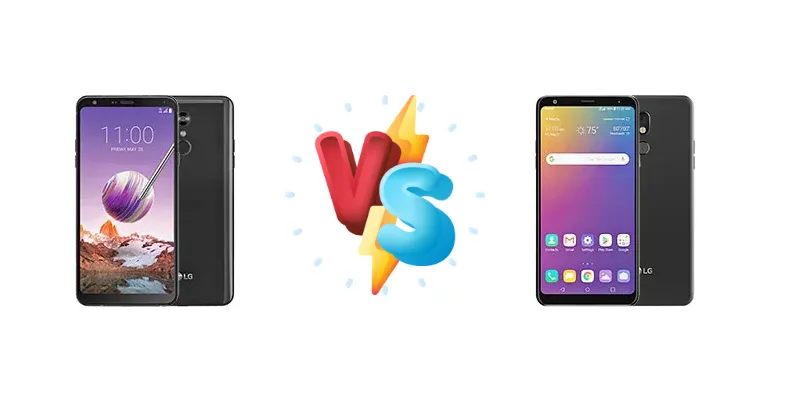
The LG Q Stylo 4 and LG Stylo 5 represent LG’s continued commitment to the affordable smartphone market. While both devices share the same Qualcomm Snapdragon 450 chipset, the Stylo 5 introduces key improvements in charging speed and display quality, prompting the question: are these upgrades enough to justify the price difference for the average user?
🏆 Quick Verdict
For most users, the LG Stylo 5 is the better choice. While the core performance remains identical due to the shared Snapdragon 450, the 20W charging and significantly improved display contrast ratio – particularly in sunlight – offer a more modern and usable experience. The Q Stylo 4 remains viable for extremely budget-conscious buyers.
| Network |
|---|
| 2G bands | GSM 850 / 900 / 1800 / 1900 | GSM 850 / 900 / 1800 / 1900 |
| 3G bands | HSDPA 850 / 900 / 1900 / 2100 | HSDPA 850 / 1700(AWS) / 1900 |
| 4G bands | 1, 2, 3, 4, 5, 7, 12, 13, 20, 38, 41, 66, 71 | 2, 4, 5, 12, 14, 29, 30, 66 |
| Speed | HSPA 42.2/5.76 Mbps, LTE (2CA) Cat6 300/50 Mbps | HSPA, LTE |
| Technology | GSM / HSPA / LTE | GSM / HSPA / LTE |
| Launch |
|---|
| Announced | 2018, June. Released 2018, June | 2019, June. Released 2019, June |
| Status | Discontinued | Discontinued |
| Body |
|---|
| Build | - | Glass front (Gorilla Glass 5), aluminum back, aluminum frame |
| Dimensions | 160 x 77.7 x 8.1 mm (6.30 x 3.06 x 0.32 in) | 160 x 77.7 x 8.4 mm (6.30 x 3.06 x 0.33 in) |
| SIM | Nano-SIM | Nano-SIM |
| Weight | 172 g (6.07 oz) | 179 g (6.31 oz) |
| | Stylus | Stylus |
| Display |
|---|
| Protection | - | Corning Gorilla Glass 5 |
| Resolution | 1080 x 2160 pixels, 18:9 ratio (~390 ppi density) | 1080 x 2160 pixels, 18:9 ratio (~390 ppi density) |
| Size | 6.2 inches, 99.2 cm2 (~79.8% screen-to-body ratio) | 6.2 inches, 99.2 cm2 (~79.8% screen-to-body ratio) |
| Type | IPS LCD | IPS LCD |
| Platform |
|---|
| CPU | Octa-core 1.8 GHz Cortex-A53 | Octa-core 1.8 GHz Cortex-A53 |
| Chipset | Qualcomm SDM450 Snapdragon 450 (14 nm) | Qualcomm SDM450 Snapdragon 450 (14 nm) |
| GPU | Adreno 506 | Adreno 506 |
| OS | Android 8.1 (Oreo), LG UX 7 | Android 9.0 (Pie) |
| Memory |
|---|
| Card slot | microSDXC (dedicated slot) | microSDXC (dedicated slot) |
| Internal | 32GB 2GB RAM | 32GB 3GB RAM |
| | eMMC 5.1 | eMMC 5.1 |
| Main Camera |
|---|
| Features | LED flash, panorama, HDR | LED flash, panorama, HDR |
| Single | 13 MP, f/2.4, PDAF | 13 MP, PDAF |
| Video | 1080p@30fps | 1080p@30fps |
| Selfie camera |
|---|
| Dual | - | 16 MP, f/2.0, 26mm (wide), 1/3.06", 1.0µm
8 MP |
| Single | 5 MP | 5 MP |
| Video | 720p | 1080p@30fps |
| Sound |
|---|
| 3.5mm jack | Yes | Yes |
| 35mm jack | Yes | Yes |
| Loudspeaker | Yes | Yes |
| Comms |
|---|
| Bluetooth | 4.2, A2DP, LE | 4.2, A2DP, LE |
| NFC | Yes | No |
| Positioning | GPS, GLONASS | GPS |
| Radio | No | No |
| USB | USB Type-C 2.0 | USB Type-C 2.0 |
| WLAN | Wi-Fi 802.11 a/b/g/n/ac, dual-band, Wi-Fi Direct, DLNA | Wi-Fi 802.11 a/b/g/n/ac, dual-band, Wi-Fi Direct |
| Features |
|---|
| Sensors | Fingerprint (rear-mounted), accelerometer, gyro, proximity, compass | Fingerprint (rear-mounted), accelerometer, proximity |
| Battery |
|---|
| Charging | 10W wired | 20W wired |
| Type | Li-Ion 3300 mAh, non-removable | Li-Ion 3500 mAh, non-removable |
| Misc |
|---|
| Colors | Aurora Black | Blonde Rose, Platinum Gray |
| Models | LM-Q710(FGN), LM-Q710.FGN, Q710AL, LML713DL, Q710PL | LM-Q720 |
| Price | About 250 EUR | About 200 EUR |
| SAR | 1.12 W/kg (head) 1.22 W/kg (body) | - |
| Tests |
|---|
| Audio quality | - |
Noise-93.5dB / Crosstalk -92.0dB |
| Battery life | - |
Endurance rating 79h
|
| Camera | - |
Photo / Video |
| Display |
240 USD |
Contrast ratio: 1485 (nominal), 3.218 (sunlight) |
| Loudspeaker | - |
Voice 62dB / Noise 69dB / Ring 70dB
|
| Performance | - |
GeekBench: 4695 (v4.4)
GFXBench: 6fps (ES 3.1 onscreen) |
LG Q Stylo 4
- Lowest possible price point
- Functional for basic smartphone tasks
- Reliable Qualcomm Snapdragon 450 chipset
- Slow 10W charging
- Inferior display contrast and sunlight visibility
- Limited camera capabilities (assumed)
LG Stylo 5
- Faster 20W charging
- Improved display contrast ratio (1485:1 nominal, 3.218:1 sunlight)
- Longer endurance rating (79h)
- Shares the same Snapdragon 450 chipset as the Q Stylo 4
- Likely a modest price premium over the Q Stylo 4
- Camera details are limited
Display Comparison
Both the LG Q Stylo 4 and LG Stylo 5 feature displays priced at $240, suggesting similar panel costs. However, the Stylo 5 distinguishes itself with a significantly improved contrast ratio – 1485:1 nominal and 3.218:1 in sunlight – compared to the Q Stylo 4’s unspecified ratio. This higher contrast translates to deeper blacks and more vibrant colors, especially noticeable outdoors. While neither device is expected to offer high peak brightness, the Stylo 5’s sunlight contrast suggests better visibility under direct sunlight. The Q Stylo 4’s display specifications lack this crucial sunlight readability metric, making the Stylo 5 a clear winner for outdoor use.
Camera Comparison
The context data for both devices is limited regarding camera specifics, only mentioning 'Photo / Video' capability for the Stylo 5. Given the budget nature of these phones, it’s unlikely either boasts a particularly impressive camera system. We can infer that the Q Stylo 4 likely features a simpler camera setup, while the Stylo 5 may have minor improvements in image processing or sensor quality. Without detailed sensor size or aperture information, a definitive camera comparison is impossible. It's reasonable to assume both rely heavily on software processing to enhance image quality.
Performance
The LG Q Stylo 4 and LG Stylo 5 are fundamentally identical in terms of processing power. Both are powered by the Qualcomm Snapdragon 450 (14nm) chipset with an octa-core 1.8 GHz Cortex-A53 CPU. This means application launch times, multitasking performance, and general responsiveness will be virtually indistinguishable between the two. The 14nm manufacturing process, while not cutting-edge, is adequate for basic smartphone tasks. Neither device is geared towards demanding gaming or intensive applications; performance will be sufficient for social media, web browsing, and light productivity.
Battery Life
The LG Stylo 5 offers a significant advantage in charging speed with 20W wired charging, doubling the 10W charging of the Q Stylo 4. While battery capacity isn’t specified for either device, the Stylo 5’s faster charging allows for a quicker top-up, reducing downtime. The Stylo 5 also boasts an endurance rating of 79 hours, indicating a well-optimized power management system. This suggests that, even with similar battery capacities, the Stylo 5’s efficiency and faster charging combine for a more convenient user experience.
Buying Guide
Buy the LG Q Stylo 4 if you prioritize minimizing upfront cost above all else and are comfortable with slower charging speeds and a less vibrant display. Buy the LG Stylo 5 if you value faster charging, a more visible screen in bright conditions, and a slightly more refined overall user experience, even if it means a modest price increase.
Frequently Asked Questions
❓ Does the Snapdragon 450 struggle with modern apps on either the LG Q Stylo 4 or LG Stylo 5?
The Snapdragon 450 is a capable processor for basic smartphone tasks like calling, texting, social media, and web browsing. However, it will show its age with demanding apps or graphically intensive games. Expect some lag and slowdowns when multitasking heavily or running resource-intensive applications on both devices.
❓ How much faster is the 20W charging on the LG Stylo 5 compared to the 10W charging on the LG Q Stylo 4 in real-world use?
The 20W charging on the Stylo 5 will significantly reduce charging times. While exact 0-100% times aren't available, you can expect the Stylo 5 to charge roughly twice as fast as the Q Stylo 4. This means a quick top-up during a short break is much more feasible with the Stylo 5.
❓ Is the improved contrast ratio on the LG Stylo 5 noticeable in everyday use?
Yes, the higher contrast ratio on the Stylo 5 will be noticeable, especially when viewing photos, videos, and dark-themed content. Blacks will appear deeper, and colors will be more vibrant, leading to a more immersive viewing experience. The improvement in sunlight readability is also a significant benefit.