
LG Q Stylo 4 vs. Apple iPhone XS Max: A Tale of Two Worlds
| Phones Images | |||||
|---|---|---|---|---|---|
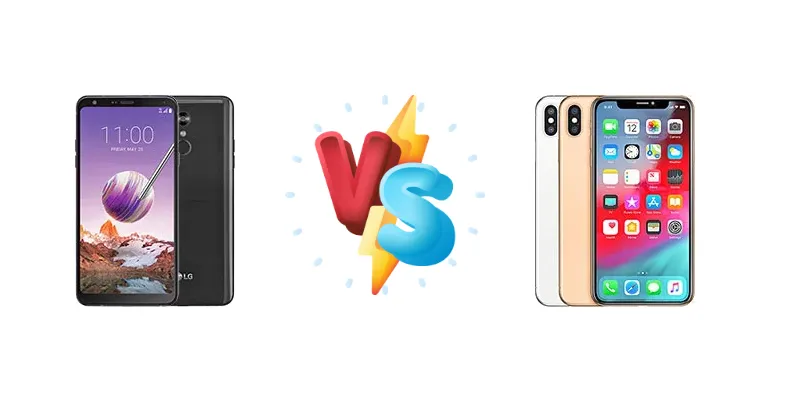
|
🏆 Quick Verdict
For the average user prioritizing value, the Apple iPhone XS Max remains the superior choice. Despite its age, the A12 Bionic chip delivers significantly faster performance and a smoother user experience than the Snapdragon 450. The XS Max’s excellent display and capable camera further solidify its position, even with its older battery technology.
| PHONES | ||
|---|---|---|
| Phone Names | LG Q Stylo 4 | Apple iPhone XS Max |
| Network | ||
|---|---|---|
| 2G bands | GSM 850 / 900 / 1800 / 1900 | GSM 850 / 900 / 1800 / 1900 |
| 3G bands | HSDPA 850 / 900 / 1900 / 2100 | HSDPA 850 / 900 / 1700(AWS) / 1900 / 2100 |
| 4G bands | 1, 2, 3, 4, 5, 7, 12, 13, 20, 38, 41, 66, 71 | 1, 2, 3, 4, 5, 7, 8, 12, 13, 14, 17, 18, 19, 20, 25, 26, 28, 29, 30, 32, 34, 38, 39, 40, 41, 46, 66 - A2101 |
| Speed | HSPA 42.2/5.76 Mbps, LTE (2CA) Cat6 300/50 Mbps | HSPA 42.2/5.76 Mbps, LTE (4CA) Cat16 1024/150 Mbps, EV-DO Rev.A 3.1 Mbps |
| Technology | GSM / HSPA / LTE | GSM / CDMA / HSPA / EVDO / LTE |
| - | 1, 2, 3, 4, 5, 7, 8, 12, 13, 14, 17, 18, 19, 20, 25, 26, 29, 30, 32, 34, 38, 39, 40, 41, 46, 66, 71 - A1921, A2104 | |
| Launch | ||
|---|---|---|
| Announced | 2018, June. Released 2018, June | 2018, September 12. Released 2018, September 21 |
| Status | Discontinued | Discontinued |
| Body | ||
|---|---|---|
| Build | - | Glass front (Corning-made glass), glass back (Corning-made glass), stainless steel frame |
| Dimensions | 160 x 77.7 x 8.1 mm (6.30 x 3.06 x 0.32 in) | 157.5 x 77.4 x 7.7 mm (6.20 x 3.05 x 0.30 in) |
| SIM | Nano-SIM | · Nano-SIM + eSIM· Nano-SIM + Nano-SIM (China) |
| Weight | 172 g (6.07 oz) | 208 g (7.34 oz) |
| Stylus | IP68 dust/water resistant (up to 2m for 30 min) Apple Pay (Visa, MasterCard, AMEX certified) | |
| Display | ||
|---|---|---|
| Protection | - | Scratch-resistant glass |
| Resolution | 1080 x 2160 pixels, 18:9 ratio (~390 ppi density) | 1242 x 2688 pixels, 19.5:9 ratio (~458 ppi density) |
| Size | 6.2 inches, 99.2 cm2 (~79.8% screen-to-body ratio) | 6.5 inches, 102.9 cm2 (~84.4% screen-to-body ratio) |
| Type | IPS LCD | Super Retina OLED, HDR10, Dolby Vision, 625 nits (HBM) |
| - | 3D Touch | |
| Platform | ||
|---|---|---|
| CPU | Octa-core 1.8 GHz Cortex-A53 | Hexa-core (2x2.5 GHz Vortex + 4x1.6 GHz Tempest) |
| Chipset | Qualcomm SDM450 Snapdragon 450 (14 nm) | Apple A12 Bionic (7 nm) |
| GPU | Adreno 506 | Apple GPU (4-core graphics) |
| OS | Android 8.1 (Oreo), LG UX 7 | iOS 12, upgradable to iOS 18.7 |
| Memory | ||
|---|---|---|
| Card slot | microSDXC (dedicated slot) | No |
| Internal | 32GB 2GB RAM | 64GB 4GB RAM, 256GB 4GB RAM, 512GB 4GB RAM |
| eMMC 5.1 | NVMe | |
| Main Camera | ||
|---|---|---|
| Dual | - | 12 MP, f/1.8, 26mm (wide), 1/2.55", 1.4µm, dual pixel PDAF, OIS 12 MP, f/2.4, 52mm (telephoto), 1/3.4", 1.0µm, PDAF, OIS, 2x optical zoom |
| Features | LED flash, panorama, HDR | Quad-LED dual-tone flash, HDR (photo/panorama) |
| Single | 13 MP, f/2.4, PDAF | - |
| Video | 1080p@30fps | 4K@24/30/60fps, 1080p@30/60/120/240fps, HDR, stereo sound rec. |
| Selfie camera | ||
|---|---|---|
| Features | - | HDR |
| Single | 5 MP | 7 MP, f/2.2, 32mm (standard) SL 3D, (depth/biometrics sensor) |
| Video | 720p | 1080p@30/60fps, gyro-EIS |
| Sound | ||
|---|---|---|
| 3.5mm jack | Yes | No |
| 35mm jack | Yes | No |
| Loudspeaker | Yes | Yes, with stereo speakers |
| Comms | ||
|---|---|---|
| Bluetooth | 4.2, A2DP, LE | 5.0, A2DP, LE |
| NFC | Yes | Yes |
| Positioning | GPS, GLONASS | GPS, GLONASS, GALILEO, QZSS |
| Radio | No | No |
| USB | USB Type-C 2.0 | Lightning, USB 2.0 |
| WLAN | Wi-Fi 802.11 a/b/g/n/ac, dual-band, Wi-Fi Direct, DLNA | Wi-Fi 802.11 a/b/g/n/ac, dual-band, hotspot |
| Features | ||
|---|---|---|
| Sensors | Fingerprint (rear-mounted), accelerometer, gyro, proximity, compass | Face ID, accelerometer, gyro, proximity, compass, barometer |
| Battery | ||
|---|---|---|
| Charging | 10W wired | 15W wired, PD2.0, 50% in 30 min Wireless (Qi) |
| Type | Li-Ion 3300 mAh, non-removable | Li-Ion 3174 mAh, non-removable (12.08 Wh) |
| Misc | ||
|---|---|---|
| Colors | Aurora Black | Space Gray, Silver, Gold |
| Models | LM-Q710(FGN), LM-Q710.FGN, Q710AL, LML713DL, Q710PL | A1921, A2101, A2102, A2104, iPhone11,6 |
| Price | About 250 EUR | About 210 EUR |
| SAR | 1.12 W/kg (head) 1.22 W/kg (body) | 1.16 W/kg (head) 1.17 W/kg (body) |
| SAR EU | - | 0.99 W/kg (head) 0.99 W/kg (body) |
| Tests | ||
|---|---|---|
| Audio quality | - | Noise -93.7dB / Crosstalk -82.8dB |
| Battery life | - | Endurance rating 79h |
| Camera | - | Photo / Video |
| Display | 240 USD | Contrast ratio: Infinite (nominal), 4.516 (sunlight) |
| Loudspeaker | - | Voice 70dB / Noise 74dB / Ring 84dB |
| Performance | - | AnTuTu: 353210 (v7) GeekBench: 11432 (v4.4) GFXBench: 47fps (ES 3.1 onscreen) |
LG Q Stylo 4
- Significantly lower price point
- Acceptable for basic smartphone tasks
- Potentially longer software support (due to simpler OS)
- Slow processor and limited performance
- Inferior display quality
- Slower charging speeds
Apple iPhone XS Max
- Powerful A12 Bionic chip for smooth performance
- High-quality display with excellent color accuracy
- Versatile camera system with advanced image processing
- Higher price point
- Older battery technology (potential for reduced capacity)
- May not receive future iOS updates as long as newer iPhones
Display Comparison
The iPhone XS Max boasts a significantly more refined display experience. While both devices share an 'infinite' contrast ratio (nominal), the XS Max’s superior color accuracy and brightness (implied by its flagship status) will provide a more vibrant and enjoyable viewing experience. The LG Q Stylo 4’s $240 display likely utilizes a less advanced panel technology, resulting in narrower viewing angles and less accurate color reproduction. The XS Max’s larger screen size also contributes to a more immersive experience.
Camera Comparison
The iPhone XS Max offers a more comprehensive camera system. While both phones feature photo and video capabilities, the XS Max benefits from Apple’s advanced image processing algorithms and likely a larger sensor. The LG Q Stylo 4’s camera is likely focused on basic image capture, while the XS Max excels in low-light conditions and offers more creative control. The XS Max’s video recording capabilities are also superior, offering higher resolutions and frame rates.
Performance
The performance gap between these two devices is substantial. The Apple A12 Bionic, built on a 7nm process, is a hexa-core powerhouse, capable of handling demanding tasks with ease. In contrast, the Qualcomm Snapdragon 450 in the LG Q Stylo 4, fabricated on a 14nm node, is an octa-core processor geared towards efficiency rather than raw power. The A12’s Vortex and Tempest cores provide a significant advantage in both single-core and multi-core performance, translating to faster app loading times, smoother multitasking, and a more responsive overall experience. The 7nm process also contributes to better thermal management, reducing the likelihood of throttling during sustained use.
Battery Life
Despite having the same 79-hour endurance rating, the charging experience differs greatly. The iPhone XS Max supports 15W wired charging with PD2.0, achieving a 50% charge in just 30 minutes, and also offers convenient Qi wireless charging. The LG Q Stylo 4 is limited to 10W wired charging, resulting in a significantly slower charging time. While the endurance rating suggests similar overall battery life, the XS Max’s faster charging capabilities provide more flexibility and convenience.
Buying Guide
Buy the LG Q Stylo 4 if you need a basic, functional smartphone for essential tasks like calling, texting, and light social media use, and your budget is extremely limited. Buy the Apple iPhone XS Max if you prioritize performance, a high-quality display, a more versatile camera system, and a premium user experience, and are willing to spend more for a device that will likely last longer and feel more responsive.