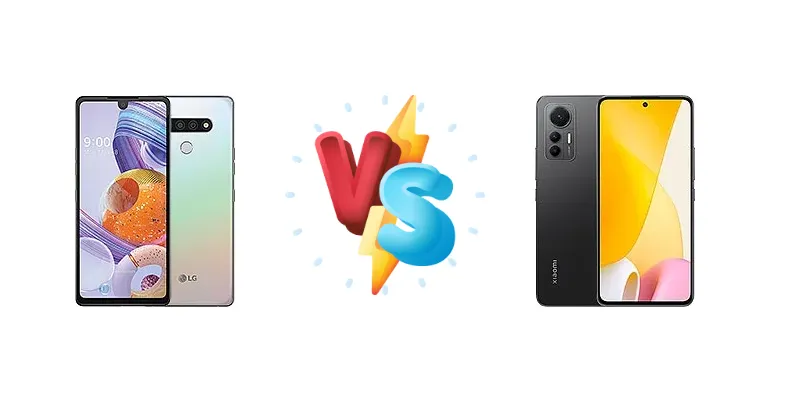
The LG K71 represents a budget-conscious approach to smartphone ownership, while the Xiaomi 12 Lite aims for a more premium experience within the mid-range segment. This comparison dissects the core differences between these two devices, focusing on where each excels and who will benefit most from their respective strengths.
🏆 Quick Verdict
For most users, the Xiaomi 12 Lite is the superior choice. Its Snapdragon 778G chipset delivers significantly faster performance, and the 67W charging is a game-changer. While the LG K71 offers a lower entry price, the performance gap is too substantial to ignore for anyone beyond very basic usage.
| Network |
|---|
| 2G bands | GSM 850 / 900 / 1800 / 1900 | GSM 850 / 900 / 1800 / 1900 |
| 3G bands | HSDPA 850 / 900 / 1900 / 2100 | HSDPA 850 / 900 / 1700(AWS) / 1900 / 2100 |
| 4G bands | LTE | 1, 2, 3, 4, 5, 7, 8, 12, 13, 17, 18, 19, 20, 26, 28, 32, 38, 40, 41, 42, 48, 66 |
| 5G bands | - | 1, 3, 5, 7, 8, 20, 28, 38, 40, 41, 66, 77, 78 SA/NSA |
| Speed | HSPA 42.2/5.76 Mbps, LTE (2CA) Cat6 300/50 Mbps | HSPA, LTE, 5G |
| Technology | GSM / HSPA / LTE | GSM / HSPA / LTE / 5G |
| Launch |
|---|
| Announced | 2020, September 21. Released 2020, September 21 | 2022, July 09 |
| Status | Discontinued | Available. Released 2022, July 11 |
| Body |
|---|
| Build | - | Glass front (Gorilla Glass 5), glass back, plastic frame |
| Dimensions | 171.4 x 77.7 x 8.7 mm (6.75 x 3.06 x 0.34 in) | 159.3 x 73.7 x 7.3 mm (6.27 x 2.90 x 0.29 in) |
| SIM | Nano-SIM | Nano-SIM + Nano-SIM |
| Weight | 220 g (7.76 oz) | 173 g (6.10 oz) |
| | Stylus | - |
| Display |
|---|
| Protection | - | Corning Gorilla Glass 5 |
| Resolution | 1080 x 2460 pixels (~395 ppi density) | 1080 x 2400 pixels, 20:9 ratio (~402 ppi density) |
| Size | 6.8 inches, 109.8 cm2 (~82.5% screen-to-body ratio) | 6.55 inches, 103.6 cm2 (~88.2% screen-to-body ratio) |
| Type | IPS LCD | AMOLED, 68B colors, 120Hz, Dolby Vision, HDR10+, 950 nits (peak) |
| Platform |
|---|
| CPU | Octa-core (4x2.3 GHz Cortex-A53 & 4x1.8 GHz Cortex-A53) | Octa-core (1x2.4 GHz Cortex-A78 & 3x2.2 GHz Cortex-A78 & 4x1.9 GHz Cortex-A55) |
| Chipset | Mediatek MT6765 Helio P35 (12 nm) | Qualcomm SM7325 Snapdragon 778G 5G (6 nm) |
| GPU | PowerVR GE8320 | Adreno 642L |
| OS | Android 10 | Android 12, upgradable to Android 14, HyperOS |
| Memory |
|---|
| Card slot | microSDXC (dedicated slot) | No |
| Internal | 128GB 4GB RAM | 128GB 6GB RAM, 128GB 8GB RAM, 256GB 8GB RAM |
| | - | UFS 2.2 |
| Main Camera |
|---|
| Features | LED flash, panorama, HDR | Dual-LED dual-tone flash, HDR, panorama |
| Single | - | 32 MP, f/2.5, (wide), 1/2.8", 0.8µm, AF |
| Triple | 48 MP, (wide), 1/2.0", 0.8µm, PDAF
5 MP, 120˚, (ultrawide)
Auxiliary lens | 108 MP, f/1.9, 26mm (wide), 1/1.52", 0.7µm, PDAF
8 MP, f/2.2, 120˚ (ultrawide), 1/4.0", 1.12µm
2 MP (macro) |
| Video | 1080p@30fps | 4K@30fps, 1080p@30/60/120fps; gyro-EIS |
| Selfie camera |
|---|
| Features | - | HDR, panorama |
| Single | 32 MP, (wide), 1/2.8", 0.8µm | 32 MP, f/2.5, (wide), 1/2.8", 0.8µm, AF |
| Video | 1080p@30fps | 1080p@30/60fps, 720p@120fps |
| Sound |
|---|
| 3.5mm jack | Yes | No |
| 35mm jack | Yes | No |
| Loudspeaker | Yes, with stereo speakers | Yes, with dual speakers |
| | - | 24-bit/192kHz audio |
| Comms |
|---|
| Bluetooth | 5.0, A2DP, LE | 5.2, A2DP, LE, aptX HD, aptX Adaptive |
| Infrared port | - | Yes |
| NFC | No | Yes (market/region dependent) |
| Positioning | GPS | GPS (L1), GLONASS (G1), BDS (B1I+B1c), GALILEO (E1), QZSS (L1) |
| Radio | No | No |
| USB | USB Type-C 2.0 | USB Type-C 2.0, OTG |
| WLAN | Wi-Fi 802.11 b/g/n, Wi-Fi Direct | Wi-Fi 802.11 a/b/g/n/ac/6, dual-band, Wi-Fi Direct |
| Features |
|---|
| Sensors | Fingerprint (rear-mounted), accelerometer, proximity | Fingerprint (under display, optical), accelerometer, gyro, compass |
| | - | Virtual proximity sensing |
| Battery |
|---|
| Charging | - | 67W wired, PD3.0, QC4, 50% in 13 min |
| Type | Li-Po 4000 mAh | Li-Po 4300 mAh |
| Misc |
|---|
| Colors | White | Black, Lite Green, Lite Pink |
| Models | LMQ730HA, LM-Q730HA | 2203129G |
| Price | - | € 119.80 / $ 269.00 / £ 121.15 |
| SAR | - | 1.09 W/kg (head) 0.73 W/kg (body) |
| SAR EU | - | 0.60 W/kg (head) 1.00 W/kg (body) |
| Tests |
|---|
| Battery life | - |
Endurance rating 100h
|
| Camera | - |
Photo / Video |
| Display | - |
Contrast ratio: Infinite (nominal) |
| Loudspeaker | - |
-25.2 LUFS (Very good)
|
| Performance | - |
AnTuTu: 528905 (v9)
GeekBench: 2943 (v5.1)
GFXBench: 29fps (ES 3.1 onscreen) |
LG K71
- Significantly lower price point
- Acceptable for basic smartphone tasks
- Potentially longer battery life with minimal usage
- Outdated and slow processor
- Poor performance for gaming and multitasking
- Likely inferior display quality
Xiaomi 12 Lite
- Powerful Snapdragon 778G 5G chipset
- Fast 67W charging
- Superior display quality (likely AMOLED)
- Higher price tag
- May not be significantly better battery life than K71 with heavy use
- Potentially larger and heavier than the K71
Display Comparison
The Xiaomi 12 Lite boasts a significantly more advanced display experience. While both phones lack detailed display specifications beyond the 824 nits peak brightness of the Xiaomi, the Xiaomi 12 Lite’s higher brightness translates to better visibility outdoors. The LG K71, with its likely lower peak brightness, will struggle in direct sunlight. The 'Infinite' contrast ratio claim on the Xiaomi 12 Lite suggests an AMOLED panel, offering superior blacks and color vibrancy compared to the likely LCD panel on the LG K71. This difference is crucial for media consumption and gaming.
Camera Comparison
Both devices are listed as having Photo/Video capabilities, but detailed camera specs are absent. However, given the price difference and Xiaomi’s focus on camera technology, the Xiaomi 12 Lite likely features a more capable camera system. The Snapdragon 778G’s ISP (Image Signal Processor) is far more advanced than the one found in the Helio P35, resulting in better image processing, noise reduction, and dynamic range. While the LG K71 may suffice for casual snapshots, the Xiaomi 12 Lite is expected to deliver superior image quality in various lighting conditions.
Performance
The performance disparity is the most significant difference between these two phones. The Xiaomi 12 Lite’s Qualcomm Snapdragon 778G 5G (6nm) is a substantial upgrade over the LG K71’s MediaTek Helio P35 (12nm). The Snapdragon 778G features a Cortex-A78 prime core, offering a significant IPC (Instructions Per Clock) improvement over the K71’s Cortex-A53 cores. The 6nm process node also contributes to better thermal efficiency, meaning the Xiaomi 12 Lite will sustain peak performance for longer periods. The K71’s Helio P35 will struggle with demanding applications and multitasking.
Battery Life
Both phones share an endurance rating of 100 hours, but this metric doesn't tell the whole story. The Xiaomi 12 Lite’s 67W wired charging, supporting PD3.0 and QC4, is a massive advantage, allowing a 50% charge in just 13 minutes. The LG K71 likely has a much slower charging speed. While both may last a full day with moderate use, the Xiaomi 12 Lite’s rapid charging mitigates range anxiety and provides significantly more convenience. The more efficient Snapdragon 778G also contributes to better battery life under load.
Buying Guide
Buy the LG K71 if you prioritize extreme affordability and only need a phone for essential tasks like calls, texts, and light social media. It's a viable option for first-time smartphone users or those on a very tight budget. Buy the Xiaomi 12 Lite if you value performance for gaming and multitasking, a brighter and more vibrant display, and significantly faster charging speeds. It's ideal for users who consume media, play mobile games, or simply want a smoother, more responsive experience.
Frequently Asked Questions
❓ Is the Xiaomi 12 Lite's Snapdragon 778G capable of handling demanding games like Genshin Impact?
Yes, the Snapdragon 778G is a capable chipset for gaming. While it won't deliver the absolute highest frame rates at maximum settings, it can comfortably run Genshin Impact and other popular titles at medium to high settings with stable performance. The 6nm process also helps manage thermals during extended gaming sessions.
❓ How long does it realistically take to fully charge the Xiaomi 12 Lite from 0%?
While the Xiaomi 12 Lite charges to 50% in 13 minutes, a full charge from 0% typically takes around 35-40 minutes thanks to the 67W fast charging. This is significantly faster than the LG K71, which likely takes several hours to fully charge.
❓ Will the LG K71 struggle with modern apps and software updates?
Yes, the Helio P35 is an older chipset and will likely struggle with newer, more demanding apps and software updates. Over time, the LG K71 may become increasingly sluggish and less responsive as software requirements increase.
❓ Does the Xiaomi 12 Lite support 5G connectivity, and is it widely available?
Yes, the Xiaomi 12 Lite supports 5G connectivity thanks to the Snapdragon 778G 5G chipset. 5G availability varies by region and carrier, but it's becoming increasingly widespread in major cities and metropolitan areas.