
Google Pixel 4a vs LG K62: A Detailed Comparison for Budget-Minded Buyers
| Phones Images | |||||
|---|---|---|---|---|---|
|
🏆 Quick Verdict
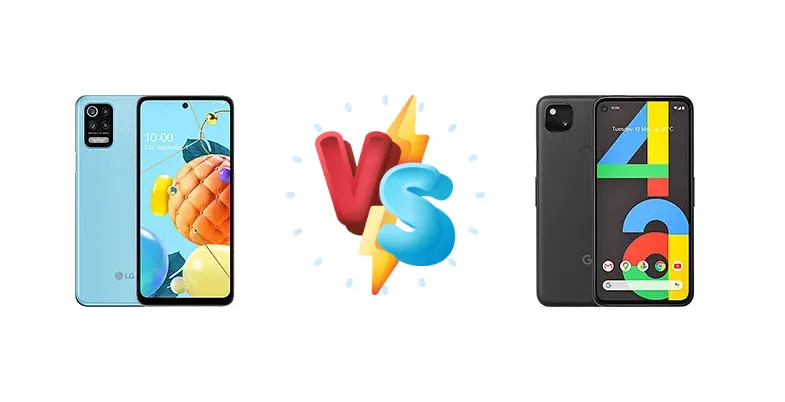
For most users, the Google Pixel 4a is the superior choice. Its Snapdragon 730G chipset provides significantly better performance than the LG K62’s Helio P35, and its camera capabilities are in a different league. While the K62 offers a lower price point, the Pixel 4a’s refined experience justifies the extra investment.
| PHONES | ||
|---|---|---|
| Phone Names | LG K62 | Google Pixel 4a |
| Network | ||
|---|---|---|
| 2G bands | GSM 850 / 900 / 1800 / 1900 | GSM 850 / 900 / 1800 / 1900 |
| 3G bands | HSDPA 850 / 900 / 1900 / 2100 | HSDPA 850 / 900 / 1700(AWS) / 1900 / 2100 |
| 4G bands | 1, 2, 3, 4, 5, 7, 8, 12, 13, 17, 28, 38, 66 - North America | 1, 2, 3, 4, 5, 7, 8, 12, 13, 14, 17, 18, 20, 25, 26, 28, 29, 30, 38, 39, 40, 41, 66, 71 |
| Speed | HSPA 42.2/5.76 Mbps, LTE (2CA) Cat6 300/50 Mbps | HSPA 42.2/5.76 Mbps, LTE (3CA) Cat12 600/75 Mbps |
| Technology | GSM / HSPA / LTE | GSM / HSPA / LTE |
| 1, 3, 5, 7, 28, 40 - Brazil | - | |
| Launch | ||
|---|---|---|
| Announced | 2020, September 23. Released 2020, November 27 | 2020, August 03 |
| Status | Discontinued | Available. Released 2020, August 20 |
| Body | ||
|---|---|---|
| Build | - | Glass front (Gorilla Glass 3), plastic back, plastic frame |
| Dimensions | 165 x 76.7 x 8.4 mm (6.50 x 3.02 x 0.33 in) | 144 x 69.4 x 8.2 mm (5.67 x 2.73 x 0.32 in) |
| SIM | Nano-SIM + Nano-SIM | Nano-SIM + eSIM |
| Weight | 186 g (6.56 oz) | 143 g (5.04 oz) |
| MIL-STD-810G compliant* *does not guarantee ruggedness or use in extreme conditions | - | |
| Display | ||
|---|---|---|
| Protection | - | Corning Gorilla Glass 3 |
| Resolution | 720 x 1600 pixels, 20:9 ratio (~266 ppi density) | 1080 x 2340 pixels, 19.5:9 ratio (~443 ppi density) |
| Size | 6.6 inches, 105.2 cm2 (~83.1% screen-to-body ratio) | 5.81 inches, 83.2 cm2 (~83.3% screen-to-body ratio) |
| Type | IPS LCD | OLED, HDR |
| - | Always-on display | |
| Platform | ||
|---|---|---|
| CPU | Octa-core (4x2.3 GHz Cortex-A53 & 4x1.8 GHz Cortex-A53) | Octa-core (2x2.2 GHz Kryo 470 Gold & 6x1.8 GHz Kryo 470 Silver) |
| Chipset | Mediatek MT6765 Helio P35 (12 nm) | Qualcomm SDM730 Snapdragon 730G (8 nm) |
| GPU | PowerVR GE8320 | Adreno 618 |
| OS | Android 10 | Android 10, upgradable to Android 13 |
| Memory | ||
|---|---|---|
| Card slot | microSDXC | No |
| Internal | 64GB 4GB RAM, 128GB 4GB RAM | 128GB 6GB RAM |
| - | UFS 2.1 | |
| Main Camera | ||
|---|---|---|
| Features | Dual-LED flash, panorama, HDR | LED flash, Pixel Shift, Auto-HDR, panorama |
| Quad | 48 MP, f/1.8, (wide), 1/2.0", 0.8µm, PDAF 5 MP, f/2.2, 115˚ (ultrawide), 1/5.0", 1.12µm 2 MP (macro) Auxiliary lens | - |
| Single | - | 12.2 MP, f/1.7, 27mm (wide), 1/2.55", 1.4µm, dual pixel PDAF, OIS |
| Video | 1080p@30fps | 4K@30fps, 1080p@30/60/120fps; gyro-EIS |
| Selfie camera | ||
|---|---|---|
| Features | - | HDR |
| Single | 28 MP | 8 MP, f/2.0, 24mm (wide), 1.12µm |
| Video | 1080p@30fps | 1080p@30fps |
| Sound | ||
|---|---|---|
| 3.5mm jack | Yes | Yes |
| 35mm jack | Yes | Yes |
| Loudspeaker | Yes | Yes, with stereo speakers |
| Comms | ||
|---|---|---|
| Bluetooth | 5.0, A2DP, LE | 5.0, A2DP, LE, aptX HD |
| NFC | Yes | Yes |
| Positioning | GPS | GPS, GLONASS, GALILEO, QZSS, BDS |
| Radio | No | No |
| USB | USB Type-C 3.1 | USB Type-C 3.1 |
| WLAN | Wi-Fi 802.11 a/b/g/n/ac, dual-band, Wi-Fi Direct | Wi-Fi 802.11 a/b/g/n/ac, dual-band, Wi-Fi Direct, DLNA |
| Features | ||
|---|---|---|
| Sensors | Fingerprint (side-mounted), accelerometer, proximity, compass | Fingerprint (rear-mounted), accelerometer, gyro, proximity, compass, barometer |
| Battery | ||
|---|---|---|
| Charging | - | 18W wired, PD2.0 |
| Type | Li-Po 4000 mAh | Li-Po 3140 mAh |
| Misc | ||
|---|---|---|
| Colors | White, Sky Blue, Red | Just Black, Barely Blue |
| Models | LMK525H, LMK525, LM-K525H, LM-K525 | G025J, GA02099, G025N |
| Price | About 290 EUR | $ 139.99 / C$ 159.99 |
| Tests | ||
|---|---|---|
| Battery life | - | Endurance rating 76h |
| Display | - | Contrast ratio: Infinite (nominal) |
| Performance | - | AnTuTu: 268714 (v8) GeekBench: 6426 (v4.4), 1626 (v5.1) GFXBench: 17fps (ES 3.1 onscreen) |
LG K62
- Superior camera performance thanks to Google’s software.
- Faster and more efficient Snapdragon 730G processor.
- Faster charging with PD2.0 support.
- Older model, potentially limited software support lifespan.
- May be harder to find new.
Google Pixel 4a
- Lower price point.
- Potentially larger display (size not specified).
- Long battery endurance rating.
- Significantly weaker performance with Helio P35.
- Inferior camera quality.
- Slower charging (likely).
Display Comparison
The Pixel 4a boasts a significantly brighter display, reaching 803 nits measured, compared to the LG K62’s unspecified brightness. This translates to better visibility outdoors. While both displays likely utilize IPS LCD technology (given the price points), the Pixel 4a’s higher brightness and infinite (nominal) contrast ratio provide a more vibrant and engaging viewing experience. The K62’s display specs are less defined, suggesting a more basic panel.
Camera Comparison
The Pixel 4a’s camera system is its standout feature. While specific sensor details aren’t provided in the context data, Google’s renowned computational photography algorithms elevate image quality far beyond what the hardware alone suggests. The LG K62 likely relies on more basic image processing, resulting in less dynamic range and detail. The absence of OIS (Optical Image Stabilization) on the K62, a common feature on Pixel phones, further widens the gap in low-light performance. The K62’s inclusion of a 2MP macro camera is largely a marketing gimmick, offering limited practical benefit.
Performance
The core difference lies in the chipsets. The Google Pixel 4a’s Qualcomm Snapdragon 730G (8nm) is a substantial upgrade over the LG K62’s MediaTek Helio P35 (12nm). The 8nm process node of the Snapdragon 730G offers superior power efficiency and thermal performance, allowing for sustained performance under load. The Snapdragon 730G’s CPU configuration – 2x2.2 GHz Kryo 470 Gold & 6x1.8 GHz Kryo 470 Silver – is architecturally more advanced than the K62’s Octa-core (4x2.3 GHz Cortex-A53 & 4x1.8 GHz Cortex-A53), resulting in faster app loading times and smoother multitasking. The K62 will struggle with demanding applications and games.
Battery Life
Both phones achieve an endurance rating of 76 hours, suggesting comparable battery life despite the K62’s unspecified battery capacity. However, the Pixel 4a’s 18W wired charging with PD2.0 support offers a faster and more efficient charging experience. The K62’s charging specifications are unknown, but likely slower. The Snapdragon 730G’s power efficiency also contributes to the Pixel 4a’s ability to maintain its endurance rating despite its more powerful processor.
Buying Guide
Buy the LG K62 if your primary need is a large screen for media consumption and basic tasks, and your budget is extremely limited. You’ll accept compromises in performance and camera quality. Buy the Google Pixel 4a if you prioritize a smooth user experience, excellent camera performance, and timely software updates, even if it means spending a bit more. The Pixel 4a is ideal for users who value photography and responsiveness.