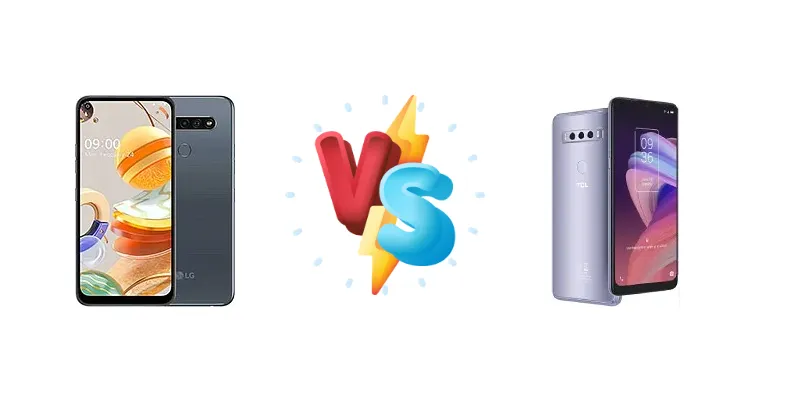
The LG K61 and TCL 10 SE represent the lower end of the smartphone market, targeting users prioritizing affordability. Both devices utilize Mediatek Helio chipsets, but differ in their processing power and features. This comparison dissects these differences to determine which phone delivers the best experience for the price.
🏆 Quick Verdict
For most users, the LG K61 emerges as the better choice. Its Helio P35 chipset, with its faster core clock speeds, provides a noticeable performance advantage over the TCL 10 SE’s Helio P22, making it more responsive for everyday tasks and light multitasking. While the TCL 10 SE offers 15W charging, the K61’s slightly better processing power offers a more fluid user experience.
| Network |
|---|
| 2G bands | GSM 850 / 900 / 1800 / 1900 | GSM 850 / 900 / 1800 / 1900 |
| 3G bands | HSDPA 850 / 900 / 1900 / 2100 | HSDPA 850 / 900 / 1700(AWS) / 1900 / 2100 |
| 4G bands | 1, 3, 5, 7, 8, 20, 28, 38, 39, 40 | 1, 2, 3, 5, 7, 8, 20, 28, 38, 40, 41 |
| Speed | HSPA 42.2/5.76 Mbps, LTE (2CA) Cat6 300/50 Mbps | HSPA 42.2/5.76 Mbps, LTE (2CA) Cat13 400/75 Mbps |
| Technology | GSM / HSPA / LTE | GSM / HSPA / LTE |
| | - | HSDPA 800 / 850 / 900 / 2100 |
| Launch |
|---|
| Announced | 2020, February 18. Released 2020, April 27 | 2020, July 09. Released 2020, July 21 |
| Status | Discontinued | Discontinued |
| Body |
|---|
| Dimensions | 164.5 x 77.5 x 8.4 mm (6.48 x 3.05 x 0.33 in) | 164.9 x 74.7 x 8.4 mm (6.49 x 2.94 x 0.33 in) |
| SIM | · Nano-SIM· Nano-SIM + Nano-SIM | · Nano-SIM· Nano-SIM + Nano-SIM |
| Weight | 191 g (6.74 oz) | 166 g (5.86 oz) |
| | MIL-STD-810G compliant*
*does not guarantee ruggedness or use in extreme conditions | - |
| Display |
|---|
| Protection | Scratch-resistant glass | - |
| Resolution | 1080 x 2340 pixels, 19.5:9 ratio (~394 ppi density) | 720 x 1600 pixels, 20:9 ratio (~269 ppi density) |
| Size | 6.53 inches, 105.2 cm2 (~82.5% screen-to-body ratio) | 6.52 inches, 102.6 cm2 (~83.3% screen-to-body ratio) |
| Type | IPS LCD | LCD |
| Platform |
|---|
| CPU | Octa-core (4x2.3 GHz Cortex-A53 & 4x1.8 GHz Cortex-A53) | Octa-core 2.0 GHz Cortex-A53 |
| Chipset | Mediatek MT6765 Helio P35 (12 nm) | Mediatek MT6762 Helio P22 (12 nm) |
| GPU | PowerVR GE8320 | PowerVR GE8320 |
| OS | Android 9.0 (Pie) | Android 10, TCL UI |
| Memory |
|---|
| Card slot | microSDXC (dedicated slot) | microSDXC (uses shared SIM slot) |
| Internal | 64GB 4GB RAM, 128GB 4GB RAM | 128GB 4GB RAM |
| Main Camera |
|---|
| Features | LED flash, panorama, HDR | Dual-LED flash, HDR, panorama |
| Quad | 48 MP, f/1.8, 26mm (wide), 1/2.0", 0.8µm, PDAF
8 MP, f/2.2, 118˚, (ultrawide)
2 MP (macro)
Auxiliary lens | - |
| Triple | - | 48 MP, f/1.8, 26mm (wide), 1/2.0", 0.8µm, PDAF
5 MP, f/2.2, 115˚ (ultrawide), 1.12µm
Auxiliary lens |
| Video | 1080p@30fps | 1080p@30fps |
| Selfie camera |
|---|
| Single | 16 MP | 8 MP, f/2.0, 26mm (wide), 1/4.0", 1.12µm
or
13 MP, f/2.2, 26mm (wide), 1/3.1", 1.12µm |
| Video | 1080p@30fps | 1080p@30fps |
| Sound |
|---|
| 3.5mm jack | Yes | Yes |
| 35mm jack | Yes | Yes |
| Loudspeaker | Yes | Yes |
| Comms |
|---|
| Bluetooth | 5.0, A2DP, LE | 5.0, A2DP, LE, aptX |
| NFC | Yes | Yes |
| Positioning | GPS | GPS, GLONASS, GALILEO, BDS |
| Radio | No | FM radio |
| USB | USB Type-C 2.0 | USB Type-C 2.0, OTG |
| WLAN | Wi-Fi 802.11 b/g/n, Wi-Fi Direct, DLNAorWi-Fi 802.11 a/b/g/n/ac, dual-band, Wi-Fi Direct, DNLA | Wi-Fi 802.11 a/b/g/n/ac, dual-band, Wi-Fi Direct |
| Features |
|---|
| Sensors | Fingerprint (rear-mounted), accelerometer, gyro, proximity, compass | Fingerprint (rear-mounted), accelerometer, gyro, proximity, compass |
| Battery |
|---|
| Charging | - | 15W wired |
| Type | Li-Po 4000 mAh | Li-Po 4000 mAh |
| Misc |
|---|
| Colors | Titanium, White, Blue | Black, Violet |
| Models | LMQ630EAW, LM-Q630EAW, LM-Q630 | T766H_EEA, T766U, T766H, T766A, T766J |
| Price | About 300 EUR | - |
LG K61
- More powerful Helio P35 processor
- Potentially better image processing
- More responsive user experience
- Likely slower charging speeds
- Battery capacity unknown
TCL 10 SE
- 15W fast charging
- Affordable price point
- Potentially longer battery life (depending on capacity)
- Less powerful Helio P22 processor
- Slower app loading times
- Potential for lag during multitasking
Display Comparison
Neither LG nor TCL provide detailed display specifications beyond resolution in their marketing materials. Given the price point, both likely utilize IPS LCD panels. The absence of high refresh rates or advanced features like HDR is expected. The real-world difference in display quality will likely be minimal, focusing on color accuracy and viewing angles, which are difficult to assess without direct comparison. Bezels are expected to be substantial on both devices, typical of this price bracket.
Camera Comparison
Both phones likely feature a multi-camera setup, but detailed sensor information is scarce. Focusing on the primary sensors is crucial. Without specific megapixel counts or aperture details, it’s difficult to definitively declare a winner. However, the K61’s more powerful processor could potentially enable slightly better image processing, resulting in marginally improved image quality. The inclusion of 2MP macro or depth sensors on either device should be considered marketing fluff rather than significant photographic enhancements.
Performance
The core difference lies in the chipsets. The LG K61’s Mediatek Helio P35 features an octa-core configuration split into 4x2.3 GHz Cortex-A53 cores and 4x1.8 GHz Cortex-A53 cores. This contrasts with the TCL 10 SE’s Helio P22, which utilizes a uniform octa-core 2.0 GHz Cortex-A53 setup. The higher clock speeds on the K61’s cores translate to faster processing, particularly noticeable when launching apps or switching between them. While both are 12nm chips, the P35’s architecture provides a performance edge. The TCL 10 SE will likely exhibit more noticeable lag during demanding tasks.
Battery Life
Battery capacity is not specified for either device. However, the TCL 10 SE’s 15W wired charging is a clear advantage. While the LG K61’s charging speed is unknown, it’s likely slower. This means the TCL 10 SE will reach a full charge more quickly, a benefit for users who frequently need to top up their battery. The actual battery life will depend on usage patterns, but the faster charging of the TCL 10 SE provides a practical benefit.
Buying Guide
Buy the LG K61 if you need a phone that feels more responsive for daily use, even if it's just for browsing, social media, and messaging. The slightly more powerful processor will handle these tasks with less lag. Buy the TCL 10 SE if you prioritize faster charging and are willing to accept a trade-off in processing speed. It’s a reasonable option for users with very basic smartphone needs and limited budgets.
Frequently Asked Questions
❓ Will the TCL 10 SE struggle with popular social media apps like TikTok and Instagram?
The Helio P22 in the TCL 10 SE is a basic processor. While it can run these apps, you may experience noticeable lag when scrolling through feeds or recording videos. The LG K61, with its Helio P35, will offer a smoother experience for these types of applications.
❓ Is the difference in performance between the Helio P35 and P22 noticeable for everyday tasks like calling and texting?
For basic tasks like making calls and sending texts, the difference will be minimal. However, when opening apps, switching between them, or browsing the web, the LG K61’s Helio P35 will feel noticeably faster and more responsive.
❓ Does either phone support Wi-Fi 5 (802.11ac)?
While not explicitly stated, both devices, given their chipset generation, likely support Wi-Fi 5 (802.11ac). This provides adequate wireless connectivity for most users, enabling faster download and upload speeds compared to older Wi-Fi standards.