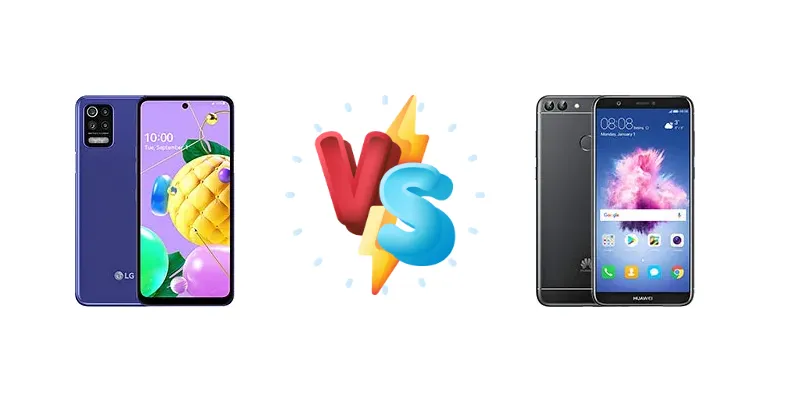
The LG K52 and Huawei P smart represent a shrinking segment of the smartphone market: truly affordable Android devices. Both phones aim to deliver essential functionality without breaking the bank, but they take different approaches to achieving this. This comparison dives deep into their specifications to determine which offers the best value for budget-conscious consumers.
🏆 Quick Verdict
For most users, the Huawei P smart edges out the LG K52. While both share similar CPU architectures, the P smart’s Kirin 659, built on a 16nm process, offers a slight efficiency advantage. Crucially, the P smart boasts a 73-hour endurance rating, making it the better choice for users prioritizing battery life.
| Network |
|---|
| 2G bands | GSM 850 / 900 / 1800 / 1900 | GSM 850 / 900 / 1800 / 1900 - SIM 1 & SIM 2 (dual-SIM model only) |
| 3G bands | HSDPA 850 / 900 / 1700(AWS) / 1900 / 2100 - International | HSDPA 850 / 900 / 1900 / 2100 - LX1 |
| 4G bands | 1, 2, 3, 4, 5, 7, 8, 12, 13, 17, 28, 38, 66 - International | 1, 3, 7, 8, 20 - LX1 |
| Speed | HSPA, LTE | HSPA 42.2/5.76 Mbps, LTE (2CA) Cat6 300/50 Mbps |
| Technology | GSM / HSPA / LTE | GSM / HSPA / LTE |
| | 1, 3, 5, 7, 8, 20, 28, 38, 39, 40, 41 - Australia | - |
| Launch |
|---|
| Announced | 2020, September 23. Released 2020, November 23 | 2017, December. Released 2017, December |
| Status | Discontinued | Discontinued |
| Body |
|---|
| Build | - | Glass front, aluminum back, aluminum frame |
| Dimensions | 165 x 76.7 x 8.4 mm (6.50 x 3.02 x 0.33 in) | 150.1 x 72.1 x 7.5 mm (5.91 x 2.84 x 0.30 in) |
| SIM | Nano-SIM + Nano-SIM | · Nano-SIM· Nano-SIM + Nano-SIM |
| Weight | 188 g (6.63 oz) | 143 g (5.04 oz) |
| | MIL-STD-810G compliant*
*does not guarantee ruggedness or use in extreme conditions | - |
| Display |
|---|
| Resolution | 720 x 1600 pixels, 20:9 ratio (~266 ppi density) | 1080 x 2160 pixels, 18:9 ratio (~427 ppi density) |
| Size | 6.6 inches, 105.2 cm2 (~83.1% screen-to-body ratio) | 5.65 inches, 82.4 cm2 (~76.1% screen-to-body ratio) |
| Type | IPS LCD | IPS LCD |
| Platform |
|---|
| CPU | Octa-core (4x2.3 GHz Cortex-A53 & 4x1.8 GHz Cortex-A53) | Octa-core (4x2.36 GHz Cortex-A53 & 4x1.7 GHz Cortex-A53) |
| Chipset | Mediatek MT6765 Helio P35 (12 nm) | Kirin 659 (16 nm) |
| GPU | PowerVR GE8320 | Mali-T830 MP2 |
| OS | Android 10 | Android 8.0 (Oreo), EMUI 8 |
| Memory |
|---|
| Card slot | microSDXC | microSDXC (uses shared SIM slot) |
| Internal | 64GB 4GB RAM | 32GB 3GB RAM, 64GB 4GB RAM |
| | eMMC 5.1 | - |
| Main Camera |
|---|
| Dual | - | 13 MP, AF
Auxiliary lens |
| Features | Dual-LED flash, panorama, HDR | LED flash, HDR, panorama |
| Quad | 48 MP, f/1.8, 26mm (wide), 1/2.0", 0.8µm, PDAF
5 MP, f/2.2, 115˚ (ultrawide), 1/5.0", 1.12µm
2 MP (macro)
Auxiliary lens | - |
| Video | 1080p@30fps | 1080p@30fps |
| Selfie camera |
|---|
| Single | 13 MP, f/2.0, 27mm (wide), 1/3.1", 1.12µm | 8 MP, f/2.0 |
| Video | 1080p@30fps | 1080p@30fps |
| Sound |
|---|
| 3.5mm jack | Yes | Yes |
| 35mm jack | Yes | Yes |
| Loudspeaker | Yes | Yes |
| Comms |
|---|
| Bluetooth | 5.0, A2DP, LE | 4.2, A2DP, LE |
| NFC | Yes | Yes (FIG-LX1 only) |
| Positioning | GPS | GPS, GLONASS, BDS |
| Radio | No | FM radio |
| USB | USB Type-C 3.1, OTG | microUSB 2.0 |
| WLAN | Wi-Fi 802.11 b/g/n or Wi-Fi 802.11 a/b/g/n/ac, dual-band | Wi-Fi 802.11 b/g/n, Wi-Fi Direct |
| Features |
|---|
| Sensors | Fingerprint (side-mounted), accelerometer, proximity, compass | Fingerprint (rear-mounted), accelerometer, proximity, compass |
| Battery |
|---|
| Type | Li-Po 4000 mAh | Li-Po 3000 mAh, non-removable |
| Misc |
|---|
| Colors | White, Blue, Red | Black, Blue, Gold, Rose Gold |
| Models | LMK520, LM-K520, LMK520E, LM-K520E, LMK520Y, LM-K520Y, LMK520H, LM-K520H | FIG-LX1, FIG-LA1, FIG-LX2, FIG-LX3, FIG-TL10, FIG-AL10, FIG-AL00 |
| Price | About 220 EUR | About 170 EUR |
| Tests |
|---|
| Audio quality | - |
Noise -90.4dB / Crosstalk -80.3dB |
| Battery life | - | Endurance rating 73h |
| Camera | - |
Photo / Video |
| Display | - |
Contrast ratio: 1492:1 (nominal), 2.563 (sunlight) |
| Loudspeaker | - |
Voice 65dB / Noise 70dB / Ring 85dB |
| Performance | - |
AnTuTu: 87156 (v7)
GeekBench: 3736 (v4.4)
GFXBench: 2.9fps (ES 3.1 onscreen) |
LG K52
- Potentially easier access to Google services (region dependent)
- Slightly newer chipset architecture
- May receive more frequent software updates (depending on LG's support)
- No specified battery endurance rating
- Chipset built on a less efficient 12nm process
Huawei P smart
- Excellent 73-hour battery endurance rating
- Display with high sunlight contrast ratio
- Chipset built on a more efficient 16nm process
- Potential limitations with Google services (depending on region)
- Older chipset generation
Display Comparison
Both the LG K52 and Huawei P smart feature displays with a nominal contrast ratio of 1492:1, improving to 2.563:1 in sunlight. This suggests good visibility outdoors, a significant benefit for both devices. However, the context data lacks specifics on panel type (IPS, TFT) or resolution. Given the price point, both likely utilize LCD panels. The absence of information on peak brightness makes it difficult to definitively declare a winner, but the high sunlight contrast ratio suggests both are reasonably viewable in bright conditions.
Camera Comparison
Both devices are listed as having 'Photo / Video' capabilities, but lack specific details regarding sensor size, aperture, or features like Optical Image Stabilization (OIS). In this price range, camera performance is rarely a standout feature. It’s reasonable to assume both phones rely on software processing to enhance image quality. Without further information, it’s impossible to determine which offers superior image quality. The lack of detail suggests neither phone will excel in low-light photography.
Performance
The LG K52 utilizes the Mediatek MT6765 Helio P35, a 12nm chipset, while the Huawei P smart is powered by the Kirin 659, fabricated on a 16nm process. Both CPUs feature an octa-core configuration with four Cortex-A53 cores clocked at 2.3 GHz and another four at lower speeds (1.8 GHz for the K52, 1.7 GHz for the P smart). The 16nm process of the Kirin 659 *should* translate to slightly better power efficiency, despite the slightly higher clock speeds on some cores. This difference, while not massive, could contribute to the P smart’s superior battery life. Neither chipset is designed for demanding tasks; both are suitable for everyday apps and light multitasking.
Battery Life
The Huawei P smart’s endurance rating of 73 hours is a significant advantage. This rating, derived from real-world usage tests, indicates substantially longer battery life than most competitors in this price bracket. The LG K52’s battery capacity and charging speed are not specified, making a direct comparison difficult. However, the P smart’s endurance rating suggests a more efficient chipset and/or optimized power management. This makes the P smart the clear winner for users who prioritize battery life above all else.
Buying Guide
Buy the LG K52 if you prioritize a slightly newer device and potentially easier access to Google services (depending on region and software updates). Buy the Huawei P smart if you value long battery life and a display with excellent contrast, even in direct sunlight. The P smart is ideal for users who primarily use their phone for communication, social media, and light browsing.
Frequently Asked Questions
❓ Does the Huawei P smart's Kirin 659 chipset struggle with modern app bloat?
The Kirin 659 is a capable chipset for basic tasks, but it's true that modern apps are becoming increasingly demanding. While it can handle social media, messaging, and web browsing, you may experience slowdowns with graphically intensive games or multitasking with numerous apps open. Optimizing app usage and clearing cache regularly can help mitigate these issues.
❓ Is the lack of detailed camera specifications a dealbreaker for casual photographers?
For casual photographers who primarily take photos in good lighting conditions, the lack of detailed camera specs isn't necessarily a dealbreaker. Both phones will likely produce acceptable results for sharing on social media. However, if you frequently take photos in low light or require high levels of detail, you'll likely be disappointed.
❓ How does Huawei's AppGallery compare to the Google Play Store on the P smart?
The Huawei AppGallery has grown significantly, but it still lacks the breadth of apps available on the Google Play Store. While many popular apps are available, you may need to sideload some apps or use alternative app stores. This can be a barrier for users heavily reliant on specific Google services.