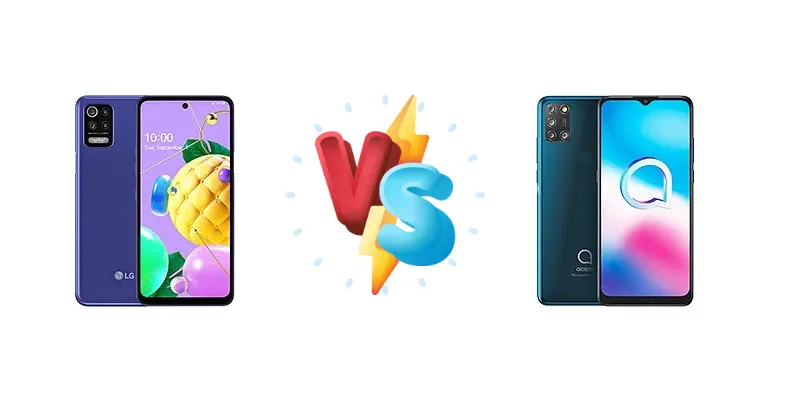
The LG K52 and alcatel 3X (2020) represent the lower end of the smartphone market, targeting users prioritizing affordability. However, even within this segment, key differences exist. This comparison focuses on how the chipset choices – Mediatek’s Helio P35 in the K52 versus the Helio P22 in the 3X – translate into real-world performance and user experience.
🏆 Quick Verdict
For most users, the LG K52 offers a slightly better experience due to its more powerful Mediatek Helio P35 chipset. While the alcatel 3X (2020) is a viable option for basic tasks, the K52’s CPU provides a noticeable performance edge for multitasking and moderately demanding applications.
| Network |
|---|
| 2G bands | GSM 850 / 900 / 1800 / 1900 | GSM 850 / 900 / 1800 / 1900 |
| 3G bands | HSDPA 850 / 900 / 1700(AWS) / 1900 / 2100 - International | HSDPA 850 / 900 / 1900 / 2100 |
| 4G bands | 1, 2, 3, 4, 5, 7, 8, 12, 13, 17, 28, 38, 66 - International | 1, 3, 5, 7, 8, 20, 28, 38, 40, 41 |
| Speed | HSPA, LTE | HSPA 42.2/11.5 Mbps, LTE Cat4 150/50 Mbps |
| Technology | GSM / HSPA / LTE | GSM / HSPA / LTE |
| | 1, 3, 5, 7, 8, 20, 28, 38, 39, 40, 41 - Australia | - |
| Launch |
|---|
| Announced | 2020, September 23. Released 2020, November 23 | 2020, June. Released 2020, June |
| Status | Discontinued | Discontinued |
| Body |
|---|
| Build | - | Glass front, plastic back, plastic frame |
| Dimensions | 165 x 76.7 x 8.4 mm (6.50 x 3.02 x 0.33 in) | 165 x 75 x 9.1 mm (6.50 x 2.95 x 0.36 in) |
| SIM | Nano-SIM + Nano-SIM | Nano-SIM + Nano-SIM |
| Weight | 188 g (6.63 oz) | 186 g (6.56 oz) |
| | MIL-STD-810G compliant*
*does not guarantee ruggedness or use in extreme conditions | - |
| Display |
|---|
| Resolution | 720 x 1600 pixels, 20:9 ratio (~266 ppi density) | 720 x 1600 pixels, 20:9 ratio (~269 ppi density) |
| Size | 6.6 inches, 105.2 cm2 (~83.1% screen-to-body ratio) | 6.52 inches, 102.6 cm2 (~82.9% screen-to-body ratio) |
| Type | IPS LCD | IPS LCD |
| Platform |
|---|
| CPU | Octa-core (4x2.3 GHz Cortex-A53 & 4x1.8 GHz Cortex-A53) | Octa-core 2.0 GHz Cortex-A53 |
| Chipset | Mediatek MT6765 Helio P35 (12 nm) | Mediatek MT6762 Helio P22 (12 nm) |
| GPU | PowerVR GE8320 | PowerVR GE8320 |
| OS | Android 10 | Android 10 |
| Memory |
|---|
| Card slot | microSDXC | microSDXC (uses shared SIM slot) |
| Internal | 64GB 4GB RAM | 64GB 4GB RAM, 128GB 4GB RAM, 128GB 6GB RAM |
| | eMMC 5.1 | eMMC 5.1 |
| Main Camera |
|---|
| Features | Dual-LED flash, panorama, HDR | Dual-LED dual-tone flash, HDR, panorama |
| Quad | 48 MP, f/1.8, 26mm (wide), 1/2.0", 0.8µm, PDAF
5 MP, f/2.2, 115˚ (ultrawide), 1/5.0", 1.12µm
2 MP (macro)
Auxiliary lens | 16 MP, f/1.8, (wide), 1/2.8", 1.12µm, PDAF
5 MP, f/2.2, (ultrawide), 1/5.0", 1.12µm
2 MP (macro)
Auxiliary lens |
| Video | 1080p@30fps | 1080p@30fps |
| Selfie camera |
|---|
| Single | 13 MP, f/2.0, 27mm (wide), 1/3.1", 1.12µm | 8 MP, f/2.0, (wide), 1/4.0", 1.12µm |
| Video | 1080p@30fps | 1080p@30fps |
| Sound |
|---|
| 3.5mm jack | Yes | Yes |
| 35mm jack | Yes | Yes |
| Loudspeaker | Yes | Yes |
| Comms |
|---|
| Bluetooth | 5.0, A2DP, LE | 5.0, A2DP, LE |
| NFC | Yes | No |
| Positioning | GPS | GPS |
| Radio | No | FM radio |
| USB | USB Type-C 3.1, OTG | microUSB 2.0, OTG |
| WLAN | Wi-Fi 802.11 b/g/n or Wi-Fi 802.11 a/b/g/n/ac, dual-band | Wi-Fi 802.11 b/g/n, Wi-Fi Direct |
| Features |
|---|
| Sensors | Fingerprint (side-mounted), accelerometer, proximity, compass | Fingerprint (rear-mounted), accelerometer, proximity, compass |
| Battery |
|---|
| Charging | - | 10W wired |
| Type | Li-Po 4000 mAh | Li-Po 5000 mAh |
| Misc |
|---|
| Colors | White, Blue, Red | Black, Blue |
| Models | LMK520, LM-K520, LMK520E, LM-K520E, LMK520Y, LM-K520Y, LMK520H, LM-K520H | 5061U, 5061K_EEA, 5061K, 5061U_EEA, 5061A |
| Price | About 220 EUR | About 170 EUR |
LG K52
- More powerful Mediatek Helio P35 chipset
- Potentially faster charging (unconfirmed)
- Slightly better multitasking performance
- Detailed specs are limited
- Likely similar display quality to the alcatel 3X
alcatel 3X (2020)
- Very affordable price point
- Functional for basic communication tasks
- Acceptable battery life for light usage
- Slower Mediatek Helio P22 chipset
- Slow 10W charging
- Limited performance for demanding apps
Display Comparison
Neither LG nor Alcatel provided display specs beyond the existence of a display. Given the price point, both likely utilize IPS LCD panels with 720p+ resolutions. The lack of detailed specifications makes a direct comparison impossible, but it's safe to assume both displays prioritize functionality over visual fidelity. Bezels are likely substantial on both devices, reflecting their budget nature.
Camera Comparison
Detailed camera specifications are unavailable for either device. However, given the market segment, it’s reasonable to expect basic camera setups focused on affordability rather than image quality. Both likely feature a primary sensor paired with depth or macro sensors of limited utility. The absence of Optical Image Stabilization (OIS) on either device suggests reliance on software processing for stabilization, which may result in softer images in low-light conditions. Without sensor size or aperture information, a definitive camera comparison is impossible.
Performance
The core difference lies in the chipsets. The LG K52’s Mediatek Helio P35 features an octa-core configuration split into two clusters: four Cortex-A53 cores clocked at 2.3 GHz and four at 1.8 GHz. This contrasts with the alcatel 3X’s Helio P22, which utilizes eight Cortex-A53 cores all clocked at 2.0 GHz. The higher clock speeds on the K52’s performance cores, combined with a slightly newer architecture, translate to a measurable performance advantage in CPU-intensive tasks. While both use 12nm process technology, the P35’s architecture is more efficient. The alcatel 3X’s 10W charging is a significant drawback, suggesting slower replenishment times compared to potentially faster charging solutions available on the K52 (though LG doesn't specify charging speed).
Battery Life
Battery capacity is not specified for either device. However, given the similar price points and target users, both likely feature batteries in the 3000-4000 mAh range. The alcatel 3X’s 10W charging is a clear disadvantage, indicating a longer time to fully charge the battery. The LG K52, while potentially having a similar capacity, may benefit from faster charging capabilities (though unconfirmed), offering a more convenient user experience.
Buying Guide
Buy the LG K52 if you need a phone capable of handling more than just basic communication and social media – its Helio P35 offers a smoother experience with multiple apps open. Buy the alcatel 3X (2020) if your primary needs are calls, texts, and light web browsing, and you prioritize maximizing value for the absolute lowest price point.
Frequently Asked Questions
❓ Will the alcatel 3X (2020) struggle with popular social media apps like Facebook and Instagram?
The alcatel 3X’s Helio P22 chipset can handle basic social media usage, but you may experience occasional lag or slowdowns when multitasking or using resource-intensive features within those apps. The LG K52, with its Helio P35, will provide a smoother experience for social media browsing.
❓ Is the difference in performance between the Helio P35 and Helio P22 noticeable for everyday tasks?
For simple tasks like making calls, sending texts, and checking email, the difference is minimal. However, when opening multiple apps, browsing the web with many tabs, or playing light games, the LG K52’s Helio P35 will feel noticeably more responsive and less prone to stuttering.
❓ How long will it take to fully charge the alcatel 3X (2020) with its 10W charging?
With 10W charging, expect the alcatel 3X to take approximately 3-4 hours to fully charge from 0% to 100%, depending on battery capacity. This is significantly slower than phones with faster charging technologies.