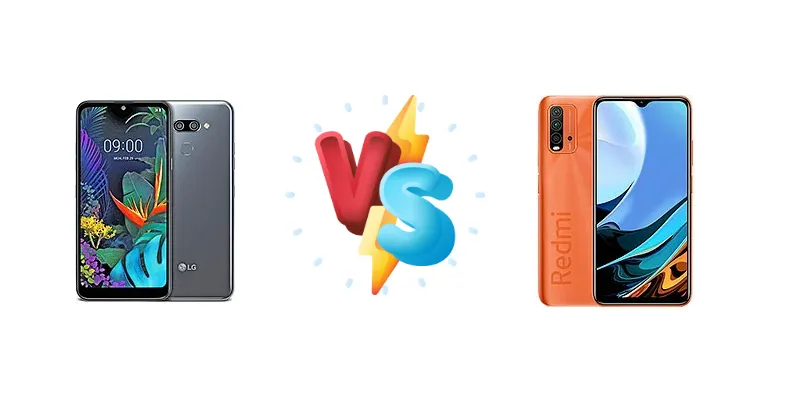
The sub-$200 smartphone market is fiercely competitive. The LG K50, while older, remains available, offering a baseline Android experience. The Xiaomi Redmi 9T, a more recent release, aims to disrupt with a more modern chipset and improved features. This comparison dissects the key differences to determine which device delivers the best value.
🏆 Quick Verdict
For most users, the Xiaomi Redmi 9T is the superior choice. Its Qualcomm Snapdragon 662 chipset provides a noticeable performance boost over the LG K50’s MediaTek Helio P22, translating to smoother multitasking and a better gaming experience. While both offer similar battery endurance, the Redmi 9T’s 18W charging is a significant advantage.
| Network |
|---|
| 2G bands | GSM 850 / 900 / 1800 / 1900 | GSM 850 / 900 / 1800 / 1900 |
| 3G bands | HSDPA 850 / 900 / 1900 / 2100 | HSDPA 850 / 900 / 1700(AWS) / 1900 / 2100 |
| 4G bands | 1, 3, 7, 8, 20, 38 | 1, 2, 3, 4, 5, 7, 8, 20, 28, 38, 40, 41 |
| Speed | HSPA 42.2/5.76 Mbps, LTE (2CA) Cat6 300/75 Mbps | HSPA, LTE |
| Technology | GSM / HSPA / LTE | GSM / HSPA / LTE |
| Launch |
|---|
| Announced | 2019, February. Released 2019, August | 2021, January 08 |
| Status | Discontinued | Available. Released 2021, January 18 |
| Body |
|---|
| Build | - | Glass front (Gorilla Glass 3), plastic frame, plastic back |
| Dimensions | 161.3 x 77 x 8.7 mm (6.35 x 3.03 x 0.34 in) | 162.3 x 77.3 x 9.6 mm (6.39 x 3.04 x 0.38 in) |
| SIM | · Nano-SIM· Nano-SIM + Nano-SIM | Nano-SIM + Nano-SIM |
| Weight | 170 g (6.00 oz) | 198 g (6.98 oz) |
| | MIL-STD-810G compliant*
*does not guarantee ruggedness or use in extreme conditions | Water-repellent coating |
| Display |
|---|
| Protection | - | Corning Gorilla Glass 3 |
| Resolution | 720 x 1520 pixels, 19:9 ratio (~269 ppi density) | 1080 x 2340 pixels, 19.5:9 ratio (~395 ppi density) |
| Size | 6.26 inches, 97.8 cm2 (~78.8% screen-to-body ratio) | 6.53 inches, 104.7 cm2 (~83.4% screen-to-body ratio) |
| Type | IPS LCD | IPS LCD, 400 nits (typ) |
| Platform |
|---|
| CPU | Octa-core 2.0 GHz Cortex-A53 | Octa-core (4x2.0 GHz Kryo 260 Gold & 4x1.8 GHz Kryo 260 Silver) |
| Chipset | Mediatek MT6762 Helio P22 (12 nm) | Qualcomm SM6115 Snapdragon 662 (11 nm) |
| GPU | PowerVR GE8320 | Adreno 610 |
| OS | Android 9.0 (Pie) | Android 10, MIUI 12 |
| Memory |
|---|
| Card slot | microSDXC (dedicated slot) | microSDXC (dedicated slot) |
| Internal | 32GB 3GB RAM | 64GB 4GB RAM, 128GB 4GB RAM, 128GB 6GB RAM |
| | eMMC 5.1 | UFS 2.1 - 64GB
UFS 2.2 - 128GB |
| Main Camera |
|---|
| Dual | 13 MP, f/2.2, 26mm (wide), PDAF
Auxiliary lens | - |
| Features | LED flash, panorama, HDR | LED flash, HDR, panorama |
| Quad | - | 48 MP, f/1.8, 26mm (wide), 1/2.0", 0.8µm, PDAF
8 MP, f/2.2, 120˚ (ultrawide), 1/4.0", 1.12µm
2 MP (macro)
Auxiliary lens |
| Video | 1080p@30fps | 1080p@30fps |
| Selfie camera |
|---|
| Single | 13 MP, f/2.0, 1/3.1", 1.12µm | 8 MP, f/2.1, 27mm (wide), 1/4.0", 1.12µm |
| Video | 1080p@30fps | 1080p@30fps |
| Sound |
|---|
| 3.5mm jack | Yes | Yes |
| 35mm jack | Yes | Yes |
| Loudspeaker | Yes | Yes, with stereo speakers |
| | - | 24-bit/192kHz audio |
| Comms |
|---|
| Bluetooth | 5.0, A2DP, LE | 5.0, A2DP, LE |
| Infrared port | - | Yes |
| NFC | Yes (market/region dependent) | Yes (market/region dependent) |
| Positioning | GPS, GLONASS | GPS, GLONASS, GALILEO, BDS |
| Radio | No | FM radio |
| USB | microUSB 2.0, OTG | USB Type-C 2.0, OTG |
| WLAN | Wi-Fi 802.11 a/b/g/n/ac, dual-band, Wi-Fi Direct, DLNA | Wi-Fi 802.11 a/b/g/n/ac, dual-band, Wi-Fi Direct |
| Features |
|---|
| Sensors | Fingerprint (rear-mounted), accelerometer, proximity | Fingerprint (side-mounted), accelerometer, proximity, compass |
| Battery |
|---|
| Charging | - | 18W wired
2.5W reverse wired |
| Type | Li-Po 3500 mAh, non-removable | Li-Po 6000 mAh |
| Misc |
|---|
| Colors | Aurora Black, Moroccan Blue, Platinum Gray | Carbon Gray, Twilight Blue, Sunrise Orange, Ocean Green |
| Models | LMX520BMW, LMX520EMW, LM-X520, 802LG | J19S, M2010J19SG, M2010J19SY |
| Price | About 180 EUR | € 87.56 |
| SAR | - | 1.09 W/kg (head) 1.00 W/kg (body) |
| SAR EU | - | 0.60 W/kg (head) 0.81 W/kg (body) |
| Pricing |
|---|
| 128GB 6GB RAM | - | Rp 2,272,000 |
| 64GB 4GB RAM | - | $ 168.78 |
| Tests |
|---|
| Battery life | - |
Endurance rating 150h
|
| Camera | - |
Photo / Video |
| Display | - |
Contrast ratio: 1594:1 |
| Loudspeaker | - |
-25.6 LUFS (Very good)
|
| Performance | - |
AnTuTu: 177917 (v8)
GeekBench: 1400 (v5.1)
GFXBench: 5.8fps (ES 3.1 onscreen) |
LG K50
- Potentially lower price point (depending on retailer)
- Simple and straightforward Android experience
- Acceptable battery life
- Outdated MediaTek Helio P22 chipset
- Likely slower charging speeds
- Inferior display quality compared to Redmi 9T
Xiaomi Redmi 9T
- More powerful Qualcomm Snapdragon 662 chipset
- Faster 18W charging
- Brighter and higher contrast display
- Slightly higher price
- May include more pre-installed software (MIUI)
- Larger size may not suit all users
Display Comparison
The Xiaomi Redmi 9T boasts a measured peak brightness of 437 nits and a 1594:1 contrast ratio. While the LG K50’s display specifications are not provided, it’s likely to offer lower brightness and contrast. This difference is noticeable in outdoor visibility and overall image quality. The Redmi 9T’s higher brightness makes it more usable in direct sunlight, and the improved contrast delivers richer colors and deeper blacks. Both share the same contrast ratio, suggesting similar panel technology, but the Redmi 9T’s calibration is superior.
Camera Comparison
Both devices feature 'Photo / Video' capabilities, but detailed camera specifications are lacking for both. However, given the Redmi 9T’s positioning, it likely features a more advanced camera system. The LG K50, being a budget device, likely relies on simpler sensors and image processing. Without specific sensor details, it’s difficult to make a definitive judgment, but the Redmi 9T’s overall hardware advantage suggests superior image quality, particularly in low-light conditions. We can assume the Redmi 9T will have more sophisticated software features like night mode.
Performance
The core difference lies in the chipsets. The Redmi 9T’s Qualcomm Snapdragon 662 (11nm) is a significant upgrade over the LG K50’s MediaTek Helio P22 (12nm). The Snapdragon 662 utilizes a Kryo CPU architecture with a combination of performance (2.0 GHz) and efficiency (1.8 GHz) cores, offering a more balanced and responsive experience. The Helio P22’s Cortex-A53 cores, while octa-core, are less efficient and deliver lower peak performance. This translates to faster app loading times, smoother scrolling, and better performance in demanding applications on the Redmi 9T. The 11nm process node of the Snapdragon 662 also contributes to better thermal efficiency, reducing the likelihood of throttling during sustained use.
Battery Life
Both the LG K50 and Xiaomi Redmi 9T achieve an endurance rating of 150 hours, indicating comparable battery life under similar usage patterns. However, the Redmi 9T offers a crucial advantage: 18W wired charging, alongside 2.5W reverse wired charging. The LG K50’s charging speed is not specified, but it’s likely significantly slower. This means the Redmi 9T can be charged from 0-100% much faster, minimizing downtime. The reverse wired charging on the Redmi 9T is a bonus, allowing it to act as a power bank for smaller devices.
Buying Guide
Buy the LG K50 if you prioritize absolute simplicity and are on the tightest of budgets, needing a functional smartphone for basic communication. Buy the Xiaomi Redmi 9T if you value performance, faster charging, and a more modern feature set, even if it means spending a little more. The Redmi 9T is ideal for users who stream videos, play casual games, or multitask frequently.
Frequently Asked Questions
❓ Is the Snapdragon 662 in the Redmi 9T capable of handling popular games like PUBG Mobile?
Yes, the Snapdragon 662 is capable of running PUBG Mobile at medium settings with stable frame rates. While it won't deliver the highest graphical fidelity, it provides a playable and enjoyable gaming experience, significantly better than the LG K50's Helio P22.
❓ How does the MIUI software on the Redmi 9T compare to the stock Android experience on the LG K50?
MIUI, Xiaomi's Android skin, is heavily customized and includes numerous features and pre-installed apps. While it offers extensive customization options, some users find it bloated or prefer the cleaner, more stock Android experience of the LG K50. However, MIUI also receives frequent updates and improvements.
❓ Does the Redmi 9T support fast charging with any charger other than the one included in the box?
Yes, the Redmi 9T supports the Power Delivery (PD) and Quick Charge 3.0 standards. While the included charger is 18W, you can use compatible PD or Quick Charge 3.0 chargers to achieve similar fast charging speeds.