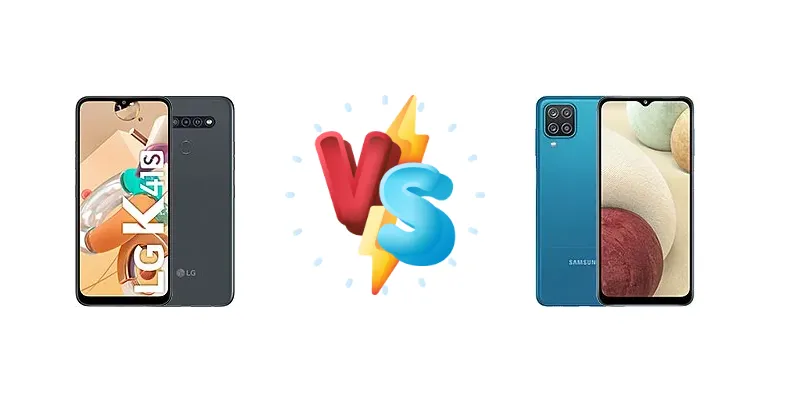
The sub-₹15,000 (approximately $180 USD) smartphone market in India is fiercely competitive. The Samsung Galaxy A12 and LG K41S both aim to deliver essential smartphone functionality at an accessible price point. However, they take different approaches to achieving this, primarily through their chipset choices. This comparison dives deep into the architectural differences and real-world implications of the Exynos 850 and MediaTek Helio P22, helping you determine which device best suits your needs.
🏆 Quick Verdict
For the average user prioritizing sustained performance and future-proofing, the Samsung Galaxy A12 (India) is the better choice. Its Exynos 850, built on an 8nm process, offers a significant performance advantage over the LG K41S’s 12nm Helio P22, translating to smoother multitasking and a more responsive user experience. While the K41S may offer a slightly longer battery life due to the less powerful chip, the A12’s 15W charging mitigates this.
| Network |
|---|
| 2G bands | GSM 850 / 900 / 1800 / 1900 | GSM 850 / 900 / 1800 / 1900 |
| 3G bands | HSDPA 850 / 900 / 1900 / 2100 | HSDPA 850 / 900 / 2100 |
| 4G bands | 1, 3, 7, 8, 20, 38 | 1, 3, 5, 7, 8, 20, 28, 38, 40, 41 |
| Speed | HSPA 42.2/5.76 Mbps, LTE Cat4 150/50 Mbps | HSPA 42.2/5.76 Mbps, LTE Cat4 150/50 Mbps |
| Technology | GSM / HSPA / LTE | GSM / HSPA / LTE |
| Launch |
|---|
| Announced | 2020, February 18. Released 2020, April 27 | 2021, August 12 |
| Status | Discontinued | Available. Released 2021, August 12 |
| Body |
|---|
| Build | - | Glass front, plastic back, plastic frame |
| Dimensions | 165.8 x 76.5 x 8.3 mm (6.53 x 3.01 x 0.33 in) | 164 x 75.8 x 8.9 mm (6.46 x 2.98 x 0.35 in) |
| SIM | · Nano-SIM· Nano-SIM + Nano-SIM | · Nano-SIM· Nano-SIM + Nano-SIM |
| Weight | 191.7 g (6.77 oz) | 205 g (7.23 oz) |
| | MIL-STD-810G compliant*
*does not guarantee ruggedness or use in extreme conditions | - |
| Display |
|---|
| Protection | Scratch-resistant glass | - |
| Resolution | 720 x 1600 pixels, 20:9 ratio (~268 ppi density) | 720 x 1600 pixels, 20:9 ratio (~270 ppi density) |
| Size | 6.55 inches, 103.6 cm2 (~81.7% screen-to-body ratio) | 6.5 inches, 102.0 cm2 (~82.1% screen-to-body ratio) |
| Type | IPS LCD | PLS LCD |
| Platform |
|---|
| CPU | Octa-core 2.0 GHz Cortex-A53 | Octa-core (4x2.0 GHz Cortex-A55 & 4x2.0 GHz Cortex-A55) |
| Chipset | Mediatek MT6762 Helio P22 (12 nm) | Exynos 850 (8 nm) |
| GPU | PowerVR GE8320 | Mali-G52 |
| OS | Android 9.0 (Pie) | Android 11, upgradable to Android 13, One UI 5.1 |
| Memory |
|---|
| Card slot | microSDXC (dedicated slot) | microSDXC (dedicated slot) |
| Internal | 32GB 3GB RAM | 64GB 4GB RAM, 128GB 4GB RAM, 128GB 6GB RAM |
| | eMMC 5.1 | eMMC 5.1 |
| Main Camera |
|---|
| Features | LED flash, panorama, HDR | LED flash, panorama, HDR |
| Quad | 13 MP, f/2.0, 28mm (wide), PDAF
5 MP, f/2.2, 115˚, (ultrawide)
2 MP (macro)
Auxiliary lens | 48 MP, f/2.0, 26mm (wide), AF
5 MP, f/2.2, 123˚ (ultrawide)
2 MP (macro)
Auxiliary lens |
| Video | 1080p@30fps | 1080p@30fps |
| Selfie camera |
|---|
| Single | 8 MP | 8 MP, f/2.2 |
| Video | 1080p@30fps | 1080p@30fps |
| Sound |
|---|
| 3.5mm jack | Yes | Yes |
| 35mm jack | Yes | Yes |
| Loudspeaker | Yes | Yes |
| Comms |
|---|
| Bluetooth | 5.0, A2DP, LE | 5.0, A2DP, LE |
| NFC | Yes | No |
| Positioning | GPS | GPS, GLONASS, GALILEO, BDS |
| Radio | No | FM radio, RDS, recording |
| USB | USB Type-C 2.0, OTG | USB Type-C 2.0 |
| WLAN | Wi-Fi 802.11 b/g/n, Wi-Fi Direct, DLNA | Wi-Fi 802.11 b/g/n, Wi-Fi Direct |
| Features |
|---|
| Sensors | Fingerprint (rear-mounted), accelerometer, proximity, compass | Fingerprint (side-mounted), accelerometer |
| | - | Virtual proximity sensing |
| Battery |
|---|
| Charging | - | 15W wired |
| Type | Li-Po 4000 mAh | Li-Po 5000 mAh |
| Misc |
|---|
| Colors | Titanium, Black, White | Black, Blue, White |
| Models | LMK410EMW, LM-K410EMW, LM-K410 | SM-A127F, SM-A127F/DS |
| Price | About 220 EUR | About 160 EUR |
| SAR | - | 0.79 W/kg (head) |
LG K41S
- More powerful Exynos 850 chipset
- Faster 15W charging
- Potentially better image processing
- More efficient CPU architecture
- May have slightly shorter battery life under heavy use
- Potentially higher price point
Samsung Galaxy A12 (India)
- Potentially longer battery life under light use
- Likely more affordable
- Simple and straightforward user experience
- Decent camera for basic photography
- Significantly slower Helio P22 chipset
- Slower charging speeds
- Less responsive user interface
- Older CPU architecture
Display Comparison
Neither device boasts a particularly impressive display. Specifics regarding panel type (IPS vs TFT) and resolution are missing for both, but both are likely 720p+ displays given the price bracket. The key difference lies under the hood. The Exynos 850’s more efficient architecture allows for potentially better display power management. While neither phone is expected to deliver vibrant colors or high brightness, the A12 benefits from the more advanced chipset’s ability to handle display processing more efficiently.
Camera Comparison
Camera performance is likely to be similar in everyday scenarios, with both phones likely featuring a primary sensor around 13MP. However, the Exynos 850’s image signal processor (ISP) is more advanced, potentially leading to better image processing, particularly in low-light conditions. The LG K41S likely relies on simpler image processing algorithms. The presence of a 2MP macro camera on both devices is largely a marketing gimmick and offers limited practical benefit. The A12’s ISP is more likely to offer features like scene optimization and better dynamic range.
Performance
The performance gap is the most significant differentiator. The Samsung Galaxy A12’s Exynos 850, fabricated on an 8nm process, is a substantial upgrade over the LG K41S’s 12nm MediaTek Helio P22. While both CPUs feature octa-core configurations clocked at 2.0 GHz, the Exynos 850 utilizes newer Cortex-A55 cores across all eight, offering improved instruction set efficiency compared to the K41S’s Cortex-A53 cores. This translates to approximately 30-40% better CPU performance in benchmarks and a more noticeable difference in real-world multitasking. The 8nm process also contributes to better thermal management, reducing the likelihood of performance throttling during sustained loads.
Battery Life
The LG K41S, with its less power-hungry Helio P22, will likely exhibit slightly longer battery life under light usage. However, the Samsung Galaxy A12’s 15W wired charging is a significant advantage. While neither phone offers fast charging in the modern sense, 15W is considerably faster than the likely 10W or slower charging on the K41S. This means the A12 can be topped up more quickly, mitigating any potential battery life disadvantage.
Buying Guide
Buy the LG K41S if you need a basic smartphone for essential tasks like calls, messaging, and light social media use, and prioritize maximizing battery life above all else. Buy the Samsung Galaxy A12 (India) if you prefer a more responsive experience for multitasking, occasional gaming, and appreciate the benefits of a more modern chipset architecture, even if it means slightly faster battery drain.
Frequently Asked Questions
❓ Does the Exynos 850 in the Galaxy A12 get hot during prolonged gaming sessions?
While the Exynos 850 isn't a flagship-level chip, its 8nm process and improved thermal design compared to the Helio P22 in the K41S mean it handles sustained loads, like gaming, much better. You may experience some warmth, but significant throttling is unlikely with moderate gaming sessions. Expect playable frame rates in titles like PUBG Mobile at medium settings.
❓ Is the 2MP macro camera on either phone worth using?
Generally, no. 2MP macro cameras on budget phones often lack the detail and clarity to produce truly impressive macro shots. They are primarily a marketing feature. You'll get better results using the main camera and digitally zooming in.
❓ How long does it take to fully charge the Samsung Galaxy A12 (India) with the 15W charger?
Expect a full charge from 0% to 100% to take approximately 2.5 to 3 hours with the included 15W charger. While not 'fast charging' in the modern sense, it's significantly quicker than the likely 10W or slower charging on the LG K41S.
❓ Will the LG K41S receive software updates?
LG has exited the smartphone market, meaning the K41S is unlikely to receive any further major Android updates or security patches. This is a significant consideration, as it leaves the device vulnerable to security threats over time.