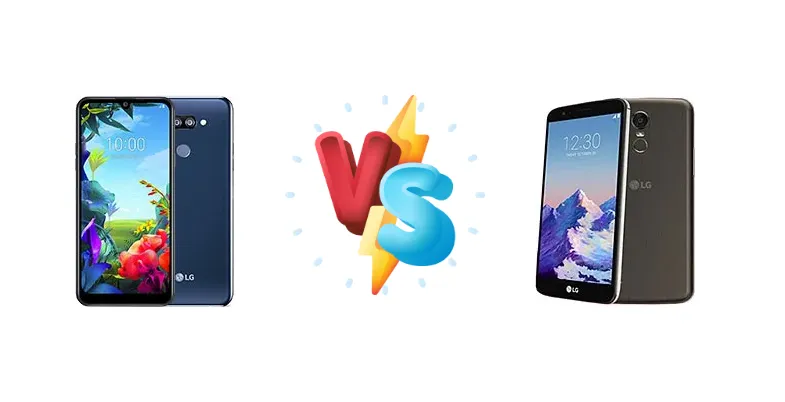
The LG K40S and Stylus 3 represent LG’s attempts to deliver affordable smartphones with varying priorities. The Stylus 3, as its name suggests, focuses on stylus functionality, while the K40S aims for a balance of performance and features. This comparison dissects the core differences, particularly the chipset architecture, to determine which device offers the best value in 2024.
🏆 Quick Verdict
For the average user prioritizing responsiveness and future-proofing, the LG K40S is the better choice. Its Mediatek Helio P22, built on a 12nm process, offers a noticeable performance advantage and improved efficiency over the Stylus 3’s older Snapdragon 435 (or MT6750 variant), despite the Stylus 3's stylus feature.
| Network |
|---|
| 2G bands | GSM 850 / 900 / 1800 / 1900 | GSM 850 / 900 / 1800 / 1900 - SIM 1 & SIM 2 (dual-SIM model only) |
| 3G bands | HSDPA 850 / 900 / 1900 / 2100 | HSDPA 850 / 900 / 1900 / 2100 |
| 4G bands | 1, 3, 7, 8, 20 | 2, 4, 5, 12, 25, 26, 41 - LS777 |
| Speed | HSPA 42.2/5.76 Mbps, LTE (2CA) Cat6 300/50 Mbps | HSPA 42.2/5.76 Mbps, LTE (2CA) Cat6 300/50 Mbps |
| Technology | GSM / HSPA / LTE | GSM / CDMA / HSPA / LTE |
| | - | 3, 5, 40 - M400DK |
| Launch |
|---|
| Announced | 2019, August. Released 2019, September | 2016, December. Released 2017, March |
| Status | Discontinued | Discontinued |
| Body |
|---|
| Build | - | Glass front, plastic back, plastic frame |
| Dimensions | 156.3 x 73.9 x 8.6 mm (6.15 x 2.91 x 0.34 in) | 155.6 x 79.8 x 7.4 mm (6.13 x 3.14 x 0.29 in) |
| SIM | · Nano-SIM· Nano-SIM + Nano-SIM | · Nano-SIM· Nano-SIM + Nano-SIM |
| Weight | 186 g (6.56 oz) | 149 g (5.26 oz) |
| | MIL-STD-810G compliant*
*does not guarantee ruggedness or use in extreme conditions | Stylus |
| Display |
|---|
| Resolution | 720 x 1520 pixels, 19:9 ratio (~276 ppi density) | 720 x 1280 pixels, 16:9 ratio (~258 ppi density) |
| Size | 6.1 inches, 92.9 cm2 (~80.4% screen-to-body ratio) | 5.7 inches, 89.6 cm2 (~72.1% screen-to-body ratio) |
| Type | IPS LCD | IPS LCD |
| Platform |
|---|
| CPU | Octa-core 2.0 GHz Cortex-A53 | Octa-core (4x1.5 GHz Cortex-A53 & 4x1.0 GHz Cortex-A53) - M400DKOcta-core 1.4 GHz Cortex-A53 - LS777 |
| Chipset | Mediatek MT6762 Helio P22 (12 nm) | Mediatek MT6750 - M400DKQualcomm MSM8940 Snapdragon 435 (28 nm) - LS777 |
| GPU | PowerVR GE8320 | Mali-T860MP2 - M400DKAdreno 505 - LS777 |
| OS | Android 9.0 (Pie), upgradable to Android 10 | Android 7.0 (Nougat) |
| Memory |
|---|
| Card slot | microSDXC (dedicated slot) | microSDXC (dedicated slot) |
| Internal | 32GB 2GB RAM, 32GB 3GB RAM | 16GB 2GB RAM, 16GB 3GB RAM, 32GB 2GB RAM |
| | eMMC 5.1 | eMMC 5.1 |
| Main Camera |
|---|
| Dual | 13 MP, f/2.2, 26mm (wide), PDAF
5 MP, (ultrawide) | - |
| Features | LED flash, panorama, HDR | LED flash |
| Single | - | 13 MP, f/2.2, 1/3.1", 1.12µm, AF |
| Video | 1080p@30fps | 1080p@30fps |
| Selfie camera |
|---|
| Single | 13 MP, f/2.0, 1/3.1", 1.12µm | 5 MP, Stylus 3, / 8 MP, Stylo 3, M400DK |
| Video | 1080p@30fps | - |
| Sound |
|---|
| 3.5mm jack | Yes | Yes |
| 35mm jack | Yes | Yes |
| Loudspeaker | Yes | Yes |
| Comms |
|---|
| Bluetooth | 5.0, A2DP, LE | 4.1, A2DP, LE |
| NFC | Yes (market/region dependent) | Yes |
| Positioning | GPS, GLONASS | GPS, GLONASS |
| Radio | No | Stereo FM radio with RDS; recording |
| USB | microUSB 2.0, OTG | microUSB 2.0, OTG |
| WLAN | Wi-Fi 802.11 a/b/g/n/ac, dual-band, Wi-Fi Direct, DLNA | Wi-Fi 802.11 b/g/n, Wi-Fi Direct, DLNA |
| Features |
|---|
| Sensors | Fingerprint (rear-mounted), accelerometer, proximity | Fingerprint (rear-mounted), accelerometer, gyro, proximity, compass |
| Battery |
|---|
| Type | Li-Po 3500 mAh, non-removable | Li-Ion 3200 mAh, removable |
| Misc |
|---|
| Colors | New Aurora Black, New Moroccan Blue | Titan, Pink gold |
| Models | LMX430HM, LM-X430 | M400, LS777, LGMP450, LGL84VL, M430, M40, LGL83BL |
| Price | About 160 EUR | About 170 EUR |
LG K40S
- More efficient processor (Helio P22)
- Likely better multitasking performance
- Potentially longer battery life
- Lacks integrated stylus functionality
- Display details are unknown
LG Stylus 3
- Integrated stylus for note-taking and drawing
- Potentially lower price point (depending on market)
- Familiar LG Stylus experience
- Less powerful and efficient processor
- Older chipset architecture
- Potential for thermal throttling
Display Comparison
Neither device boasts a standout display. Details regarding panel type (IPS vs TFT) and resolution are missing, but both likely target the entry-level segment. The key difference lies in the underlying processing power impacting UI smoothness. While display specs are unavailable, the K40S’s more capable chipset will contribute to a more fluid visual experience when scrolling and navigating menus.
Camera Comparison
Camera performance is likely similar on both devices, focusing on basic photography. Details regarding sensor size and aperture are unavailable, but both likely feature a primary sensor around 8-13 megapixels. The presence of a stylus on the Stylus 3 could be leveraged for photo editing, but the image quality itself will be largely determined by the sensor and image processing capabilities of the chipset. Given the K40S’s more modern ISP (Image Signal Processor) within the Helio P22, it may offer slightly better image processing, particularly in low-light conditions. The usefulness of any 2MP macro or depth sensors on either device is questionable.
Performance
The core of the difference lies in the chipsets. The LG K40S utilizes the Mediatek MT6762 Helio P22, a 12nm octa-core processor clocked at 2.0 GHz. This represents a significant leap in efficiency compared to the LG Stylus 3’s options: the Mediatek MT6750 (28nm) or the Qualcomm Snapdragon 435 (28nm). The P22’s Cortex-A53 cores, while not the latest architecture, benefit from the smaller manufacturing process, resulting in lower power consumption and reduced thermal throttling. The Stylus 3’s CPU configuration varies – either eight Cortex-A53 cores at 1.4 GHz (Snapdragon 435) or a big.LITTLE configuration with 1.5 GHz and 1.0 GHz cores (MT6750). This big.LITTLE setup *attempts* to balance performance and efficiency, but the older 28nm process limits its effectiveness. The K40S will demonstrably outperform the Stylus 3 in CPU-intensive tasks and multitasking.
Battery Life
Battery capacity details are missing for both devices. However, the K40S’s more efficient Helio P22 chipset will translate to longer battery life under similar usage scenarios. The 12nm process inherently consumes less power than the 28nm process used in the Stylus 3’s chipsets. While the Stylus 3 might have a slightly larger battery, the K40S’s efficiency will likely offset this difference, providing comparable or even superior real-world battery performance. Charging wattage is also unknown, but faster charging would be a benefit for either device.
Buying Guide
Buy the LG K40S if you need a phone for everyday tasks, light gaming, and appreciate a more modern processor for smoother multitasking. It’s ideal for users who want a responsive experience without breaking the bank. Buy the LG Stylus 3 if you absolutely require a stylus for note-taking, drawing, or precise navigation, and are willing to accept a slightly slower processor and potentially shorter software support lifespan.
Frequently Asked Questions
❓ Will the LG K40S handle popular social media apps like Facebook and Instagram smoothly?
Yes, the Helio P22 chipset in the K40S is more than capable of handling everyday social media apps without significant lag. The 2.0 GHz octa-core CPU and improved efficiency will provide a smoother experience compared to the Stylus 3, especially when multitasking between apps.
❓ Is the Snapdragon 435 in the LG Stylus 3 sufficient for basic gaming?
The Snapdragon 435 can handle very basic 2D games and older 3D titles at low settings. However, it will struggle with more demanding games, experiencing noticeable frame drops and potential overheating. The K40S’s Helio P22 offers a more playable experience for casual gaming.
❓ Does the LG Stylus 3's stylus offer pressure sensitivity for drawing?
While the LG Stylus 3 does include a stylus, details regarding pressure sensitivity are limited. It's likely to offer basic stylus functionality for note-taking and simple sketching, but it won't match the precision and responsiveness of styluses found on higher-end devices.
❓ Which phone is likely to receive more software updates?
Given the age of both devices and LG's exit from the smartphone market, neither is guaranteed to receive significant software updates. However, the K40S, being a slightly newer model, *might* have a marginally better chance of receiving security patches, but expectations should be tempered.