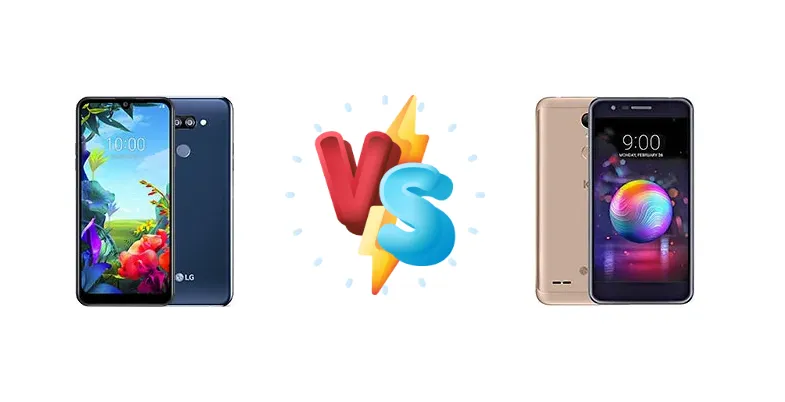
The LG K40S and K11 Plus represent LG’s attempts to capture the budget smartphone market. While both devices aim for affordability, they differ significantly in their underlying hardware, particularly in their chipsets. This comparison dissects these differences to determine which phone offers the best value for users prioritizing performance and efficiency.
🏆 Quick Verdict
For the average user, the LG K40S is the better choice. Its Mediatek Helio P22, built on a 12nm process, provides a noticeable performance advantage and improved power efficiency compared to the K11 Plus’s older, 28nm MT6750. This translates to smoother multitasking and potentially longer battery life.
| Network |
|---|
| 2G bands | GSM 850 / 900 / 1800 / 1900 | GSM 850 / 900 / 1800 / 1900 |
| 3G bands | HSDPA 850 / 900 / 1900 / 2100 | HSDPA 850 / 900 / 2100 - LMX410YC |
| 4G bands | 1, 3, 7, 8, 20 | 1, 3, 5, 7, 8, 28, 38, 40 - LMX410YC |
| Speed | HSPA 42.2/5.76 Mbps, LTE (2CA) Cat6 300/50 Mbps | HSPA 42.2/5.76 Mbps, LTE (2CA) Cat6 300/50 Mbps |
| Technology | GSM / HSPA / LTE | GSM / HSPA / LTE |
| | - | 1, 3, 7, 8, 20 - LMX410ZCW |
| Launch |
|---|
| Announced | 2019, August. Released 2019, September | 2018, July. Released 2018, July |
| Status | Discontinued | Discontinued |
| Body |
|---|
| Build | - | Glass front, aluminum back, plastic frame |
| Dimensions | 156.3 x 73.9 x 8.6 mm (6.15 x 2.91 x 0.34 in) | 148.7 x 75.3 x 8.7 mm (5.85 x 2.96 x 0.34 in) |
| SIM | · Nano-SIM· Nano-SIM + Nano-SIM | · Nano-SIM· Nano-SIM + Nano-SIM |
| Weight | 186 g (6.56 oz) | 162 g (5.71 oz) |
| | MIL-STD-810G compliant*
*does not guarantee ruggedness or use in extreme conditions | MIL-STD-810G compliant*
*does not guarantee ruggedness or use in extreme conditions |
| Display |
|---|
| Resolution | 720 x 1520 pixels, 19:9 ratio (~276 ppi density) | 720 x 1280 pixels, 16:9 ratio (~277 ppi density) |
| Size | 6.1 inches, 92.9 cm2 (~80.4% screen-to-body ratio) | 5.3 inches, 77.4 cm2 (~69.2% screen-to-body ratio) |
| Type | IPS LCD | IPS LCD |
| Platform |
|---|
| CPU | Octa-core 2.0 GHz Cortex-A53 | Octa-core (4x1.5 GHz Cortex-A53 & 4x1.0 GHz Cortex-A53) |
| Chipset | Mediatek MT6762 Helio P22 (12 nm) | Mediatek MT6750 (28 nm) |
| GPU | PowerVR GE8320 | Mali-T860MP2 |
| OS | Android 9.0 (Pie), upgradable to Android 10 | Android 7.1.2 (Nougat), upgradable to Android 8.1 (Oreo) |
| Memory |
|---|
| Card slot | microSDXC (dedicated slot) | microSDXC (dedicated slot) |
| Internal | 32GB 2GB RAM, 32GB 3GB RAM | 16GB 2GB RAM, 32GB 2GB RAM, 32GB 3GB RAM |
| | eMMC 5.1 | eMMC 5.1 |
| Main Camera |
|---|
| Dual | 13 MP, f/2.2, 26mm (wide), PDAF
5 MP, (ultrawide) | - |
| Features | LED flash, panorama, HDR | LED flash, HDR |
| Single | - | 13 MP, f2.2, 26mm (wide), 1/3.1", PDAF - LG K11+
8 MP, f/2.2, 26mm (wide), 1/4.0", PDAF - LG K11α |
| Video | 1080p@30fps | 1080p@30fps |
| Selfie camera |
|---|
| Single | 13 MP, f/2.0, 1/3.1", 1.12µm | 5 MP, f/2.2, 18mm, 1/5.0", 1.12µm |
| Video | 1080p@30fps | 720p@30fps |
| Sound |
|---|
| 3.5mm jack | Yes | Yes |
| 35mm jack | Yes | Yes |
| Loudspeaker | Yes | Yes |
| Comms |
|---|
| Bluetooth | 5.0, A2DP, LE | 4.2, A2DP, LE |
| NFC | Yes (market/region dependent) | Yes (market dependent) |
| Positioning | GPS, GLONASS | GPS, GLONASS |
| Radio | No | FM radio, RDS, recording |
| USB | microUSB 2.0, OTG | microUSB 2.0 |
| WLAN | Wi-Fi 802.11 a/b/g/n/ac, dual-band, Wi-Fi Direct, DLNA | Wi-Fi 802.11 b/g/n, Wi-Fi Direct |
| Features |
|---|
| Sensors | Fingerprint (rear-mounted), accelerometer, proximity | Fingerprint (rear-mounted), accelerometer, proximity, compass |
| Battery |
|---|
| Type | Li-Po 3500 mAh, non-removable | Li-Ion 3000 mAh, non-removable |
| Misc |
|---|
| Colors | New Aurora Black, New Moroccan Blue | Moroccan Blue, Terra Gold, Black |
| Models | LMX430HM, LM-X430 | LMX410, LMX410FC, LMX410YC, LMX410HC, LMX410EO, LMX410ZCW, LMX410BCW, LM-X410S |
| Price | About 160 EUR | About 140 EUR |
| SAR EU | - | 0.81 W/kg (head) |
LG K40S
- More efficient processor (12nm vs 28nm)
- Faster CPU clock speed (2.0 GHz vs 1.5/1.0 GHz)
- Potentially better image processing
- Likely longer battery life
- May be slightly more expensive
- No specific advantages in display or camera beyond chipset benefits
LG K11 Plus
- Potentially lower price point
- Acceptable for basic smartphone tasks
- Heterogeneous core design *could* offer some efficiency gains at very low loads
- Simple and straightforward user experience
- Less powerful processor
- Higher power consumption
- Slower app loading times
- Potential for overheating under load
Display Comparison
Neither LG provides detailed display specifications in the provided data. However, given their market segment, both likely feature LCD panels with 720p+ resolution. The K40S’s more modern chipset *could* suggest slightly better image processing capabilities, potentially leading to marginally improved color accuracy, but this is speculative. Bezels are likely comparable, reflecting the budget nature of both devices.
Camera Comparison
Without detailed camera specs, a direct comparison is difficult. Both phones likely feature a primary camera and potentially a depth sensor. However, the K40S’s more powerful chipset allows for faster image processing, potentially resulting in better dynamic range and noise reduction. The K11 Plus’s older chipset may struggle with complex image processing algorithms. The presence of a 2MP macro lens on either device is unlikely to significantly impact image quality, serving primarily as a marketing feature.
Performance
The core difference lies in the chipsets. The LG K40S’s Mediatek MT6762 Helio P22 (12nm) features an octa-core CPU clocked at 2.0 GHz, all Cortex-A53 cores. The K11 Plus utilizes the older Mediatek MT6750 (28nm) with a heterogeneous octa-core configuration – four Cortex-A53 cores at 1.5 GHz and four at 1.0 GHz. The 12nm fabrication process of the Helio P22 is significantly more efficient than the 28nm process of the MT6750. This means the K40S will generate less heat under load and consume less power for the same tasks. The K40S’s consistently higher clock speed across all cores also contributes to faster overall performance. Users will notice this difference in app loading times and multitasking.
Battery Life
Battery capacity isn’t specified. However, the K40S’s more efficient Helio P22 chipset will undoubtedly translate to longer battery life, even if both phones have similar battery capacities. The 28nm MT6750 in the K11 Plus is known for its relatively high power consumption. Charging wattage is also unknown, but the K40S’s chipset *could* support faster charging protocols, though this is speculative without further information.
Buying Guide
Buy the LG K40S if you need a phone capable of handling everyday tasks with reasonable speed and appreciate a more modern chipset architecture. It’s ideal for users who occasionally play light games or use multiple apps simultaneously. Buy the LG K11 Plus if you prioritize a potentially lower price point and your usage is limited to basic communication – calls, texts, and very light web browsing. It’s best suited for first-time smartphone users or those on an extremely tight budget.
Frequently Asked Questions
❓ Will the LG K11 Plus struggle with modern apps like Facebook or WhatsApp?
The LG K11 Plus’s MT6750 chipset, while capable of running these apps, may exhibit noticeable lag and slowdowns, especially when multitasking. The older processor and limited RAM (spec not provided, but likely 2GB or 3GB) will struggle with the demands of these constantly updating applications.
❓ Is the difference in performance between the K40S and K11 Plus noticeable for everyday tasks like calling and texting?
For basic tasks like calling and texting, the difference will be minimal. However, when opening apps, browsing the web, or switching between applications, the K40S’s Helio P22 will provide a significantly smoother and more responsive experience. The K11 Plus may exhibit noticeable delays.
❓ Can either of these phones handle mobile gaming?
Neither phone is ideal for demanding mobile games. The K40S can handle light games with reduced settings, but the K11 Plus will struggle even with less graphically intensive titles. Expect low frame rates and potential stuttering on both devices.
❓ Which phone is better for someone upgrading from a feature phone?
Both phones are suitable for a first-time smartphone user. However, the K40S offers a more future-proof experience with its more powerful processor, ensuring a smoother transition to the world of apps and mobile internet. The K11 Plus is a viable option if budget is the absolute primary concern.