
Samsung Galaxy S9 vs. LG K40: A Detailed Comparison for Value Seekers
| Phones Images | |||||
|---|---|---|---|---|---|
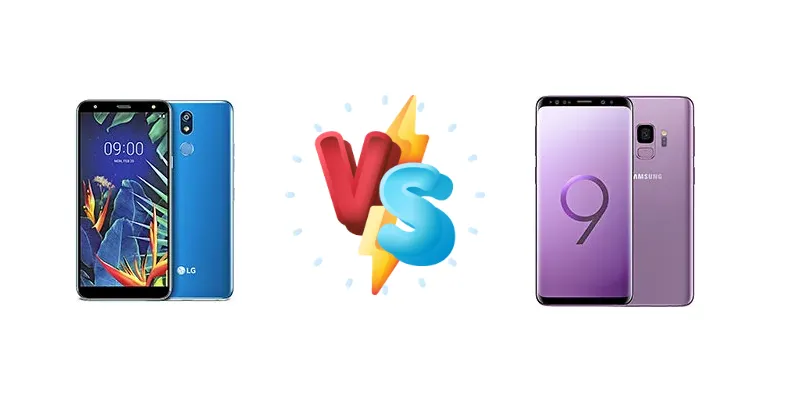
|
🏆 Quick Verdict
For the average user prioritizing a smooth, responsive experience and a better camera, the Samsung Galaxy S9 remains the superior choice despite its age. The Exynos 9810/Snapdragon 845 chipset delivers significantly more processing power than the LG K40’s Helio P22, justifying the price difference for demanding tasks.
| PHONES | ||
|---|---|---|
| Phone Names | LG K40 | Samsung Galaxy S9 |
| Network | ||
|---|---|---|
| 2G bands | GSM 850 / 900 / 1800 / 1900 | GSM 850 / 900 / 1800 / 1900 - SIM 1 & SIM 2 (dual-SIM model only) |
| 3G bands | HSDPA 850 / 900 / 1900 / 2100 | HSDPA 850 / 900 / 1700(AWS) / 1900 / 2100 - Global, USA |
| 4G bands | 1, 3, 7, 8, 20 | 1, 2, 3, 4, 5, 7, 8, 12, 13, 17, 18, 19, 20, 25, 26, 28, 32, 38, 39, 40, 41, 66 - Global |
| Speed | HSPA 42.2/5.76 Mbps, LTE (2CA) Cat6 300/50 Mbps | HSPA 42.2/5.76 Mbps, LTE (6CA) Cat18 1200/200 Mbps |
| Technology | GSM / HSPA / LTE | GSM / CDMA / HSPA / EVDO / LTE |
| - | 1, 2, 3, 4, 5, 7, 8, 12, 13, 14, 17, 18, 19, 20, 25, 26, 28, 29, 30, 38, 39, 40, 41, 46, 66, 71 - USA | |
| Launch | ||
|---|---|---|
| Announced | 2019, February. Released 2019, April | 2018, February 25. Released 2018, March 09 |
| Status | Discontinued | Discontinued |
| Body | ||
|---|---|---|
| Build | Glass front, plastic back, plastic frame | Glass front (Gorilla Glass 5), glass back (Gorilla Glass 5), aluminum frame |
| Dimensions | 153 x 71.9 x 8.3 mm (6.02 x 2.83 x 0.33 in) | 147.7 x 68.7 x 8.5 mm (5.81 x 2.70 x 0.33 in) |
| SIM | · Nano-SIM· Nano-SIM + Nano-SIM | · Nano-SIM· Nano-SIM + Nano-SIM |
| Weight | 144 g (5.08 oz) | 163 g (5.75 oz) |
| MIL-STD-810G compliant* *does not guarantee ruggedness or use in extreme conditions | IP68 dust/water resistant (up to 1.5m for 30 min) | |
| Display | ||
|---|---|---|
| Protection | - | Corning Gorilla Glass 5 |
| Resolution | 720 x 1440 pixels, 18:9 ratio (~282 ppi density) | 1440 x 2960 pixels, 18.5:9 ratio (~570 ppi density) |
| Size | 5.7 inches, 83.8 cm2 (~76.2% screen-to-body ratio) | 5.8 inches, 84.8 cm2 (~83.6% screen-to-body ratio) |
| Type | IPS LCD | Super AMOLED, HDR10 |
| - | 3D Touch (home button only) Always-on display | |
| Platform | ||
|---|---|---|
| CPU | Octa-core 2.0 GHz Cortex-A53 | Octa-core (4x2.7 GHz Mongoose M3 & 4x1.8 GHz Cortex-A55) - EMEAOcta-core (4x2.8 GHz Kryo 385 Gold & 4x1.7 GHz Kryo 385 Silver) - USA/LATAM, China |
| Chipset | Mediatek MT6762 Helio P22 (12 nm) | Exynos 9810 (10 nm) - EMEAQualcomm SDM845 Snapdragon 845 (10 nm) - USA/LATAM, China |
| GPU | PowerVR GE8320 | Mali-G72 MP18 - EMEAAdreno 630 - USA/LATAM, China |
| OS | Android 8.1 (Oreo), LG UX 7 | Android 8.0 (Oreo), upgradable to Android 10, One UI 2.5 |
| Memory | ||
|---|---|---|
| Card slot | microSDXC (dedicated slot) | microSDXC (uses shared SIM slot) - dual SIM model only |
| Internal | 32GB 2GB RAM, 32GB 3GB RAM | 64GB 4GB RAM, 128GB 4GB RAM, 256GB 4GB RAM |
| eMMC 5.1 | UFS 2.1 | |
| Main Camera | ||
|---|---|---|
| Features | LED flash, panorama, HDR | LED flash, auto-HDR, panorama |
| Single | 16 MP, f/2.0, 1/3.1", 1.0µm, PDAF | 12 MP, f/1.5-2.4, 26mm (wide), 1/2.55", 1.4µm, dual pixel PDAF, OIS |
| Video | 1080p@30fps | 4K@30/60fps, 1080p@30/60/240fps, 720p@960fps, HDR, stereo sound rec., gyro-EIS & OIS (30fps) |
| Selfie camera | ||
|---|---|---|
| Dual | - | 8 MP, f/1.7, 25mm (wide), 1/3.6", 1.22µm, AF 2 MP (dedicated iris scanner camera) |
| Features | LED flash | HDR |
| Single | 8 MP, f/2.0 | - |
| Video | 1080p@30fps | 1440p@30fps |
| Sound | ||
|---|---|---|
| 3.5mm jack | Yes | Yes |
| 35mm jack | Yes | Yes |
| Loudspeaker | Yes | Yes, with stereo speakers |
| - | 32-bit/384kHz audio Tuned by AKG | |
| Comms | ||
|---|---|---|
| Bluetooth | 5.0, A2DP, LE | 5.0, A2DP, LE, aptX |
| NFC | Yes (market/region dependent) | Yes |
| Positioning | GPS, GLONASS | GPS, GLONASS, BDS, GALILEO |
| Radio | No | FM radio (USA & Canada only) |
| USB | microUSB 2.0, OTG | USB Type-C 3.1 |
| WLAN | Wi-Fi 802.11 a/b/g/n/ac, dual-band, Wi-Fi Direct, DLNA | Wi-Fi 802.11 a/b/g/n/ac, dual-band, Wi-Fi Direct |
| Features | ||
|---|---|---|
| Sensors | Fingerprint (rear-mounted), accelerometer, proximity, compass | Iris scanner, fingerprint (rear-mounted), accelerometer, gyro, proximity, compass, barometer, heart rate, SpO2 |
| - | ANT+ Bixby natural language commands and dictation Samsung Pay (Visa, MasterCard certified) | |
| Battery | ||
|---|---|---|
| Charging | - | 15W wired, QC2 Wireless (Qi) (market dependent) |
| Type | Li-Ion 3000 mAh, non-removable | Li-Ion 3000 mAh, non-removable (11.55 Wh) |
| Misc | ||
|---|---|---|
| Colors | Black, New Moroccan Blue, New Platinum Gray | Midnight Black, Coral Blue, Titanium Gray, Lilac Purple, Burgundy Red, Sunrise Gold, Ice Blue |
| Models | LMX420, LMX420EMW, LM-X420 | SM-G960F, SM-G960, SM-G960F, SM-G960U, SM-G960W, SM-G9600, SM-G960U1, SM-G960N, SCV38, SM-G960X, SC-02K |
| Price | About 140 EUR | About 110 EUR |
| SAR | - | 0.63 W/kg (head) 0.96 W/kg (body) |
| SAR EU | - | 0.36 W/kg (head) 1.18 W/kg (body) |
| Tests | ||
|---|---|---|
| Audio quality | - | Noise -93.4dB / Crosstalk -93.9dB |
| Battery life | - | Endurance rating 78h |
| Camera | - | Photo / Video |
| Display | - | Contrast ratio: Infinite (nominal), 4.630 (sunlight) |
| Loudspeaker | - | Voice 68dB / Noise 74dB / Ring 81dB |
| Performance | - | AnTuTu: 250156 (v7) GeekBench: 8830 (v4.4) GFXBench: 14fps (ES 3.1 onscreen) |
LG K40
- More powerful processor for smoother performance
- Superior camera quality and features
- Wireless charging and faster wired charging
- Older device with potentially limited software updates
- Battery has degraded over time (used models)
Samsung Galaxy S9
- Significantly lower price
- Decent battery life for basic usage
- More readily available replacement parts
- Slow processor struggles with demanding tasks
- Inferior camera quality
- Lacks premium features like wireless charging
Display Comparison
Both devices offer similar endurance ratings at 78h, but their displays differ significantly. The Galaxy S9 boasts an 'Infinite' contrast ratio (4.630 in sunlight), suggesting a vibrant and readable screen even outdoors. While the LG K40’s display specs are not provided, its budget nature suggests a lower peak brightness and contrast ratio. The S9’s Super AMOLED panel likely offers superior color accuracy and viewing angles compared to the K40’s probable LCD.
Camera Comparison
The Galaxy S9’s camera system, while not the latest, remains competitive. Details on sensor size and aperture are missing, but its reputation for image quality is well-established. The LG K40’s camera specs are not detailed enough to make a direct comparison, but budget phones often compromise on sensor quality and image processing. The S9 likely offers superior low-light performance, dynamic range, and video recording capabilities. The K40 may include a 2MP macro camera, but these are often of limited practical use due to their low resolution.
Performance
The performance gap is substantial. The Samsung Galaxy S9, equipped with either the Exynos 9810 (EMEA) or Snapdragon 845 (USA/LATAM, China) – both 10nm processors – features an octa-core CPU with high-performance cores clocked up to 2.8 GHz. This contrasts sharply with the LG K40’s Mediatek MT6762 Helio P22 (12nm) and its 2.0 GHz Cortex-A53 cores. The S9’s architecture (Mongoose M3/Kryo 385 Gold) is significantly more advanced, resulting in faster app loading, smoother multitasking, and better gaming performance. The 10nm process node on the S9 also contributes to better thermal efficiency, reducing throttling under sustained load.
Battery Life
Both phones achieve an endurance rating of 78 hours, suggesting comparable battery life under similar usage patterns. However, the S9 offers 15W wired charging with Quick Charge 2.0 and Qi wireless charging (market dependent), features absent on the LG K40. While the K40’s battery capacity isn’t specified, the S9’s faster charging capabilities provide a more convenient user experience, allowing for quicker top-ups when needed.
Buying Guide
Buy the LG K40 if you need a basic, reliable smartphone for essential tasks like calling, texting, and light social media use, and your budget is extremely limited. Buy the Samsung Galaxy S9 if you prioritize a more premium experience, better performance for gaming and multitasking, a superior camera system, and features like wireless charging, even if it means spending more and accepting an older device.