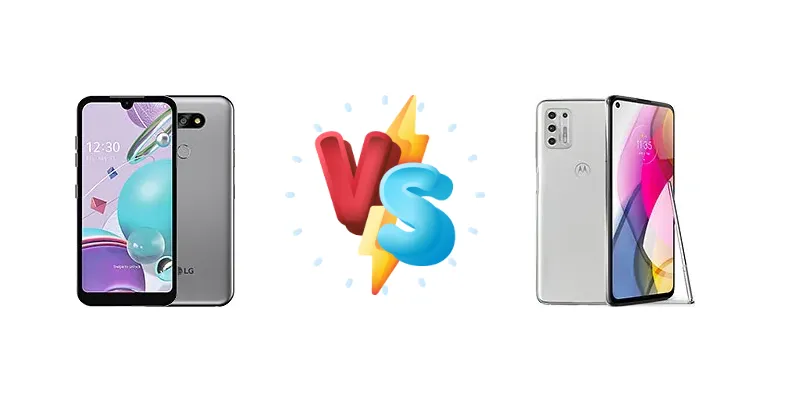
The LG K31 and Motorola Moto G Stylus (2021) represent distinct approaches to the budget smartphone market. The K31, a holdover from LG’s final years, aims for affordability, while the Moto G Stylus (2021) attempts to add functionality with its integrated stylus and a more modern chipset. This comparison dissects their core components to determine which device offers the best value for everyday users.
🏆 Quick Verdict
For the average user, the Motorola Moto G Stylus (2021) is the superior choice. Its Qualcomm Snapdragon 678 chipset, built on an 11nm process, provides a noticeable performance advantage over the LG K31’s MediaTek Helio P22, translating to smoother multitasking and a more responsive user experience. While both offer adequate battery life, the Moto G Stylus’s more efficient processor contributes to better overall longevity.
| Network |
|---|
| 2G bands | GSM 850 / 900 / 1800 / 1900 | GSM 850 / 900 / 1800 / 1900 |
| 3G bands | HSDPA 850 / 900 / 1700(AWS) / 1900 / 2100 | HSDPA 850 / 900 / 1700(AWS) / 1900 / 2100 |
| 4G bands | 2, 4, 5, 12, 13, 25, 26, 41, 66, 71 | 1, 2, 3, 4, 5, 7, 8, 12, 13, 14, 17, 20, 25, 26, 29, 38, 40, 41, 66, 71 |
| Speed | HSPA, LTE | HSPA, LTE |
| Technology | GSM / CDMA / HSPA / LTE | GSM / CDMA / HSPA / LTE |
| | CDMA 800 / 1900 | CDMA 800 / 1900 |
| Launch |
|---|
| Announced | 2020, August 21. Released 2020, August 21 | 2021, January 08 |
| Status | Discontinued | Available. Released 2021, January 14 |
| Body |
|---|
| Build | - | Glass front, plastic frame, plastic back |
| Dimensions | 147.8 x 71.1 x 8.6 mm (5.82 x 2.80 x 0.34 in) | 169.8 x 77.9 x 9 mm (6.69 x 3.07 x 0.35 in) |
| SIM | Nano-SIM + Nano-SIM | Nano-SIM |
| Weight | 146 g (5.15 oz) | 213 g (7.51 oz) |
| | MIL-STD-810G compliant*
*does not guarantee ruggedness or use in extreme conditions | Stylus
Water-repellent coating |
| Display |
|---|
| Resolution | 720 x 1520 pixels, 19:9 ratio (~295 ppi density) | 1080 x 2400 pixels, 20:9 ratio (~386 ppi density) |
| Size | 5.7 inches, 81.1 cm2 (~77.2% screen-to-body ratio) | 6.8 inches, 112.2 cm2 (~84.8% screen-to-body ratio) |
| Type | IPS LCD | IPS LCD |
| Platform |
|---|
| CPU | Octa-core 2.0 GHz Cortex-A53 | Octa-core (2x2.2 GHz Kryo 460 Gold & 6x1.7 GHz Kryo 460 Silver) |
| Chipset | Mediatek MT6762 Helio P22 (12 nm) | Qualcomm SDM678 Snapdragon 678 (11 nm) |
| GPU | PowerVR GE8320 | Adreno 612 |
| OS | Android 10, LG UX 9.1 | Android 10 |
| Memory |
|---|
| Card slot | microSDXC | microSDXC (dedicated slot) |
| Internal | 32GB 2GB RAM | 128GB 4GB RAM |
| | eMMC 5.1 | - |
| Main Camera |
|---|
| Dual | 13 MP, f/1.8, 27mm (wide), 1/3.1", 1.12µm, PDAF
5 MP, f/2.2, 120˚ (ultrawide), 1/5.0", 1.12µm | - |
| Features | LED flash, panorama, HDR | LED flash, HDR, panorama |
| Quad | - | 48 MP, f/1.7, 26mm (wide), 1/2.0", 0.8µm, PDAF
8 MP, f/2.2, 118˚ (ultrawide), 1/4.0, 1.12µm
2 MP (macro)
Auxiliary lens |
| Video | 1080p@30fps | 4K@30fps, 1080p@30/60fps; gyro-EIS |
| Selfie camera |
|---|
| Features | - | HDR |
| Single | 5 MP, f/2.2, 24mm (wide), 1/5.0", 1.12µm | 16 MP, f/2.0, (wide), 1/3.06", 1.0µm |
| Video | 1080p@30fps | 1080p@30fps, gyro-EIS |
| Sound |
|---|
| 3.5mm jack | Yes | Yes |
| 35mm jack | Yes | Yes |
| Loudspeaker | Yes | Yes |
| Comms |
|---|
| Bluetooth | 5.0, A2DP, LE | 5.0, A2DP, LE |
| NFC | No | No |
| Positioning | GPS | GPS, GLONASS, BDS, GALILEO |
| Radio | No | Unspecified |
| USB | microUSB 2.0 | USB Type-C 2.0 |
| WLAN | Wi-Fi 802.11 b/g/n, Wi-Fi Direct | Wi-Fi 802.11 a/b/g/n/ac, dual-band, Wi-Fi Direct |
| Features |
|---|
| Sensors | Fingerprint (rear-mounted), accelerometer | Fingerprint (side-mounted), accelerometer, gyro, proximity |
| Battery |
|---|
| Charging | - | 10W wired |
| Type | Li-Ion 3000 mAh | Li-Po 4000 mAh |
| Misc |
|---|
| Colors | Gray | Aurora Black, Aurora White |
| Models | LM-K300Q, LMK300, LGL355DL | XT2115, XT2115-1 |
| Price | About 130 EUR | About 90 EUR |
LG K31
- Potentially lower price point
- Basic functionality for essential tasks
- Simple and straightforward user interface
- Significantly weaker performance
- Less efficient processor
- Likely outdated software support
Motorola Moto G Stylus (2021)
- More powerful Snapdragon 678 processor
- Integrated stylus for enhanced productivity
- Better power efficiency for longer battery life
- Slower 10W charging
- Slightly higher price
- May still exhibit some performance limitations with demanding apps
Display Comparison
Neither device boasts a standout display. Both likely feature LCD panels, common in this price bracket. However, the lack of detailed display specs for the LG K31 makes a direct comparison difficult. The Moto G Stylus (2021) benefits from a larger screen size, which is advantageous for media consumption. The real difference lies in the processing power driving the UI; a sluggish processor like the Helio P22 will make even a perfectly adequate display *feel* slow.
Camera Comparison
Camera performance is likely similar in real-world usage, given the focus on affordability for both devices. Detailed camera specs are lacking for the LG K31, but it’s reasonable to assume it features a basic camera setup. The Moto G Stylus (2021) likely features a more refined image processing pipeline thanks to Qualcomm’s ISP. While megapixel counts aren’t everything, the Snapdragon 678’s image signal processor (ISP) will likely deliver better dynamic range and noise reduction, particularly in challenging lighting conditions. The inclusion of a stylus on the Moto G Stylus also opens up possibilities for creative photo editing and annotation.
Performance
The performance gap is the most significant differentiator. The Motorola Moto G Stylus (2021) utilizes the Qualcomm Snapdragon 678, fabricated on an 11nm process, featuring a Kryo 460 CPU with a dual-core configuration clocked at 2.2 GHz and a hexa-core configuration at 1.7 GHz. This contrasts sharply with the LG K31’s MediaTek Helio P22, a 12nm chip with an octa-core Cortex-A53 CPU clocked at 2.0 GHz. While both are octa-core, the Snapdragon 678’s architecture is more modern and efficient, resulting in superior single-core and multi-core performance. This translates to faster app loading times, smoother scrolling, and a more responsive overall experience. The 11nm process also contributes to better thermal management, reducing the likelihood of performance throttling under sustained load.
Battery Life
Both phones likely offer all-day battery life with moderate usage. The Moto G Stylus (2021) includes 10W wired charging, which is relatively slow by today’s standards. However, the Snapdragon 678’s improved power efficiency means it can extract more usage from a given battery capacity compared to the Helio P22. The LG K31’s battery capacity is unknown, but the less efficient Helio P22 will likely require more frequent charging to achieve similar longevity.
Buying Guide
Buy the LG K31 if your primary need is an extremely affordable device for basic communication – calls, texts, and light web browsing – and you prioritize minimal upfront cost above all else. Buy the Motorola Moto G Stylus (2021) if you value a more fluid user experience, appreciate the added functionality of a stylus for note-taking and quick sketches, and are willing to spend slightly more for a more capable processor and improved responsiveness.
Frequently Asked Questions
❓ Will the Moto G Stylus (2021) struggle with graphically intensive games like PUBG Mobile?
While the Snapdragon 678 isn't a gaming powerhouse, it's capable of running PUBG Mobile at medium settings with reasonable frame rates. Expect some occasional stuttering, especially in intense firefights. The LG K31’s Helio P22 will likely offer a significantly less enjoyable gaming experience, even at the lowest settings.
❓ How does the stylus on the Moto G Stylus (2021) enhance everyday use beyond just taking notes?
The stylus allows for precise navigation, quick screenshot annotations, and easy selection of small items on the screen. It also enables features like quick note-taking directly from the lock screen and can be used for creative tasks like sketching and photo editing. These features add a layer of convenience and productivity not found on the LG K31.
❓ Is the software experience significantly different between these two phones?
Yes. The Moto G Stylus (2021) runs a near-stock version of Android with Motorola’s helpful ‘My UX’ customizations, offering a cleaner and more responsive experience. The LG K31, running LG’s UX, is likely to be more heavily customized and potentially slower due to the less powerful hardware. Furthermore, LG has ceased software support for most of its phones, meaning the K31 is unlikely to receive future Android updates.