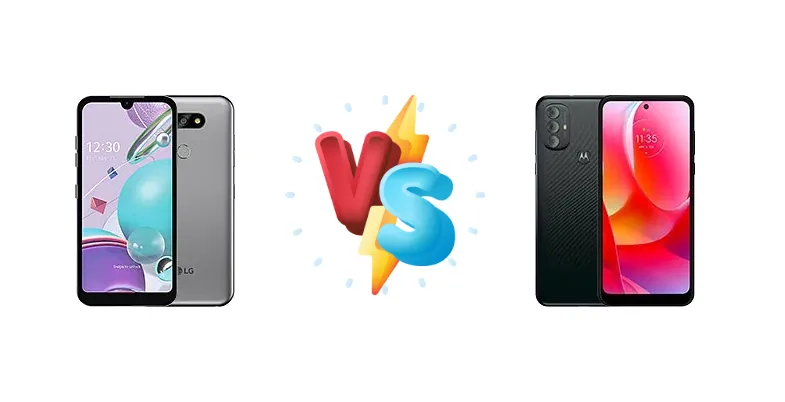
The LG K31 and Motorola Moto G Power (2022) represent two distinct approaches to the ultra-budget smartphone market. The K31, while older, offers a glimpse into LG’s former mobile strategy, while the Moto G Power (2022) continues Motorola’s focus on maximizing battery life and delivering a functional experience at a low price point. This comparison dissects their core components to determine which device offers the best value.
🏆 Quick Verdict
For the average user, the Motorola Moto G Power (2022) is the better choice. While both phones target the budget segment, the Moto G Power’s Mediatek Helio G37 chipset provides a noticeable performance uplift over the LG K31’s Helio P22, making it more responsive for everyday tasks and light gaming. The 10W charging is a downside, but the overall experience is smoother.
| Network |
|---|
| 2G bands | GSM 850 / 900 / 1800 / 1900 | GSM 850 / 900 / 1800 / 1900 |
| 3G bands | HSDPA 850 / 900 / 1700(AWS) / 1900 / 2100 | HSDPA 850 / 900 / 1700(AWS) / 1900 / 2100 |
| 4G bands | 2, 4, 5, 12, 13, 25, 26, 41, 66, 71 | 1, 2, 3, 4, 5, 7, 8, 12, 13, 14, 17, 25, 26, 29, 30, 38, 41, 66, 71 - USA |
| Speed | HSPA, LTE | HSPA, LTE |
| Technology | GSM / CDMA / HSPA / LTE | GSM / HSPA / LTE |
| | CDMA 800 / 1900 | - |
| Launch |
|---|
| Announced | 2020, August 21. Released 2020, August 21 | 2021, November 17 |
| Status | Discontinued | Available. Released 2022, February 22 |
| Body |
|---|
| Build | - | Glass front, plastic back, plastic frame |
| Dimensions | 147.8 x 71.1 x 8.6 mm (5.82 x 2.80 x 0.34 in) | 167.2 x 76.5 x 9.4 mm (6.58 x 3.01 x 0.37 in) |
| SIM | Nano-SIM + Nano-SIM | Nano-SIM |
| Weight | 146 g (5.15 oz) | 203 g (7.16 oz) |
| | MIL-STD-810G compliant*
*does not guarantee ruggedness or use in extreme conditions | Water-repellent coating |
| Display |
|---|
| Resolution | 720 x 1520 pixels, 19:9 ratio (~295 ppi density) | 720 x 1600 pixels, 20:9 ratio (~270 ppi density) |
| Size | 5.7 inches, 81.1 cm2 (~77.2% screen-to-body ratio) | 6.5 inches, 102.0 cm2 (~79.7% screen-to-body ratio) |
| Type | IPS LCD | IPS LCD, 90Hz |
| Platform |
|---|
| CPU | Octa-core 2.0 GHz Cortex-A53 | - |
| Chipset | Mediatek MT6762 Helio P22 (12 nm) | Mediatek MT6765 Helio G37 (12 nm) |
| GPU | PowerVR GE8320 | - |
| OS | Android 10, LG UX 9.1 | Android 11 |
| Memory |
|---|
| Card slot | microSDXC | microSDXC (dedicated slot) |
| Internal | 32GB 2GB RAM | 64GB 4GB RAM, 128GB 4GB RAM |
| | eMMC 5.1 | eMMC 5.1 |
| Main Camera |
|---|
| Dual | 13 MP, f/1.8, 27mm (wide), 1/3.1", 1.12µm, PDAF
5 MP, f/2.2, 120˚ (ultrawide), 1/5.0", 1.12µm | - |
| Features | LED flash, panorama, HDR | LED flash, HDR |
| Triple | - | 50 MP, f/1.8, (wide), 0.65µm, PDAF
2 MP (macro)
Auxiliary lens |
| Video | 1080p@30fps | 1080p@30fps, gyro-EIS |
| Selfie camera |
|---|
| Single | 5 MP, f/2.2, 24mm (wide), 1/5.0", 1.12µm | 8 MP, f/2.0, 1.12µm |
| Video | 1080p@30fps | 1080p@30fps |
| Sound |
|---|
| 3.5mm jack | Yes | Yes |
| 35mm jack | Yes | Yes |
| Loudspeaker | Yes | Yes |
| Comms |
|---|
| Bluetooth | 5.0, A2DP, LE | 5.0, A2DP, LE |
| NFC | No | No |
| Positioning | GPS | GPS, GLONASS, GALILEO |
| Radio | No | Unspecified |
| USB | microUSB 2.0 | USB Type-C 2.0 |
| WLAN | Wi-Fi 802.11 b/g/n, Wi-Fi Direct | Wi-Fi 802.11 a/b/g/n/ac, dual-band, Wi-Fi Direct |
| Features |
|---|
| Sensors | Fingerprint (rear-mounted), accelerometer | Fingerprint (side-mounted), accelerometer, gyro, proximity, compass, barometer |
| Battery |
|---|
| Charging | - | 10W wired |
| Type | Li-Ion 3000 mAh | Li-Po 5000 mAh |
| Misc |
|---|
| Colors | Gray | Black |
| Models | LM-K300Q, LMK300, LGL355DL | - |
| Price | About 130 EUR | About 70 EUR |
LG K31
- Potentially lower price point (depending on availability)
- Functional for basic smartphone tasks
- May be available with expandable storage
- Older, less efficient chipset (Helio P22)
- Likely slower performance and more lag
- Limited software support
Motorola Moto G Power (2022)
- More powerful and efficient chipset (Helio G37)
- Smoother user experience
- Better long-term software support from Motorola
- Slow 10W charging
- Basic camera system
- May be slightly more expensive than the K31
Display Comparison
Neither device boasts a standout display. Both utilize LCD panels, and detailed specifications like resolution and brightness are unavailable for the K31. The Moto G Power (2022) likely features a standard 60Hz refresh rate, common in this price bracket. The K31’s display quality is likely to be adequate for basic viewing, but the G Power’s newer panel may offer slightly improved color accuracy and viewing angles. Bezels are expected to be substantial on both devices, reflecting their budget positioning.
Camera Comparison
Camera performance is likely to be similar on both devices, leaning towards basic functionality. Detailed camera specs are scarce for the K31, but both phones likely feature a primary camera paired with depth and macro sensors. The Moto G Power (2022) likely has a slightly more refined image processing pipeline, but don’t expect flagship-level results. The presence of a 2MP macro camera on both is largely for marketing purposes and offers limited practical benefit. Image quality will be acceptable in good lighting conditions, but struggle in low light.
Performance
The core difference lies in the chipsets. The Motorola Moto G Power (2022) utilizes the Mediatek Helio G37, built on a 12nm process, while the LG K31 features the older Helio P22, also on a 12nm process. The Helio G37’s Cortex-A55 cores represent an architectural improvement over the K31’s Cortex-A53 cores, resulting in better single-core and multi-core performance. While both are octa-core CPUs clocked at 2.0 GHz, the G37’s improved architecture translates to a smoother user experience, particularly when multitasking or launching apps. The K31 will likely exhibit more noticeable lag in these scenarios. RAM specifications are missing for both, but expect 2-4GB, further limiting multitasking capabilities.
Battery Life
The Motorola Moto G Power (2022) prioritizes battery life, as its name suggests. While the exact battery capacity isn’t specified, Motorola’s ‘Power’ line is known for large batteries. The LG K31’s battery capacity is also unspecified. However, the G Power’s 10W wired charging is a significant drawback. Charging will be slow, taking several hours to reach a full charge. The K31’s charging speed is also likely to be slow, given its budget nature. The G Power’s more efficient chipset may offset the slower charging somewhat, providing longer overall usage time.
Buying Guide
Buy the LG K31 if you’ve found it at a significantly discounted price and your needs are extremely basic – primarily calls, texts, and very light app usage. The K31’s appeal is limited to those on the absolute tightest of budgets. Buy the Motorola Moto G Power (2022) if you prioritize a more responsive user experience, even for simple tasks, and want a phone that will handle occasional gaming or more demanding apps without significant lag. The G Power offers a better balance of performance and usability.
Frequently Asked Questions
❓ Is the Motorola Moto G Power (2022) good for playing mobile games?
The Helio G37 in the Moto G Power (2022) is capable of handling less demanding mobile games at lower settings. However, it’s not a gaming powerhouse. Expect playable frame rates in titles like PUBG Mobile or Call of Duty Mobile on medium or low graphics settings. The LG K31’s Helio P22 will struggle with even these games.
❓ How long will the battery last on the Motorola Moto G Power (2022) with typical usage?
Motorola’s ‘Power’ line is known for excellent battery life. With typical usage (browsing, social media, calls, and some video streaming), the Moto G Power (2022) should easily last a full day, and potentially two days, on a single charge. However, the 10W charging means it will take a significant amount of time to recharge.
❓ Does the LG K31 still receive software updates?
LG has largely exited the smartphone market, so software update support for the K31 is extremely limited. It’s unlikely to receive any further major Android version updates or security patches, making it a potential security risk over time.