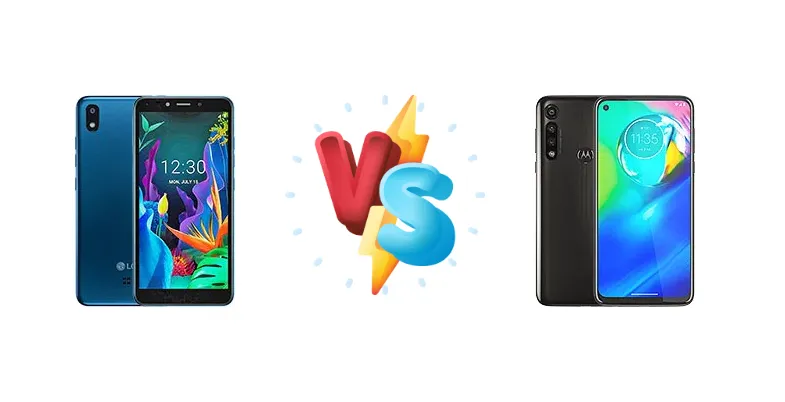
Both the LG K20 (2019) and the Motorola Moto G Power represent attempts to deliver affordable Android experiences. However, a significant gap exists in their underlying hardware, particularly in the chipset department. This comparison dissects the key differences, revealing why the Moto G Power offers a substantially more capable and future-proof experience.
🏆 Quick Verdict
For the average user, the Motorola Moto G Power is the clear winner. Its Snapdragon 665 chipset provides a noticeable performance boost over the LG K20’s Mediatek MT6739, coupled with improved efficiency. While both prioritize battery life, the Moto G Power’s superior processing power makes it the better all-around choice.
| Network |
|---|
| 2G bands | GSM 850 / 900 / 1800 / 1900 | GSM 850 / 900 / 1800 / 1900 |
| 3G bands | HSDPA 850 / 900 / 1900 / 2100 | HSDPA 850 / 900 / 1700(AWS) / 1900 / 2100 |
| 4G bands | 1, 3, 7, 8, 20, 38 | 1, 2, 3, 4, 5, 7, 8, 12, 13, 14, 17, 18, 19, 20, 25, 26, 29, 30, 38, 39, 40, 41, 66, 71 |
| Speed | HSPA 42.2/5.76 Mbps, LTE Cat4 150/50 Mbps | HSPA 42.2/5.76 Mbps, LTE (2CA) Cat13 600/100 Mbps |
| Technology | GSM / HSPA / LTE | GSM / CDMA / HSPA / EVDO / LTE |
| | - | CDMA2000 1xEV-DO |
| Launch |
|---|
| Announced | 2019, August. Released 2019, September | 2020, February 07. Released 2020, April 17 |
| Status | Discontinued | Discontinued |
| Body |
|---|
| Build | Glass front, plastic back, plastic frame | Glass front, plastic back, aluminum frame (6000 series) |
| Dimensions | 148.6 x 71.9 x 8.3 mm (5.85 x 2.83 x 0.33 in) | 159.9 x 75.8 x 9.6 mm (6.30 x 2.98 x 0.38 in) |
| SIM | Nano-SIM + Nano-SIM | Nano-SIM |
| Weight | 152 g (5.36 oz) | 199 g (7.02 oz) |
| | MIL-STD-810G compliant*
*does not guarantee ruggedness or use in extreme conditions | Water-repellent coating |
| Display |
|---|
| Resolution | 480 x 960 pixels, 18:9 ratio (~197 ppi density) | 1080 x 2300 pixels (~399 ppi density) |
| Size | 5.45 inches, 76.7 cm2 (~71.7% screen-to-body ratio) | 6.4 inches, 100.7 cm2 (~83.0% screen-to-body ratio) |
| Type | IPS LCD | IPS LCD |
| Platform |
|---|
| CPU | Quad-core 1.5 GHz Cortex-A53 | Octa-core (4x2.0 GHz Kryo 260 Gold & 4x1.8 GHz Kryo 260 Silver) |
| Chipset | Mediatek MT6739 (28 nm) | Qualcomm SDM665 Snapdragon 665 (11 nm) |
| GPU | PowerVR GE8100 | Adreno 610 |
| OS | Android 9.0 Pie (Go edition) | Android 10 |
| Memory |
|---|
| Card slot | microSDHC (dedicated slot) | microSDXC (dedicated slot) |
| Internal | 16GB 1GB RAM | 64GB 4GB RAM |
| | eMMC 5.1 | eMMC 5.1 |
| Main Camera |
|---|
| Features | LED flash, panorama, HDR | LED flash, HDR, panorama |
| Single | 8 MP, f/2.0, 27mm (wide), 1/4.0", 1.12µm, AF | - |
| Triple | - | 16 MP, f/1.7, (wide), 1/2.8", 1.12µm, PDAF
8 MP, f/2.2, 118˚ (ultrawide), 1/4.0", 1.12µm
2 MP (macro) |
| Video | 1080p@30fps | 4K@30fps, 1080p@30/60fps, 1080p@30fps (gyro-EIS) |
| Selfie camera |
|---|
| Features | LED flash | HDR |
| Single | 5 MP, f/2.2, 24mm (wide), 1/5.0", 1.12µm | 16 MP, f/2.0, (wide), 1/3.06", 1.0µm |
| Video | - | 1080p@30/120fps |
| Sound |
|---|
| 3.5mm jack | Yes | Yes |
| 35mm jack | Yes | Yes |
| Loudspeaker | Yes | Yes, with stereo speakers |
| Comms |
|---|
| Bluetooth | 5.0, A2DP, LE | 5.0, A2DP, LE |
| NFC | No | No |
| Positioning | GPS | GPS, GLONASS, BDS, GALILEO |
| Radio | No | FM radio |
| USB | microUSB 2.0 | USB Type-C 2.0 |
| WLAN | Wi-Fi 802.11 b/g/n | Wi-Fi 802.11 a/b/g/n/ac, dual-band, Wi-Fi Direct |
| Features |
|---|
| Sensors | Accelerometer, proximity | Fingerprint (rear-mounted), accelerometer, gyro, proximity |
| Battery |
|---|
| Charging | - | 10W wired |
| Type | Li-Ion 3000 mAh, non-removable | Li-Po 5000 mAh |
| Misc |
|---|
| Colors | New Aurora Black, New Moroccan Blue | Smoke Black |
| Models | LM-X120EMW, LMX120EMW, LM-X120, LMX120BMW | XT2041DL |
| Price | About 100 EUR | - |
LG K20 (2019)
- Potentially lower initial cost
- Simple and straightforward Android experience
- May be more readily available in certain regions
- Significantly slower performance
- Less efficient chipset leading to shorter battery life
- Inferior camera image quality
Motorola Moto G Power
- Much faster and more responsive performance
- More efficient chipset for longer battery life
- Superior camera image processing capabilities
- Better long-term software support potential
- Slower 10W charging
- May be slightly more expensive upfront
- Larger size compared to some ultra-budget options
Display Comparison
Neither device is known for display excellence. Both likely feature LCD panels, typical for this price bracket. However, details like resolution and brightness are missing for the LG K20. The Moto G Power’s display, while not exceptional, benefits from the more modern chipset’s image processing capabilities, potentially resulting in slightly more vibrant colors. Bezels are expected to be substantial on both devices, reflecting their budget positioning.
Camera Comparison
Without detailed camera specifications beyond the presence of cameras, a direct comparison is difficult. However, the chipset plays a crucial role in image processing. The Snapdragon 665’s image signal processor (ISP) is significantly more advanced than the one found in the Mediatek MT6739, enabling better noise reduction, dynamic range, and overall image quality. While both phones likely feature basic camera setups, the Moto G Power will produce superior photos and videos, especially in challenging lighting conditions. The LG K20’s camera will likely struggle with detail and color accuracy.
Performance
The performance disparity is the most significant difference. The Motorola Moto G Power’s Qualcomm Snapdragon 665 (11nm) is a substantial upgrade over the LG K20’s Mediatek MT6739 (28nm). The Snapdragon 665 utilizes an octa-core configuration (4x2.0 GHz Kryo 260 Gold & 4x1.8 GHz Kryo 260 Silver) compared to the K20’s quad-core 1.5 GHz Cortex-A53. The 11nm process node of the Snapdragon 665 is far more efficient, generating less heat and consuming less power for the same level of performance. This translates to smoother app launches, faster multitasking, and a more responsive user experience on the Moto G Power. The K20 will struggle with demanding applications and may exhibit noticeable lag.
Battery Life
Both devices prioritize battery life, but achieve it through different means. The Moto G Power’s 10W charging is relatively slow by today’s standards, but the Snapdragon 665’s efficiency means it requires less frequent charging. The LG K20’s battery capacity is unknown, but its less efficient chipset will likely necessitate more frequent top-ups. While the Moto G Power’s charging speed isn’t impressive, the combination of a large battery and an efficient processor provides excellent real-world endurance.
Buying Guide
Buy the LG K20 (2019) if you absolutely need the lowest possible upfront cost and your usage is limited to basic tasks like calls, texts, and light social media. Buy the Motorola Moto G Power if you prioritize smoother multitasking, occasional gaming, and a phone that will remain usable for a longer period without feeling sluggish. The Moto G Power’s efficiency also translates to better long-term value.
Frequently Asked Questions
❓ Will the LG K20 (2019) struggle with popular apps like Facebook or YouTube?
Yes, the LG K20’s Mediatek MT6739 chipset is relatively weak and will likely exhibit noticeable lag and slowdown when running demanding apps like Facebook or YouTube, especially with multiple apps open simultaneously. Expect longer loading times and a less fluid experience.
❓ Is the Motorola Moto G Power a good choice for light gaming?
The Moto G Power, with its Snapdragon 665, is capable of handling light gaming reasonably well. While it won’t run graphically intensive titles at maximum settings, it can comfortably play popular games like PUBG Mobile or Call of Duty Mobile at medium settings with acceptable frame rates. The LG K20 would struggle significantly with these games.
❓ How much faster is the Snapdragon 665 in the Moto G Power compared to the Mediatek MT6739 in the LG K20?
The Snapdragon 665 is significantly faster – roughly 50-70% faster in CPU performance and 80-100% faster in GPU performance – due to its octa-core architecture and more efficient 11nm manufacturing process. This translates to a much smoother and more responsive user experience on the Moto G Power.
❓ Does the Moto G Power support fast charging, and how long does it take to fully charge?
The Moto G Power supports 10W wired charging, which is relatively slow compared to modern fast charging standards. A full charge from 0% to 100% typically takes around 3-4 hours. However, the Snapdragon 665’s efficiency means you won’t need to charge it as frequently.