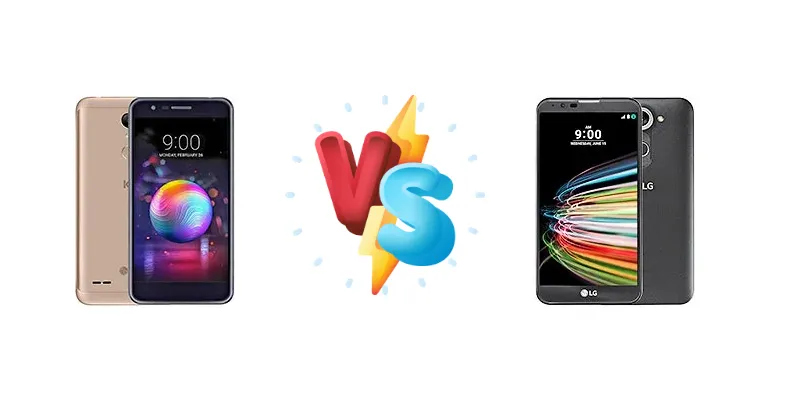
The LG K11 Plus and LG X mach represent different approaches to the mid-range smartphone market. The K11 Plus aimed for affordability with a Mediatek chipset, while the X mach leveraged Qualcomm's Snapdragon 808, a processor found in earlier flagship devices. This comparison dissects the core differences between these two phones, focusing on how their chipsets impact daily use and long-term performance.
🏆 Quick Verdict
For the average user prioritizing responsiveness and future-proofing, the LG X mach is the clear winner. Its Snapdragon 808, built on a smaller 20nm process, delivers significantly better CPU and GPU performance than the K11 Plus’s Mediatek MT6750. While the K11 Plus offers a value proposition, the X mach’s superior processing power justifies the potential price difference.
| Network |
|---|
| 2G bands | GSM 850 / 900 / 1800 / 1900 | GSM 850 / 900 / 1800 / 1900 - SIM 1 & SIM 2 |
| 3G bands | HSDPA 850 / 900 / 2100 - LMX410YC | HSDPA 850 / 900 / 1900 / 2100 |
| 4G bands | 1, 3, 5, 7, 8, 28, 38, 40 - LMX410YC | 1, 2, 3, 4, 5, 7, 8, 12, 17, 20, 28, 38 |
| Speed | HSPA 42.2/5.76 Mbps, LTE (2CA) Cat6 300/50 Mbps | HSPA 42.2/5.76 Mbps, LTE (3CA) Cat9 450/50 Mbps |
| Technology | GSM / HSPA / LTE | GSM / HSPA / LTE |
| | 1, 3, 7, 8, 20 - LMX410ZCW | - |
| Launch |
|---|
| Announced | 2018, July. Released 2018, July | 2016, June. Released 2016, September |
| Status | Discontinued | Discontinued |
| Body |
|---|
| Build | Glass front, aluminum back, plastic frame | - |
| Dimensions | 148.7 x 75.3 x 8.7 mm (5.85 x 2.96 x 0.34 in) | 149.1 x 76.5 x 8.9 mm (5.87 x 3.01 x 0.35 in) |
| SIM | · Nano-SIM· Nano-SIM + Nano-SIM | · Nano-SIM· Nano-SIM + Nano-SIM |
| Weight | 162 g (5.71 oz) | 150 g (5.29 oz) |
| | MIL-STD-810G compliant*
*does not guarantee ruggedness or use in extreme conditions | - |
| Display |
|---|
| Protection | - | Corning Gorilla Glass (unspecified version) |
| Resolution | 720 x 1280 pixels, 16:9 ratio (~277 ppi density) | 1440 x 2560 pixels, 16:9 ratio (~538 ppi density) |
| Size | 5.3 inches, 77.4 cm2 (~69.2% screen-to-body ratio) | 5.5 inches, 82.2 cm2 (~72.0% screen-to-body ratio) |
| Type | IPS LCD | IPS LCD |
| Platform |
|---|
| CPU | Octa-core (4x1.5 GHz Cortex-A53 & 4x1.0 GHz Cortex-A53) | Hexa-core (4x1.4 GHz Cortex-A53 & 2x1.8 GHz Cortex-A57) |
| Chipset | Mediatek MT6750 (28 nm) | Qualcomm MSM8992 Snapdragon 808 (20 nm) |
| GPU | Mali-T860MP2 | Adreno 418 |
| OS | Android 7.1.2 (Nougat), upgradable to Android 8.1 (Oreo) | Android 6.0.1 (Marshmallow) |
| Memory |
|---|
| Card slot | microSDXC (dedicated slot) | microSDXC (dedicated slot) |
| Internal | 16GB 2GB RAM, 32GB 2GB RAM, 32GB 3GB RAM | 32GB 3GB RAM |
| | eMMC 5.1 | eMMC 5.0 |
| Main Camera |
|---|
| Features | LED flash, HDR | LED flash, HDR, panorama |
| Single | 13 MP, f2.2, 26mm (wide), 1/3.1", PDAF - LG K11+
8 MP, f/2.2, 26mm (wide), 1/4.0", PDAF - LG K11α | 12.3 MP, f/2.0, 1.55µm, AF |
| Video | 1080p@30fps | 4K@30fps |
| Selfie camera |
|---|
| Single | 5 MP, f/2.2, 18mm, 1/5.0", 1.12µm | 8 MP |
| Video | 720p@30fps | 1080p@30fps |
| Sound |
|---|
| 3.5mm jack | Yes | Yes |
| 35mm jack | Yes | Yes |
| Loudspeaker | Yes | Yes |
| Comms |
|---|
| Bluetooth | 4.2, A2DP, LE | 4.2, A2DP, LE |
| NFC | Yes (market dependent) | Yes |
| Positioning | GPS, GLONASS | GPS, GLONASS |
| Radio | FM radio, RDS, recording | FM radio |
| USB | microUSB 2.0 | microUSB 2.0 |
| WLAN | Wi-Fi 802.11 b/g/n, Wi-Fi Direct | Wi-Fi 802.11 a/b/g/n/ac, dual-band, Wi-Fi Direct, DLNA |
| Features |
|---|
| Sensors | Fingerprint (rear-mounted), accelerometer, proximity, compass | Fingerprint (rear-mounted), accelerometer, gyro, proximity, compass |
| Battery |
|---|
| Stand-by | - | Up to 300 h (3G) |
| Talk time | - | Up to 13 h (3G) |
| Type | Li-Ion 3000 mAh, non-removable | Li-Ion 3000 mAh, removable |
| Misc |
|---|
| Colors | Moroccan Blue, Terra Gold, Black | Titan, White |
| Models | LMX410, LMX410FC, LMX410YC, LMX410HC, LMX410EO, LMX410ZCW, LMX410BCW, LM-X410S | K600 |
| Price | About 140 EUR | About 240 EUR |
| SAR EU | 0.81 W/kg (head) | 0.44 W/kg (head) |
LG K11 Plus
- More affordable price point
- Potentially longer battery life due to simpler chipset
- Reliable for basic smartphone tasks
- Significantly slower performance compared to the X mach
- Less efficient chipset leading to potential throttling
- Likely lower quality camera
LG X mach
- Superior CPU and GPU performance
- More efficient chipset for better thermal management
- Potentially better camera quality and image processing
- Higher price point
- May have slightly shorter battery life compared to K11 Plus (depending on battery capacity)
- Older chipset, potentially limited software support
Display Comparison
Neither device's display specifications are provided, so a direct comparison is limited. However, given the X mach's positioning as a slightly more premium device, it likely features a higher quality panel with better color accuracy and viewing angles. The K11 Plus, targeting a lower price point, likely utilizes a more cost-effective display solution. Both would have likely used LCD panels common in this price bracket at the time of release.
Camera Comparison
Without specific camera sensor details, a direct comparison is difficult. However, the X mach, being a slightly more premium device, likely incorporates a better camera module with a larger sensor and wider aperture. The Snapdragon 808 also includes an ISP (Image Signal Processor) capable of more advanced image processing, potentially resulting in better dynamic range and low-light performance. The K11 Plus likely features a more basic camera setup focused on affordability.
Performance
The core difference lies in the chipsets. The LG X mach’s Qualcomm MSM8992 Snapdragon 808 (20nm) features a hexa-core CPU with two high-performance Cortex-A57 cores clocked at 1.8 GHz, paired with four Cortex-A53 cores at 1.4 GHz. This architecture provides a significant boost in single-core performance compared to the LG K11 Plus’s Mediatek MT6750 (28nm). The MT6750 utilizes an octa-core configuration with four Cortex-A53 cores at 1.5 GHz and another four at 1.0 GHz. The Snapdragon 808’s 20nm manufacturing process is more efficient than the MT6750’s 28nm, resulting in better thermal management and potentially less throttling under sustained load. The A57 cores in the Snapdragon 808 are architecturally superior to the A53 cores in the MT6750, offering a noticeable performance advantage in CPU-intensive tasks.
Battery Life
Battery capacity data is missing for both devices. However, the Snapdragon 808’s 20nm process offers better power efficiency than the MT6750’s 28nm. This means the X mach could potentially achieve similar or better battery life despite potentially having a smaller battery capacity. Charging wattage is also unknown, making it impossible to compare charging speeds.
Buying Guide
Buy the LG K11 Plus if you need a basic, reliable smartphone for essential tasks like calling, texting, and light social media use, and your budget is extremely limited. Buy the LG X mach if you prefer a smoother, more responsive experience for multitasking, moderate gaming, and running demanding applications, and you value a processor that was originally found in higher-end devices.
Frequently Asked Questions
❓ Will the Mediatek MT6750 in the K11 Plus struggle with modern apps?
Yes, the Mediatek MT6750 is a relatively older and less powerful chipset. While it can handle basic apps, you may experience lag and slowdowns when running more demanding applications or multitasking heavily. The Snapdragon 808 in the X mach is significantly better equipped to handle modern software.
❓ Is the Snapdragon 808 in the LG X mach still a viable option for gaming?
The Snapdragon 808 can handle many mobile games, but it won't deliver the same performance as newer chipsets. Expect to play most games at medium settings. More graphically intensive titles may require lower settings to maintain a smooth frame rate. Thermal throttling could also become a factor during extended gaming sessions.
❓ Which phone is likely to receive more software updates?
Given the age of both devices, neither is likely to receive extensive software updates. However, Qualcomm chipsets generally have better driver support, potentially leading to slightly longer software support for the LG X mach. Don't expect major Android version updates on either device.