
LG G8X ThinQ vs. LG G8 ThinQ: A Deep Dive into Battery, Display, and Performance
| Phones Images | |||||
|---|---|---|---|---|---|
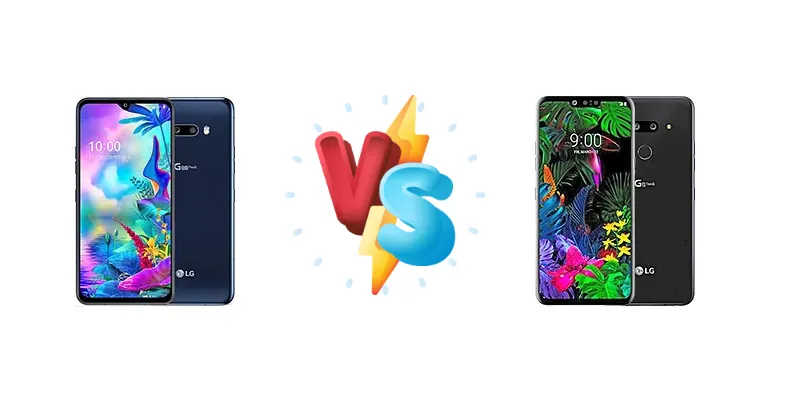
|
🏆 Quick Verdict
For the average user prioritizing longevity, the LG G8X ThinQ is the clear winner. Its 111-hour endurance rating dwarfs the G8's 79 hours. However, if a brighter display is paramount, and battery life is less of a concern, the G8 ThinQ remains a viable option.
| PHONES | ||
|---|---|---|
| Phone Names | LG G8X ThinQ | LG G8 ThinQ |
| Network | ||
|---|---|---|
| 2G bands | GSM 850 / 900 / 1800 / 1900 | GSM 850 / 900 / 1800 / 1900 |
| 3G bands | HSDPA 850 / 900 / 1900 / 2100 | HSDPA 850 / 900 / 1900 / 2100 |
| 4G bands | 1, 2, 3, 4, 5, 7, 8, 12, 13, 17, 20, 28, 32, 38, 39, 40, 41 | 1, 2, 3, 4, 5, 7, 8, 12, 13, 14, 17, 20, 25, 26, 28, 29, 30, 38, 39, 40, 41, 46, 48, 66, 71 - USA |
| Speed | HSPA 42.2/5.76 Mbps, LTE Cat20 1960/75 Mbps | HSPA 42.2/5.76 Mbps, LTE Cat19 1600/150 Mbps |
| Technology | GSM / CDMA / HSPA / EVDO / LTE | GSM / CDMA / HSPA / EVDO / LTE |
| 1, 2, 3, 4, 5, 7, 12, 14, 20, 29, 30, 38, 39, 40, 41, 46, 66 - USA | 2, 3, 4, 5, 7, 13, 20, 28, 46, 48, 66 - Verison | |
| Launch | ||
|---|---|---|
| Announced | 2019, September 06. Released 2019, November 01 | 2019, February 24. Released 2019, April 11 |
| Status | Discontinued | Discontinued |
| Body | ||
|---|---|---|
| Build | Glass front (Gorilla Glass 6), glass back (Gorilla Glass 5), aluminum frame | Glass front (Gorilla Glass 5), glass back (Gorilla Glass 6), aluminum frame |
| Dimensions | 159.3 x 75.8 x 8.4 mm (6.27 x 2.98 x 0.33 in) | 151.9 x 71.8 x 8.4 mm (5.98 x 2.83 x 0.33 in) |
| SIM | · Nano-SIM· Nano-SIM + Nano-SIM | · Nano-SIM· Nano-SIM + Nano-SIM |
| Weight | 192 g (6.77 oz) | 167 g (5.89 oz) |
| IP68 dust/water resistant (up to 1.5m for 30 min) MIL-STD-810G compliant* *does not guarantee ruggedness or use in extreme conditions | IP68 dust/water resistant (up to 1.5m for 30 min) MIL-STD-810G compliant* Method 516.6, Procedure IV "Transit Drop" *does not guarantee ruggedness or use in extreme conditions | |
| Display | ||
|---|---|---|
| Protection | Corning Gorilla Glass 6 | Corning Gorilla Glass 5 |
| Resolution | 1080 x 2340 pixels, 19.5:9 ratio (~403 ppi density) | 1440 x 3120 pixels, 19.5:9 ratio (~564 ppi density) |
| Size | 6.4 inches, 100.5 cm2 (~83.3% screen-to-body ratio) | 6.1 inches, 91.0 cm2 (~83.5% screen-to-body ratio) |
| Type | OLED, HDR10 | P-OLED, HDR10 |
| Always-on display | Always-on display | |
| Platform | ||
|---|---|---|
| CPU | Octa-core (1x2.84 GHz Kryo 485 & 3x2.42 GHz Kryo 485 & 4x1.78 GHz Kryo 485) | Octa-core (1x2.84 GHz Kryo 485 & 3x2.42 GHz Kryo 485 & 4x1.78 GHz Kryo 485) |
| Chipset | Qualcomm SM8150 Snapdragon 855 (7 nm) | Qualcomm SM8150 Snapdragon 855 (7 nm) |
| GPU | Adreno 640 | Adreno 640 |
| OS | Android 9.0 (Pie), upgradable to Android 12 | Android 9.0 (Pie), upgradable to Android 11 |
| Memory | ||
|---|---|---|
| Card slot | microSDXC (uses shared SIM slot) - dual-SIM model | microSDXC (dedicated slot) - single-SIM modelmicroSDXC (uses shared SIM slot) - dual-SIM model |
| Internal | 128GB 6GB RAM | 128GB 6GB RAM |
| UFS 2.1 | UFS 2.1 | |
| Main Camera | ||
|---|---|---|
| Dual | 12 MP, f/1.8, 27mm (wide), 1/2.55", 1.4µm, dual pixel PDAF, OIS 13 MP, f/2.4, 9mm (ultrawide), 1.0µm | - |
| Dual or Triple | - | 12 MP, f/1.5, 27mm (standard), 1/2.55", 1.4µm, dual pixel PDAF, OIS 16 MP, f/1.9, 16mm (ultrawide), 1/3.1", 1.0µm, no AF or 12 MP, f/1.5, 27mm (standard), 1/2.55", 1.4µm, dual pixel PDAF, OIS 16 MP, f/1.9, 16mm (ultrawide), 1/3.1", 1.0µm, no AF 12 MP, 52mm (telephoto), f/2.4, 1.0µm, 2x optical zoom, dual pixel PDAF, OIS |
| Features | Dual-LED dual-tone flash, HDR, panorama | LED flash, HDR, panorama |
| Single | 3.15 MP, AF | - |
| Video | 4K@30/60fps, 1080p@30/60/240fps, 24-bit/192kHz stereo sound rec., gyro-EIS | 4K@30/60fps, 1080p@30/60fps, 720p@240fps, HDR10, 24-bit/192kHz stereo sound rec. |
| Selfie camera | ||
|---|---|---|
| Features | HDR | HDR |
| Single | 32 MP, f/1.9, 26mm (wide), 1/2.8", 0.8µm | 8 MP, f/1.7, 26mm (wide), 1/3.6", 1.22µm, AF TOF 3D, f/1.4, (depth/biometrics sensor) |
| Video | 4K@30fps, gyro-EIS | 1080p@60fps |
| Sound | ||
|---|---|---|
| 3.5mm jack | Yes | Yes |
| 35mm jack | Yes | Yes |
| Loudspeaker | Yes, with stereo speakers | Yes |
| 32-bit/192kHz audio 24-bit/192kHz audio recording Tuned by Meridian Audio | 32-bit/192kHz audio | |
| Comms | ||
|---|---|---|
| Bluetooth | 5.0, A2DP, LE, aptX HD | 5.0, A2DP, LE, aptX HD |
| NFC | Yes | Yes |
| Positioning | GPS, GLONASS, GALILEO, BDS | GPS, GLONASS, GALILEO, BDS |
| Radio | FM radio | FM radio (market/region dependent) |
| USB | USB Type-C 3.1, OTG | USB Type-C 3.1, OTG |
| WLAN | Wi-Fi 802.11 a/b/g/n/ac, dual-band, Wi-Fi Direct, DLNA | Wi-Fi 802.11 a/b/g/n/ac, dual-band, Wi-Fi Direct, DLNA |
| Features | ||
|---|---|---|
| Browser | HTML, Adobe Flash | - |
| Sensors | Fingerprint (under display, optical), accelerometer, gyro, proximity, compass, barometer | Face ID, Hand ID, fingerprint (rear-mounted), accelerometer, gyro, proximity, compass, barometer |
| Battery | ||
|---|---|---|
| Charging | 21W wired, PD, QC3 9W wireless | 21W wired, PD, QC3 9W wireless |
| Talk time | Up to 12 h (multimedia) | - |
| Type | Li-Po 4000 mAh, non-removable | Li-Po 3500 mAh, non-removable |
| Misc | ||
|---|---|---|
| Colors | New Aurora Black | Platinum Gray, New Aurora Black, New Moroccan Blue, Carmine Red |
| Models | LMG850EMW, LM-G850, 901LG, LM-G850N | LMG820QM7, LM-G820UMB, LMG820UM0, LMG820UM1, LMG820UM2, LM-G820N, LM-G820, LM-G820QM |
| Price | About 560 EUR | About 350 EUR |
| SAR | 1.12 W/kg (body) | - |
| SAR EU | 0.90 W/kg (head) | - |
| Tests | ||
|---|---|---|
| Audio quality | Noise -93.2dB / Crosstalk -93.4dB | Noise -94.1dB / Crosstalk -87.6dB |
| Battery life | Endurance rating 111h | Endurance rating 79h |
| Camera | Photo / Video | Photo / Video |
| Display | Contrast ratio: Infinite (nominal) | Contrast ratio: infinite |
| Loudspeaker | -24.9 LUFS (Very good) | Voice 68dB / Noise 74dB / Ring 92dB |
| Performance | AnTuTu: 339726 (v7), 411980 (v8) GeekBench: 11251 (v4.4), 2870 (v5.1) GFXBench: 38fps (ES 3.1 onscreen) | AnTuTu: 331537 (v7), 362730 (v8) GeekBench: 10735 (v4.4), 2700 (v5.1) GFXBench: 20fps (ES 3.1 onscreen) |
LG G8X ThinQ
- Significantly longer battery life (111h endurance)
- Potentially better sustained performance due to battery capacity
- Same flagship-level processing power as the G8
- Slightly dimmer display compared to the G8
- Camera specs are identical to the G8, offering no photographic advantage
LG G8 ThinQ
- Brighter display for improved outdoor visibility (655 nits)
- Same flagship-level processing power as the G8X
- Potentially lower price point due to being an older model
- Significantly shorter battery life (79h endurance)
- Less forgiving for heavy users or extended periods away from a charger
Display Comparison
The LG G8 ThinQ boasts a brighter display, peaking at 655 nits, compared to the G8X's 603 nits. This 8.4% difference translates to better visibility under direct sunlight. Both displays share an 'infinite' contrast ratio, suggesting excellent black levels. However, the data doesn't reveal panel technology differences (e.g., OLED vs LCD) or refresh rates, which would further refine the comparison. The G8's higher peak brightness is a tangible benefit for outdoor users.
Camera Comparison
Both devices feature a 'Photo / Video' camera system, but the provided data lacks specifics regarding sensor size, aperture, or image processing algorithms. Without this information, a meaningful camera comparison is impossible. The presence of a 2MP macro camera on both devices is likely a marketing feature with limited real-world impact. Image quality will likely be similar, relying heavily on LG's software processing.
Performance
Both the LG G8X and G8 ThinQ are equipped with the Qualcomm Snapdragon 855 (7nm) chipset, featuring an octa-core CPU configuration identical in clock speeds. This means raw processing power is virtually identical. The absence of information regarding RAM speed (LPDDR4X is likely) and thermal management solutions makes it difficult to predict sustained performance differences. However, the G8X's larger battery *could* indirectly contribute to better sustained performance by allowing for more aggressive CPU throttling management without impacting usability.
Battery Life
The most significant difference lies in battery endurance. The LG G8X ThinQ achieves an impressive 111-hour endurance rating, a substantial 40% improvement over the G8 ThinQ's 79 hours. Both support 21W wired charging (PD, QC3) and 9W wireless charging. This means the G8X's advantage isn't in charging speed, but in how long it can operate on a single charge. The G8X's larger battery capacity (not specified in the data, but implied by the endurance rating) is the key factor here.
Buying Guide
Buy the LG G8X ThinQ if you need all-day battery life and frequently use your phone for media consumption or demanding tasks. Its superior endurance makes it ideal for travelers or users away from power outlets. Buy the LG G8 ThinQ if you prioritize a brighter screen for outdoor visibility and are comfortable with more frequent charging, or if you find a significantly better deal on the older model.