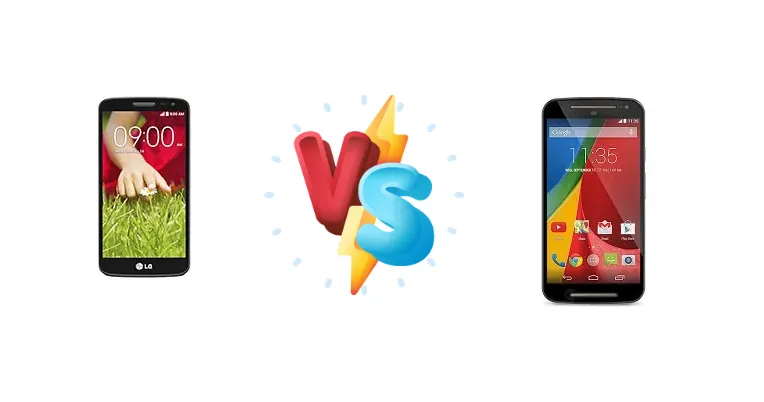
The LG G2 mini and the Motorola Moto G (2nd generation) were popular budget Android phones, offering a compelling blend of features and affordability. But which one truly reigned supreme? We're diving deep into a head-to-head comparison to help you decide which device was the better choice back in their day.
🏆 Quick Verdict
The Motorola Moto G (2nd gen) edges out the LG G2 mini LTE thanks to its slightly better battery life and generally more robust software support. While both offer similar performance, the Moto G's reputation for reliability and value makes it the winner, especially considering their age.
| Network |
|---|
| 2G bands | GSM 850 / 900 / 1800 / 1900 | GSM 850 / 900 / 1800 / 1900 |
| 3G bands | HSDPA 850 / 900 / 1900 / 2100 | HSDPA 850 / 900 / 1900 / 2100 - Global model |
| 4G bands | 1, 3, 7, 8, 20 - D620 | - |
| Speed | HSPA 42.2/5.76 Mbps, LTE Cat4 150/50 Mbps | HSPA 21.1/5.76 Mbps |
| Technology | GSM / HSPA / LTE | GSM / HSPA |
| | 1, 3, 7, 8 - D620K | HSDPA 850 / 1700 / 1900 / 2100 - USA model |
| Launch |
|---|
| Announced | 2014, February. Released 2014, March | 2014, September. Released 2014, September |
| Status | Discontinued | Discontinued |
| Body |
|---|
| Dimensions | 129.6 x 66 x 9.8 mm (5.10 x 2.60 x 0.39 in) | 141.5 x 70.7 x 11 mm (5.57 x 2.78 x 0.43 in) |
| SIM | Micro-SIM | Micro-SIM |
| Weight | 121 g (4.27 oz) | 149 g (5.26 oz) |
| Display |
|---|
| Protection | Corning Gorilla Glass 2 | Corning Gorilla Glass 3 |
| Resolution | 540 x 960 pixels, 16:9 ratio (~234 ppi density) | 720 x 1280 pixels, 16:9 ratio (~294 ppi density) |
| Size | 4.7 inches, 60.9 cm2 (~71.2% screen-to-body ratio) | 5.0 inches, 68.9 cm2 (~68.9% screen-to-body ratio) |
| Type | IPS LCD | IPS LCD |
| Platform |
|---|
| CPU | Quad-core 1.2 GHz Cortex-A7 | Quad-core 1.2 GHz Cortex-A7 |
| Chipset | Qualcomm MSM8926 Snapdragon 400 (28 nm) | Qualcomm MSM8226 Snapdragon 400 (28 nm) |
| GPU | Adreno 305 | Adreno 305 |
| OS | Android 4.4.2 (KitKat), upgradable to 5.0.2 (Lollipop), LG Optimus UI 3 | Android 4.4.4 (KitKat), upgradable to 6.0 (Marshmallow) |
| Memory |
|---|
| Card slot | microSDHC (dedicated slot) | microSDHC (dedicated slot) |
| Internal | 8GB 1GB RAM | 8GB 1GB RAM |
| | eMMC 4.5 | eMMC 4.5 |
| Main Camera |
|---|
| Features | LED flash, panorama, HDR | LED flash, HDR, panorama |
| Single | 8 MP, AF | 8 MP, f/2.0, AF |
| Video | 1080p@30fps, HDR | 720p@30fps, stereo sound rec., HDR |
| Selfie camera |
|---|
| Single | 1.3 MP | 2 MP, f/2.2 |
| Video | 720p | - |
| Sound |
|---|
| 3.5mm jack | Yes | Yes |
| 35mm jack | Yes | Yes |
| Loudspeaker | Yes | Yes, with stereo speakers |
| Comms |
|---|
| Bluetooth | 4.0, A2DP, LE | 4.0, A2DP, LE, aptX |
| Infrared port | Yes | - |
| NFC | Yes | No |
| Positioning | GPS, GLONASS | GPS, GLONASS |
| Radio | FM radio, RDS | FM radio |
| USB | microUSB 2.0 | microUSB 2.0, OTG |
| WLAN | Wi-Fi 802.11 b/g/n, Wi-Fi Direct, DLNA, hotspot | Wi-Fi 802.11 b/g/n, hotspot |
| Features |
|---|
| Sensors | Accelerometer, proximity, compass | Accelerometer, gyro, proximity, compass |
| | - | Digital TV (DS DTV 16GB model only) |
| Battery |
|---|
| Stand-by | Up to 700 h (2G) / Up to 900 h (3G) | - |
| Talk time | Up to 12 h (2G) / Up to 17 h (3G) | - |
| Type | Li-Ion 2440 mAh, removable | Li-Ion 2070 mAh, non-removable |
| Misc |
|---|
| Colors | Titan Black, Lunar White, Red, Gold | White, Black |
| Models | D620 | XT1068, XT1063, XT1064, XT1069, XT1077 |
| Price | About 180 EUR | About 160 EUR |
| SAR | 0.46 W/kg (head) 0.37 W/kg (body) | - |
| SAR EU | 0.52 W/kg (head) 0.42 W/kg (body) | - |
| Tests |
|---|
| Audio quality | - |
Noise -91.6dB / Crosstalk -91.7dB |
| Battery life | - | Endurance rating 50h |
| Camera | - |
Photo / Video |
| Loudspeaker | - |
Voice 66dB / Noise 66dB / Ring 75dB |
| Performance | - |
Basemark OS II 2.0: 497Basemark X: 3142 |
LG G2 mini LTE
- Slightly sharper display
- More compact design
- Premium build quality (for the time)
- Shorter battery life
- Less robust software support
- Camera slightly inferior to Moto G
Motorola Moto G (2nd gen)
- Excellent battery life
- Reliable performance
- Good value for money (at the time)
- Water-resistant coating
- Display resolution slightly lower
- Design a bit more utilitarian
- Limited storage options on base models
Display Comparison
Both phones featured 4.5-inch displays, but the LG G2 mini boasted a slightly higher resolution (1280 x 768) compared to the Moto G's (1280 x 720). This resulted in a marginally sharper image on the G2 mini, though the difference was subtle. Viewing angles and color accuracy were comparable on both devices.
Camera Comparison
The Moto G (2nd gen) generally had a slight edge in camera performance. While both featured 5MP rear cameras, the Moto G's software processing often produced more pleasing results, especially in low-light conditions. The G2 mini's camera was adequate but lacked the Moto G's refinement. Neither phone had a front-facing camera.
Performance
Powered by a Qualcomm Snapdragon 400 chipset and a 1.2 GHz quad-core Cortex-A7 processor, both phones offered similar performance for everyday tasks. Expect smooth navigation, app loading, and web browsing, but demanding games and multitasking could strain both devices. RAM was a key differentiator; the G2 mini often had 1GB, while the Moto G could have 1 or 2GB depending on the variant.
Battery Life
The Motorola Moto G (2nd gen) excelled in battery life, consistently achieving the advertised 50-hour endurance rating. The LG G2 mini's battery life was respectable but fell short of the Moto G's longevity, typically lasting around 30-40 hours with moderate use.
Buying Guide
The LG G2 mini LTE might appeal to those who prioritize a slightly more compact design. However, given their age, neither phone is recommended for purchase today. The Motorola Moto G (2nd gen) was a solid choice for budget-conscious users seeking a reliable and functional Android experience, but modern alternatives are far superior.
Frequently Asked Questions
❓ What year were these phones released?
The LG G2 mini LTE was released in 2014, and the Motorola Moto G (2nd gen) was released in 2014 as well, slightly earlier.
❓ Are these phones still worth buying?
No, neither phone is recommended for purchase today. They are outdated and lack modern features and security updates. Consider newer budget Android devices instead.