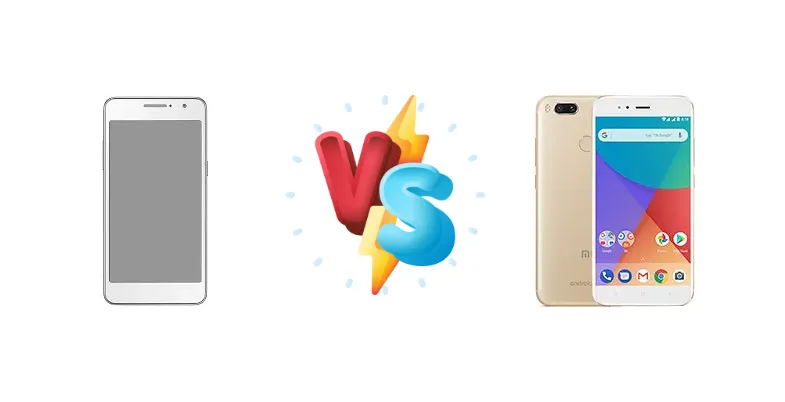
The Lenovo ZUK Z1 mini and Xiaomi Mi A1 (also known as Mi 5X) were popular budget contenders. Both offered compelling features for their price, but which one ultimately reigns supreme? This comprehensive comparison dives deep into their specs, performance, and overall value to help you decide.
🏆 Quick Verdict
The Xiaomi Mi A1 (Mi 5X) edges out the ZUK Z1 mini thanks to its superior Snapdragon 625 chipset, excellent battery life, and impressive camera performance. While the ZUK Z1 mini had a smaller form factor, the Mi A1's overall package is more polished and reliable.
| Network |
|---|
| 2G bands | GSM 850 / 900 / 1800 / 1900 - SIM 1 & SIM 2 | GSM 850 / 900 / 1800 / 1900 - SIM 1 & SIM 2 |
| 3G bands | HSDPA 850 / 900 / 1900 / 2100 | HSDPA 850 / 900 / 1900 / 2100 |
| 4G bands | 1, 3, 7, 38, 39, 40, 41 | 1, 3, 5, 7, 8, 20, 38, 40 |
| Speed | HSPA, LTE Cat4 150/50 Mbps | HSPA 42.2/5.76 Mbps, LTE (2CA) Cat6 300/50 Mbps |
| Technology | GSM / CDMA / HSPA / LTE | GSM / HSPA / LTE |
| | TD-SCDMA | - |
| Launch |
|---|
| Announced | Exp. announcement 2016, Q1 | 2017, September. Released 2017, September |
| Status | Cancelled | Discontinued |
| Body |
|---|
| Build | - | Glass front (Gorilla Glass 3), aluminum back, aluminum frame |
| Dimensions | - | 155.4 x 75.8 x 7.3 mm (6.12 x 2.98 x 0.29 in) |
| SIM | Dual SIM (Micro-SIM, dual stand-by) | Nano-SIM + Nano-SIM |
| Weight | - | 165 g (5.82 oz) |
| Display |
|---|
| Protection | - | Corning Gorilla Glass 3 |
| Resolution | 720 x 1280 pixels, 16:9 ratio (~312 ppi density) | 1080 x 1920 pixels, 16:9 ratio (~403 ppi density) |
| Size | 4.7 inches, 60.9 cm2 | 5.5 inches, 82.6 cm2 (~70.1% screen-to-body ratio) |
| Type | IPS LCD | IPS LCD |
| Platform |
|---|
| CPU | Octa-core (4x2.0 GHz Cortex-A53 & 4x1.0 GHz Cortex-A53) | Octa-core 2.0 GHz Cortex-A53 |
| Chipset | Mediatek MT6755 Helio P10 (28 nm) | Qualcomm MSM8953 Snapdragon 625 (14 nm) |
| GPU | Mali-T860MP2 | Adreno 506 |
| OS | Android 5.1.1 (Lollipop) | Android 7.1.2 (Nougat), upgradable to Android 9.0 (Pie), Android One |
| Memory |
|---|
| Card slot | No | microSDXC (uses shared SIM slot) |
| Internal | 16GB 2GB RAM, 32GB 3GB RAM | 32GB 4GB RAM, 64GB 4GB RAM |
| | eMMC 5.1 | eMMC 5.1 |
| Main Camera |
|---|
| Dual | - | 12 MP, f/2.2, 26mm (wide), 1/2.9", 1.25µm, PDAF
12 MP, f/2.6, 50mm (telephoto), 1.0µm, AF, 2x optical zoom |
| Features | LED flash, panorama | Dual-LED dual-tone flash, HDR, panorama |
| Single | 8 MP, AF | - |
| Video | Yes | 4K@30fps, 1080p@30fps, 720p@120fps |
| Selfie camera |
|---|
| Single | Yes | 5 MP |
| Video | - | 1080p@30fps |
| Sound |
|---|
| 3.5mm jack | Yes | Yes |
| 35mm jack | Yes | Yes |
| Loudspeaker | Yes | Yes |
| Comms |
|---|
| Bluetooth | 4.0, A2DP | 4.2, A2DP, LE |
| Infrared port | - | Yes |
| NFC | No | No |
| Positioning | GPS, GLONASS | GPS, GLONASS, BDS |
| Radio | FM radio | FM radio |
| USB | microUSB 2.0 | USB Type-C 2.0 |
| WLAN | Wi-Fi 802.11 b/g/n, Wi-Fi Direct, hotspot | Wi-Fi 802.11 a/b/g/n/ac, dual-band, Wi-Fi Direct |
| Features |
|---|
| Sensors | Fingerprint (front-mounted), accelerometer, proximity | Fingerprint (rear-mounted), accelerometer, gyro, proximity |
| Battery |
|---|
| Charging | - | 10W wired |
| Type | - | Li-Po 3080 mAh, non-removable |
| Misc |
|---|
| Colors | White, Black | Black, Gold, Rose Gold, Red |
| Models | - | MDG2, MDI2 |
| Price | - | About 170 EUR |
| SAR | - | 1.75 W/kg (head) 0.76 W/kg (body) |
| Tests |
|---|
| Audio quality | - |
Noise -91.0dB / Crosstalk -82.5dB |
| Battery life | - | Endurance rating 87h |
| Camera | - |
Photo / Video |
| Display | - |
Contrast ratio: 1570:1 (nominal), 2.689 (sunlight) |
| Loudspeaker | - |
Voice 74dB / Noise 73dB / Ring 90dB |
| Performance | - |
GeekBench: 4292 (v4.4)
GFXBench: 3.5fps (ES 3.1 onscreen) |
Lenovo ZUK Z1 mini
- Compact size
- Potentially more affordable
- Decent performance for basic tasks
- Less powerful chipset
- Shorter battery life
- Inferior camera quality
- Older software support
Xiaomi Mi A1 (Mi 5X)
- Excellent battery life
- Superior camera performance
- Smoother performance thanks to Snapdragon 625
- Clean Android experience
- Slightly larger than ZUK Z1 mini
- 10W charging is relatively slow
Display Comparison
Both phones featured 5.5-inch displays with a 1920x1080 resolution. The Mi A1 boasts a slightly better contrast ratio (1570:1 nominal, 2.689 in sunlight) suggesting potentially better outdoor visibility. However, both displays are adequate for everyday use.
Camera Comparison
The Mi A1's dual-lens camera setup (12MP + 12MP) delivers superior image quality, particularly in low light. It also offers features like portrait mode with bokeh effect. The ZUK Z1 mini's camera (likely a single 13MP sensor) is decent but lacks the Mi A1's versatility and image processing capabilities.
Performance
The Xiaomi Mi A1's Snapdragon 625 chipset is a significant advantage. Its 14nm process offers better power efficiency and generally smoother performance compared to the ZUK Z1 mini's Mediatek Helio P10 (28nm). While both have octa-core CPUs, the Snapdragon 625's architecture and optimization provide a noticeable difference in real-world usage.
Battery Life
The Mi A1 shines in battery life, boasting an impressive endurance rating of 87 hours. This is significantly better than the ZUK Z1 mini, which likely offered a smaller battery capacity and less efficient chipset.
Buying Guide
Who should buy the Lenovo ZUK Z1 mini? Users prioritizing a smaller, more compact phone and potentially seeking a slightly more affordable option. Who should buy the Xiaomi Mi A1 (Mi 5X)? Those looking for a reliable, long-lasting battery, a capable camera, and a smoother overall experience.
Frequently Asked Questions
❓ Is the ZUK Z1 mini still worth buying?
It's difficult to recommend the ZUK Z1 mini now due to its age and lack of software updates. However, if you find it at a very low price and prioritize a small form factor, it might suffice for basic tasks.
❓ What Android version did the Xiaomi Mi A1 ship with?
The Xiaomi Mi A1 launched with Android 7.1.1 (Nougat) and received updates to Android 9 (Pie).