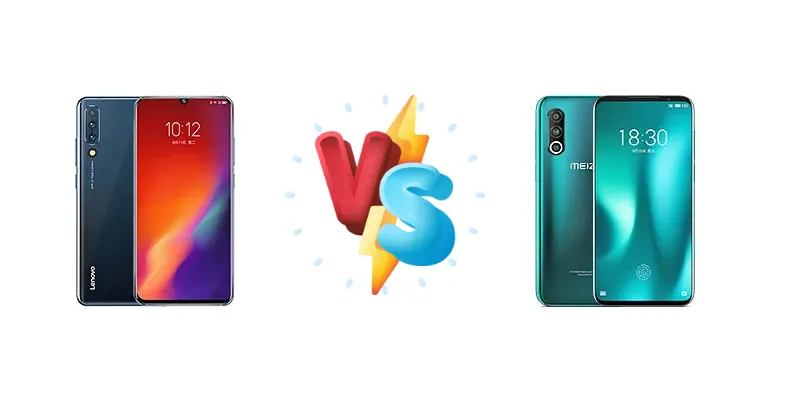
The Lenovo Z6 and Meizu 16s Pro represent interesting points in the smartphone landscape. The Z6 aimed to deliver a compelling experience at a budget price point, while the 16s Pro, though older, offered a flagship-level chipset in a more refined package. This comparison dissects the core differences between these devices, focusing on the impact of their respective chipsets and charging capabilities.
🏆 Quick Verdict
For the average user prioritizing raw performance and faster charging, the Meizu 16s Pro is the clear winner. Its Snapdragon 855+ provides a significant performance uplift over the Z6’s Snapdragon 730. However, the Lenovo Z6 remains a viable option for budget-conscious users who prioritize efficiency and a lower price.
| Network |
|---|
| 2G bands | GSM 850 / 900 / 1800 / 1900 | GSM 850 / 900 / 1800 / 1900 |
| 3G bands | HSDPA 850 / 900 / 1900 / 2100 | HSDPA 850 / 900 / 1900 / 2100 |
| 4G bands | 1, 2, 3, 5, 7, 8, 20, 34, 38, 39, 40, 41 | 1, 3, 5, 8, 34, 38, 39, 40, 41 |
| Speed | HSPA, LTE | HSPA 42.2/5.76 Mbps, LTE (5CA) Cat18 1200/150 Mbps |
| Technology | GSM / CDMA / HSPA / LTE | GSM / CDMA / HSPA / LTE |
| | CDMA 800 & TD-SCDMA | CDMA 800 & TD-SCDMA |
| Launch |
|---|
| Announced | 2019, July 04. Released 2019, July 09 | 2019, August. Released 2019, August |
| Status | Discontinued | Discontinued |
| Body |
|---|
| Build | Glass front (Gorilla Glass), glass back, aluminum frame | - |
| Dimensions | 157 x 74.5 x 8 mm (6.18 x 2.93 x 0.31 in) | 151.9 x 73.4 x 7.7 mm (5.98 x 2.89 x 0.30 in) |
| SIM | Nano-SIM + Nano-SIM | Nano-SIM + Nano-SIM |
| Weight | 159 g (5.61 oz) | 166 g (5.86 oz) |
| Display |
|---|
| Protection | Corning Gorilla Glass (unspecified) | - |
| Resolution | 1080 x 2340 pixels, 19.5:9 ratio (~403 ppi density) | 1080 x 2232 pixels, 18.5:9 ratio (~403 ppi density) |
| Size | 6.39 inches, 100.2 cm2 (~85.7% screen-to-body ratio) | 6.2 inches, 95.8 cm2 (~85.9% screen-to-body ratio) |
| Type | Super AMOLED, 120Hz, HDR10 | Super AMOLED |
| Platform |
|---|
| CPU | Octa-core (2x2.2 GHz Kryo 470 Gold & 6x1.8 GHz Kryo 470 Silver) | Octa-core (1x2.96 GHz Kryo 485 & 3x2.42 GHz Kryo 485 & 4x1.78 GHz Kryo 485) |
| Chipset | Qualcomm SDM730 Snapdragon 730 (8 nm) | Qualcomm SM8150 Snapdragon 855+ (7 nm) |
| GPU | Adreno 618 | Adreno 640 (700 MHz) |
| OS | Android 9.0 (Pie), ZUI 11 | Android 9.0 (Pie), Flyme 8 |
| Memory |
|---|
| Card slot | microSDXC (uses shared SIM slot) | No |
| Internal | 64GB 6GB RAM, 128GB 6GB RAM, 128GB 8GB RAM | 128GB 6GB RAM, 128GB 8GB RAM, 256GB 8GB RAM |
| | UFS 2.1 | UFS 3.0 |
| Main Camera |
|---|
| Features | Dual-LED flash, panorama, HDR | Six-LED dual-tone flash, Auto-HDR, panorama |
| Triple | 24 MP, f/1.8, (wide), 1/2.8", 0.9µm, PDAF
8 MP, f/2.4, (telephoto), PDAF, 2x optical zoom
Auxiliary lens | 48 MP, f/1.7, (wide), 1/2.0", 0.8µm, PDAF, OIS
20MP, f/2.6, (telephoto), 1/2.8", 1.0µm, PDAF
16 MP, f/2.2, 16mm (ultrawide), 1/3.6", 1.0µm |
| Video | 4K@30fps, 1080p@30fps | 4K@30/60fps, 1080p@30fps (gyro-EIS) |
| Selfie camera |
|---|
| Features | HDR | HDR |
| Single | 16 MP, f/2.0, 26mm (wide), 1/3.06", 1.0µm | 20MP, f/2.2 |
| Video | 1080p@30fps | 1080p@30fps |
| Sound |
|---|
| 3.5mm jack | Yes | No |
| 35mm jack | Yes | No |
| Loudspeaker | Yes | Yes |
| Comms |
|---|
| Bluetooth | 5.0, A2DP, EDR, LE, aptX HD | 5.0, A2DP, LE |
| NFC | No | Yes |
| Positioning | GPS, GLONASS, BDS | GPS (L1+L5), GLONASS, BDS, GALILEO |
| Radio | No | No |
| USB | USB Type-C 2.0, OTG | USB Type-C 2.0 |
| WLAN | Wi-Fi 802.11 a/b/g/n/ac, dual-band, Wi-Fi Direct | Wi-Fi 802.11 а/b/g/n/ac, dual-band, Wi-Fi Direct |
| Features |
|---|
| Sensors | Fingerprint (under display, optical), accelerometer, proximity, compass | Fingerprint (under display, optical), accelerometer, gyro, proximity, compass |
| Battery |
|---|
| Charging | 15W wired | 24W wired |
| Type | Li-Po 4000 mAh, non-removable | Li-Po 3600 mAh, non-removable |
| Misc |
|---|
| Colors | Blue | Twilight Forest, Dream Unicorn, Black Mirror, White story |
| Models | L78121 | - |
| Price | About 250 EUR | About 340 EUR |
Lenovo Z6
- More affordable price point
- Potentially better battery efficiency due to the less powerful chipset
- Sufficient performance for everyday tasks
- Significantly slower performance compared to the 16s Pro
- Slower charging speed (15W)
- Likely inferior camera performance
Meizu 16s Pro
- Superior performance with the Snapdragon 855+
- Faster 24W wired charging
- Likely better camera quality and image processing
- Higher price point
- Potentially shorter battery life under heavy load
- Older device, potentially limited software support
Display Comparison
While specific display details are absent, the Meizu 16s Pro, being a higher-tier device, likely features a superior panel in terms of color accuracy and brightness. Both devices likely utilize AMOLED technology, common for the price segments. The focus here isn't on display tech, but the performance needed to drive it. The 855+ in the Meizu 16s Pro will handle graphically intensive content with ease, while the 730 in the Z6 might show slight frame drops in demanding games.
Camera Comparison
Without detailed camera specs, it’s difficult to make a definitive comparison. However, the Meizu 16s Pro, as a flagship-leaning device, likely incorporates a more sophisticated camera system with a larger sensor and better image processing capabilities. The Snapdragon 855+ also features a more powerful ISP (Image Signal Processor) which aids in faster image capture and improved image quality. The Z6’s camera is likely adequate for everyday use, but will fall short in low-light conditions and dynamic range compared to the 16s Pro.
Performance
The core difference lies in the chipsets. The Meizu 16s Pro’s Snapdragon 855+ (7nm) is a substantial upgrade over the Lenovo Z6’s Snapdragon 730 (8nm). The 855+ boasts a Kryo 485 core clocked at 2.96 GHz, compared to the Z6’s 2.2 GHz Kryo 470 Gold core. This translates to significantly faster processing speeds and improved GPU performance. The 7nm process node of the 855+ also contributes to better thermal efficiency, meaning sustained performance is less likely to be throttled during extended gaming sessions. The Z6’s 730 is still capable, but will struggle with demanding titles at higher settings.
Battery Life
The Lenovo Z6 offers 15W wired charging, while the Meizu 16s Pro steps up to 24W. This faster charging speed significantly reduces the time to fully charge the device. While battery capacity isn’t specified, the faster charging of the 16s Pro mitigates any potential disadvantage from a slightly smaller battery. Users prioritizing quick top-ups will greatly benefit from the Meizu 16s Pro’s 24W charging.
Buying Guide
Buy the Lenovo Z6 if you need a reliable daily driver with decent performance for everyday tasks and value battery life over peak performance. It’s ideal for users who don’t heavily game or require demanding applications. Buy the Meizu 16s Pro if you prefer a smoother, more responsive experience, especially for gaming and multitasking. This is the better choice for power users who demand the best possible performance from their smartphone.
Frequently Asked Questions
❓ Will the Lenovo Z6 struggle with graphically demanding games like PUBG or Genshin Impact?
The Snapdragon 730 in the Lenovo Z6 can run these games, but you’ll likely need to lower the graphics settings to achieve a smooth frame rate. Expect some frame drops during intense scenes. The Meizu 16s Pro, with its Snapdragon 855+, will handle these games at higher settings with significantly less performance throttling.
❓ How much faster is the charging on the Meizu 16s Pro compared to the Lenovo Z6 in real-world use?
The 24W charging on the Meizu 16s Pro will likely charge the device from 0-100% in around 60-75 minutes, depending on battery capacity. The Lenovo Z6’s 15W charging will likely take over 90-120 minutes for a full charge. This difference is noticeable for users who frequently need to quickly top up their battery.
❓ Is the Snapdragon 730 in the Lenovo Z6 still a capable chipset for everyday tasks like browsing, social media, and video streaming?
Yes, the Snapdragon 730 is perfectly capable of handling everyday tasks smoothly. It provides a responsive experience for browsing, social media, and video streaming. The performance difference is most noticeable when running demanding applications or games.