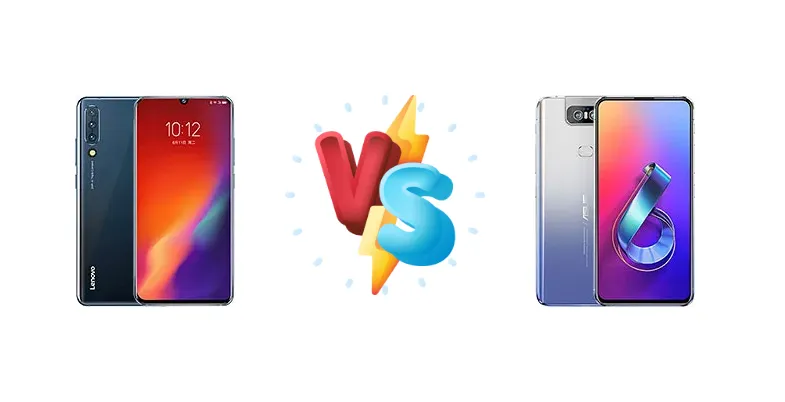
The Lenovo Z6 and Asus Zenfone 6 represent distinct approaches to the mid-range smartphone market. The Z6, powered by the Snapdragon 730, aimed for a balance of efficiency and performance. The Zenfone 6, with its Snapdragon 855, targeted near-flagship capabilities at a competitive price. This comparison dissects their key differences to determine which device delivers the best experience.
🏆 Quick Verdict
For the average user prioritizing raw performance and future-proofing, the Asus Zenfone 6 ZS630KL is the clear winner. Its Snapdragon 855 offers a significant performance leap over the Z6’s Snapdragon 730, and the inclusion of 18W charging with Quick Charge 4 support provides a faster charging experience. However, the Z6 remains a viable option for budget-conscious users.
| Network |
|---|
| 2G bands | GSM 850 / 900 / 1800 / 1900 | GSM 850 / 900 / 1800 / 1900 |
| 3G bands | HSDPA 850 / 900 / 1900 / 2100 | HSDPA 850 / 900 / 1900 / 2100 - A version |
| 4G bands | 1, 2, 3, 5, 7, 8, 20, 34, 38, 39, 40, 41 | 1, 2, 3, 5, 7, 8, 20, 28, 38, 40, 41 - A version |
| Speed | HSPA, LTE | HSPA 42.2/5.76 Mbps, LTE (5CA) Cat18 1200/150 Mbps |
| Technology | GSM / CDMA / HSPA / LTE | GSM / HSPA / LTE |
| | CDMA 800 & TD-SCDMA | 1, 2, 3, 4, 5, 7, 8, 12, 17, 18, 19, 26, 28, 38, 39, 41, 46 - C version |
| Launch |
|---|
| Announced | 2019, July 04. Released 2019, July 09 | 2019, May 16. Released 2019, May |
| Status | Discontinued | Discontinued |
| Body |
|---|
| Build | Glass front (Gorilla Glass), glass back, aluminum frame | Glass front (Gorilla Glass 6), glass back (Gorilla Glass 3), aluminum frame |
| Dimensions | 157 x 74.5 x 8 mm (6.18 x 2.93 x 0.31 in) | 159.1 x 75.4 x 9.2 mm (6.26 x 2.97 x 0.36 in) |
| SIM | Nano-SIM + Nano-SIM | Nano-SIM + Nano-SIM |
| Weight | 159 g (5.61 oz) | 190 g (6.70 oz) |
| Display |
|---|
| Protection | Corning Gorilla Glass (unspecified) | Corning Gorilla Glass 6 |
| Resolution | 1080 x 2340 pixels, 19.5:9 ratio (~403 ppi density) | 1080 x 2340 pixels, 19.5:9 ratio (~403 ppi density) |
| Size | 6.39 inches, 100.2 cm2 (~85.7% screen-to-body ratio) | 6.4 inches, 100.5 cm2 (~83.8% screen-to-body ratio) |
| Type | Super AMOLED, 120Hz, HDR10 | IPS LCD, HDR10 |
| Platform |
|---|
| CPU | Octa-core (2x2.2 GHz Kryo 470 Gold & 6x1.8 GHz Kryo 470 Silver) | Octa-core (1x2.84 GHz Kryo 485 & 3x2.42 GHz Kryo 485 & 4x1.78 GHz Kryo 485) |
| Chipset | Qualcomm SDM730 Snapdragon 730 (8 nm) | Qualcomm SM8150 Snapdragon 855 (7 nm) |
| GPU | Adreno 618 | Adreno 640 |
| OS | Android 9.0 (Pie), ZUI 11 | Android 9.0 (Pie), upgradable to Android 11, ZenUI |
| Memory |
|---|
| Card slot | microSDXC (uses shared SIM slot) | microSDXC (dedicated slot) |
| Internal | 64GB 6GB RAM, 128GB 6GB RAM, 128GB 8GB RAM | 64GB 6GB RAM, 128GB 6GB RAM, 256GB 8GB RAM, 512GB 12GB RAM |
| | UFS 2.1 | UFS 2.1 |
| Main Camera |
|---|
| Dual | - | 48 MP, f/1.8, 26mm (wide), 1/2.0", 0.8µm, PDAF
13 MP, f/2.4, 11mm (ultrawide) |
| Features | Dual-LED flash, panorama, HDR | Laser AF, Dual-LED flash, HDR, auto panorama (motorized rotation) |
| Triple | 24 MP, f/1.8, (wide), 1/2.8", 0.9µm, PDAF
8 MP, f/2.4, (telephoto), PDAF, 2x optical zoom
Auxiliary lens | - |
| Video | 4K@30fps, 1080p@30fps | 4K@30/60fps, 1080p@30/60/240fps, 720p@480fps; gyro-EIS (except @240/480fps) |
| Selfie camera |
|---|
| Dual | - | Motorized flip-up main camera module |
| Features | HDR | Dual-LED flash, HDR, auto panorama (motorized rotation) |
| Single | 16 MP, f/2.0, 26mm (wide), 1/3.06", 1.0µm | - |
| Video | 1080p@30fps | 4K@30/60fps, 1080p@30/60/240fps, 720p@480fps; gyro-EIS (except @240/480fps) |
| Sound |
|---|
| 3.5mm jack | Yes | Yes |
| 35mm jack | Yes | Yes |
| Loudspeaker | Yes | Yes, with stereo speakers |
| | - | 24-bit/192kHz audio |
| Comms |
|---|
| Bluetooth | 5.0, A2DP, EDR, LE, aptX HD | 5.0, A2DP, LE, aptX HD |
| NFC | No | Yes |
| Positioning | GPS, GLONASS, BDS | GPS (L1+L5), GLONASS (G1), BDS (B1), GALILEO (E1+E5a), QZSS (L1+L5) |
| Radio | No | FM radio |
| USB | USB Type-C 2.0, OTG | USB Type-C 2.0 |
| WLAN | Wi-Fi 802.11 a/b/g/n/ac, dual-band, Wi-Fi Direct | Wi-Fi 802.11 a/b/g/n/ac, dual-band, Wi-Fi Direct |
| Features |
|---|
| Sensors | Fingerprint (under display, optical), accelerometer, proximity, compass | Fingerprint (rear-mounted), accelerometer, gyro, proximity, compass |
| Battery |
|---|
| Charging | 15W wired | 18W wired
10W reverse wired, QC4 |
| Stand-by | - | Up to 624 h (3G) |
| Talk time | - | Up to 33 h (3G) |
| Type | Li-Po 4000 mAh, non-removable | Li-Po 5000 mAh, non-removable |
| Misc |
|---|
| Colors | Blue | Midnight Black, Twilight Silver |
| Models | L78121 | ASUS_I01WD, ZS630KL, I01WD |
| Price | About 250 EUR | About 500 EUR |
| Tests |
|---|
| Audio quality | - |
Noise -85.8dB / Crosstalk -76.2dB |
| Battery life | - |
Endurance rating 112h
|
| Camera | - |
Photo / Video |
| Display | - |
Contrast ratio: 1201:1 (nominal) |
| Loudspeaker | - |
-25.7 LUFS (Very good)
|
| Performance | - |
AnTuTu: 361679 (v7), 447774 (v8)
GeekBench: 10721 (v4.4), 2609 (v5.1)
GFXBench: 36fps (ES 3.1 onscreen) |
Lenovo Z6
- More affordable price point
- Efficient Snapdragon 730 chipset
- Decent battery life
- Slower charging speed (15W)
- Less powerful processor compared to the Zenfone 6
- Lacks reverse wireless charging
Asus Zenfone 6 ZS630KL
- Powerful Snapdragon 855 processor
- Faster 18W charging with Quick Charge 4
- Includes 10W reverse wireless charging
- Higher price compared to the Z6
- Potentially more heat generation under heavy load
- May be larger and heavier than the Z6
Display Comparison
Both the Lenovo Z6 and Asus Zenfone 6 share a 1201:1 contrast ratio, suggesting similar visual pop. However, the Zenfone 6 boasts a measured peak brightness of 455 nits, which will translate to better visibility in direct sunlight compared to the Z6, whose brightness is not specified. While both likely utilize AMOLED panels (implied by the contrast ratio), the Zenfone 6’s higher brightness gives it an edge for outdoor usability.
Camera Comparison
Both devices feature 'Photo / Video' capabilities, but detailed camera specifications are lacking. Given the Zenfone 6’s positioning, it likely incorporates a more sophisticated camera system with potentially larger sensors and more advanced image processing algorithms. The Snapdragon 855’s image signal processor (ISP) is also more powerful than the 730’s, enabling better low-light performance and faster image capture. Without specific sensor details, it’s difficult to make a definitive judgment, but the Zenfone 6’s higher-tier chipset suggests a superior camera experience.
Performance
The Asus Zenfone 6’s Snapdragon 855 (7nm) represents a substantial upgrade over the Lenovo Z6’s Snapdragon 730 (8nm). The 855 features a Kryo 485 core configuration with a peak clock speed of 2.84 GHz, significantly exceeding the Z6’s 2.2 GHz Kryo 470 Gold cores. This translates to faster app loading times, smoother multitasking, and a more responsive gaming experience. The 7nm process node of the 855 also contributes to better thermal efficiency, potentially reducing throttling during sustained workloads. The Z6’s 730 is still capable, but the 855 offers a clear performance advantage.
Battery Life
Both phones achieve an endurance rating of 112 hours, indicating comparable battery life under similar usage conditions. However, the Zenfone 6’s 18W wired charging with Quick Charge 4 support is a significant advantage over the Z6’s 15W charging. The Zenfone 6 also includes 10W reverse wired charging, allowing it to charge other devices – a feature absent on the Z6. While both offer all-day battery life, the Zenfone 6’s faster charging and reverse charging capabilities provide greater convenience.
Buying Guide
Buy the Lenovo Z6 if you need a reliable daily driver with decent performance for everyday tasks and prioritize a lower price point. It’s ideal for users who don’t heavily game or require the absolute fastest processing speeds. Buy the Asus Zenfone 6 ZS630KL if you prefer a more powerful processor for demanding applications, gaming, and future software updates, and value faster charging speeds and the convenience of reverse wireless charging.
Frequently Asked Questions
❓ Will the Snapdragon 730 in the Lenovo Z6 struggle with graphically demanding games like PUBG or Genshin Impact?
While the Snapdragon 730 can run these games, you’ll likely need to lower the graphics settings to achieve a smooth frame rate. The Zenfone 6’s Snapdragon 855 offers a much more comfortable gaming experience at higher settings, with less risk of frame drops and overheating.
❓ Does the Asus Zenfone 6’s Quick Charge 4 support work with any USB-C charger, or do I need a specific charger?
The Zenfone 6 is compatible with any USB-C Power Delivery (PD) charger, but to achieve the full 18W charging speed, you’ll need a charger that specifically supports Quick Charge 4. Using a standard USB-C charger will still charge the phone, but at a slower rate.
❓ Is the 10W reverse wireless charging on the Zenfone 6 useful for topping up accessories like earbuds?
Yes, the 10W reverse wireless charging is quite convenient for charging smaller accessories like wireless earbuds or smartwatches. It’s not fast, but it’s a handy feature to have when you’re away from a power outlet.