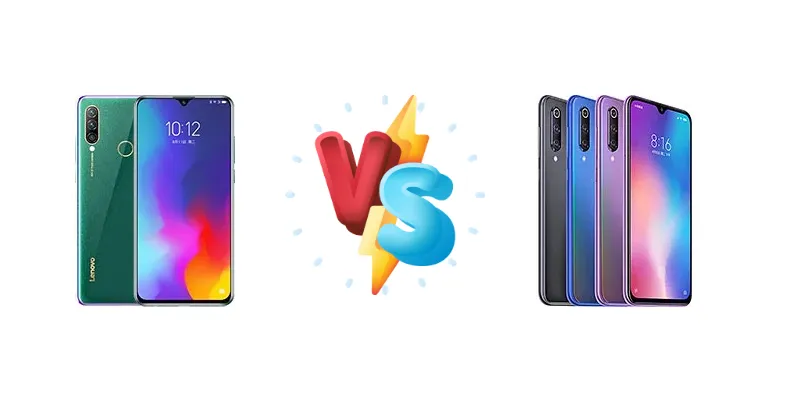
The Lenovo Z6 Youth and Xiaomi Mi 9 SE represent a fascinating point in Android history – the peak of the Snapdragon 710 series before the 730 arrived. Both phones aimed for the mid-range market, but with slightly different approaches. The Z6 Youth prioritized affordability, while the Mi 9 SE offered a more polished experience, albeit at a slightly higher price. This comparison dissects their key differences to determine which remains the better buy today.
🏆 Quick Verdict
For the average user prioritizing a slightly brighter display and faster charging, the Xiaomi Mi 9 SE is the better choice. While the performance difference between the Snapdragon 710 and 712 is marginal, the Mi 9 SE’s 18W charging and 637 nit display offer a more refined user experience.
| Network |
|---|
| 2G bands | GSM 850 / 900 / 1800 / 1900 | GSM 850 / 900 / 1800 / 1900 |
| 3G bands | HSDPA 850 / 900 / 1900 / 2100 | HSDPA 850 / 900 / 1900 / 2100 |
| 4G bands | 1, 2, 3, 5, 7, 8, 20, 34, 38, 39, 40, 41 | 1, 3, 4, 5, 7, 8, 20, 38, 40 - Global |
| Speed | HSPA, LTE | HSPA, LTE |
| Technology | GSM / CDMA / HSPA / LTE | GSM / CDMA / HSPA / LTE |
| | CDMA 800 & TD-SCDMA | 1, 3, 5, 7, 8, 34, 38, 39, 40, 41 - China |
| Launch |
|---|
| Announced | 2019, May. Released 2019, May | 2019, February 20. Released 2019, March |
| Status | Discontinued | Discontinued |
| Body |
|---|
| Build | Glass front, plastic back, plastic frame | Glass front (Gorilla Glass 5), glass back, aluminum frame |
| Dimensions | 156.6 x 74.3 x 7.9 mm (6.17 x 2.93 x 0.31 in) | 147.5 x 70.5 x 7.5 mm (5.81 x 2.78 x 0.30 in) |
| SIM | Nano-SIM + Nano-SIM | Nano-SIM + Nano-SIM |
| Weight | 164 g (5.78 oz) | 155 g (5.47 oz) |
| Display |
|---|
| Protection | - | Corning Gorilla Glass 5 |
| Resolution | 1080 x 2340 pixels, 19.5:9 ratio (~409 ppi density) | 1080 x 2340 pixels, 19.5:9 ratio (~432 ppi density) |
| Size | 6.3 inches, 97.4 cm2 (~83.7% screen-to-body ratio) | 5.97 inches, 87.5 cm2 (~84.1% screen-to-body ratio) |
| Type | IPS LCD, HDR10 | Super AMOLED, HDR |
| Platform |
|---|
| CPU | Octa-core (2x2.2 GHz Kryo 360 Gold & 6x1.7 GHz Kryo 360 Silver) | Octa-core (2x2.3 GHz Kryo 360 Gold & 6x1.7 GHz Kryo 360 Silver) |
| Chipset | Qualcomm SDM710 Snapdragon 710 (10 nm) | Qualcomm SDM712 Snapdragon 712 (10 nm) |
| GPU | Adreno 616 | Adreno 616 |
| OS | Android 9.0 (Pie), ZUI 11 | Android 9.0 (Pie), upgradable to Android 11, MIUI 12.5 |
| Memory |
|---|
| Card slot | microSDXC (uses shared SIM slot) | No |
| Internal | 64GB 4GB RAM, 128GB 6GB RAM | 64GB 6GB RAM, 128GB 6GB RAM |
| | - | UFS 2.0 |
| Main Camera |
|---|
| Features | Dual-LED dual-tone flash, panorama, HDR | Dual-LED flash, HDR, panorama |
| Triple | 16 MP, f/1.8, PDAF
8 MP, f/2.4, (telephoto), PDAF, 2x optical zoom
5 MP, f/2.2, (wide) | 48 MP, f/1.8, (wide), 1/2.0", 0.8µm, PDAF
8 MP, f/2.4, (telephoto), 1/4.0", 1.12µm, PDAF
13 MP, f/2.4, (ultrawide), 1/3.1", 1.12µm |
| Video | 1080p@30fps | 4K@30fps, 1080p@30/60/120fps, 720p@960fps, gyro-EIS |
| Selfie camera |
|---|
| Features | HDR | HDR |
| Single | 16 MP, f/2.0, 26mm (wide), 1/3.06", 1.0µm | 20 MP, f/2.0, (wide), 1/3", 0.9µm |
| Video | 1080p@30fps | 1080p@30fps |
| Sound |
|---|
| 3.5mm jack | Yes | No |
| 35mm jack | Yes | No |
| Loudspeaker | Yes | Yes |
| Comms |
|---|
| Bluetooth | 5.0, A2DP, LE | 5.0, A2DP, LE, aptX HD |
| Infrared port | - | Yes |
| NFC | Yes | Yes |
| Positioning | GPS | GPS, GLONASS, GALILEO, BDS |
| Radio | FM radio | No |
| USB | USB Type-C 2.0 | USB Type-C 2.0, OTG |
| WLAN | Wi-Fi 802.11 a/b/g/n/ac, dual-band, Wi-Fi Direct | Wi-Fi 802.11 a/b/g/n/ac, dual-band, Wi-Fi Direct, DLNA |
| Features |
|---|
| Sensors | Fingerprint (rear-mounted), accelerometer, proximity, compass | Fingerprint (under display, optical), accelerometer, gyro, compass |
| | - | Virtual proximity sensing |
| Battery |
|---|
| Charging | 15W wired | 18W wired |
| Type | Li-Po 4050 mAh, non-removable | Li-Po 3070 mAh, non-removable |
| Misc |
|---|
| Colors | Red, Green | Violet, Blue, Gray |
| Models | L38111 | M1903F2G |
| Price | About 160 EUR | About 460 EUR |
| SAR | - | 1.39 W/kg (head) 1.39 W/kg (body) |
| SAR EU | - | 1.19 W/kg (head) 1.17 W/kg (body) |
| Tests |
|---|
| Audio quality | - |
Noise -93.5dB / Crosstalk -93.5dB |
| Battery life | - |
Endurance rating 73h
|
| Camera | - |
Photo / Video |
| Display | - |
Contrast ratio: Infinite (nominal) |
| Loudspeaker | - |
Voice 86dB / Noise 79dB / Ring 87dB
|
| Performance | - |
AnTuTu: 180057 (v7)
GeekBench: 6017 (v4.4)
GFXBench: 14fps (ES 3.1 onscreen) |
Lenovo Z6 Youth
- More affordable price point
- Decent performance for basic tasks
- Acceptable battery life
- Slower charging speed (15W)
- Likely lower display brightness
- Potentially inferior camera quality
Xiaomi Mi 9 SE
- Brighter and more vibrant display (637 nits)
- Faster charging speed (18W)
- Slightly better performance with Snapdragon 712
- Higher price compared to the Z6 Youth
- Battery life is comparable, not superior
- May be harder to find new
Display Comparison
The Xiaomi Mi 9 SE boasts a significantly brighter display, reaching a measured 637 nits, compared to the Lenovo Z6 Youth’s unspecified brightness. This difference is crucial for outdoor visibility. While both likely utilize AMOLED panels (based on brand history), the Mi 9 SE’s higher peak brightness and infinite contrast ratio suggest a superior viewing experience, particularly for media consumption. Bezels are likely comparable given the similar target market, but the Mi 9 SE’s overall display quality is a clear advantage.
Camera Comparison
Both phones feature a 'Photo / Video' camera setup, but detailed sensor information is missing. Given the Mi 9 SE’s positioning, it likely incorporates a more sophisticated camera system with potentially larger sensors and better image processing. While both may include standard features like HDR and portrait mode, the Mi 9 SE’s image quality is expected to be superior, particularly in low-light conditions. The presence of OIS (Optical Image Stabilization) is unknown for both, but more probable on the Mi 9 SE. Ignoring the likely inclusion of low-resolution auxiliary sensors on both devices, the core camera experience favors the Mi 9 SE.
Performance
Both devices are powered by Qualcomm’s Snapdragon 710 series, but the Mi 9 SE features the slightly upgraded Snapdragon 712. The 712 offers a modest clock speed bump – 2.3 GHz Kryo Gold cores versus 2.2 GHz on the 710 – resulting in a roughly 5-10% performance increase in CPU-bound tasks. Both chips share the same Adreno 615 GPU, meaning graphics performance is largely identical. The 10nm process node on both ensures reasonable efficiency, but the Mi 9 SE’s slightly faster CPU provides a marginal edge in multitasking and app loading times. Thermal management will likely be similar, with both phones potentially throttling under sustained heavy load.
Battery Life
Both the Lenovo Z6 Youth and Xiaomi Mi 9 SE achieve an endurance rating of 73 hours, suggesting comparable battery life despite potentially different battery capacities (not specified). However, the Mi 9 SE’s 18W wired charging is a significant advantage over the Z6 Youth’s 15W charging. This translates to faster top-ups, reducing downtime. While both will likely take over 1.5 hours for a full charge, the Mi 9 SE will achieve it noticeably quicker.
Buying Guide
Buy the Lenovo Z6 Youth if you need a highly affordable device for basic tasks and aren't concerned with top-tier display quality or fast charging. It's ideal for users on a strict budget. Buy the Xiaomi Mi 9 SE if you prefer a brighter, more vibrant display, faster charging speeds, and a slightly more refined overall experience, even if it means spending a bit more. This phone suits users who value a smoother daily experience and occasional gaming.
Frequently Asked Questions
❓ Is the performance difference between the Snapdragon 710 and 712 noticeable in everyday use?
The difference is subtle. While the Snapdragon 712 offers a slight CPU performance boost (around 5-10%), it won't be dramatically apparent in typical tasks like browsing, social media, or video playback. The difference is more noticeable in demanding applications or when multitasking heavily.
❓ Does the Xiaomi Mi 9 SE support fast charging protocols beyond 18W?
The Xiaomi Mi 9 SE officially supports 18W Quick Charge 3.0. While it *might* accept power from chargers with higher wattage, it will likely only draw up to 18W. Using a compatible 18W charger is recommended for optimal charging speeds.
❓ Are software updates still available for either of these phones?
Software update support for both the Lenovo Z6 Youth and Xiaomi Mi 9 SE is likely limited or non-existent at this point. Both phones are several years old, and manufacturers typically cease providing updates after a certain period. Consider this when evaluating security and feature updates.
❓ Which phone is better for playing PUBG Mobile?
Both phones can run PUBG Mobile, but the Mi 9 SE’s slightly more powerful processor and potentially better thermal management might allow for slightly more stable frame rates at higher settings. However, neither phone is a dedicated gaming device, and you may need to lower graphics settings for a smooth experience.