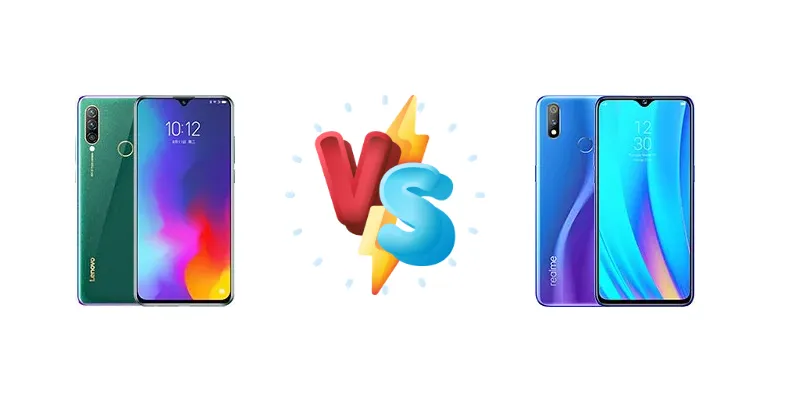
Both the Lenovo Z6 Youth and the Realme 3 Pro represent a sweet spot in the mid-range smartphone market, leveraging the Qualcomm Snapdragon 710 chipset. Released around the same timeframe, they catered to users seeking a balance between performance and affordability. This comparison dissects their key differences, focusing on areas where one phone pulls ahead, particularly in charging speed and battery endurance.
🏆 Quick Verdict
For the average user prioritizing convenience, the Realme 3 Pro emerges as the better choice. Its 20W fast charging, capable of delivering a 50% charge in just 30 minutes, significantly outweighs the Lenovo Z6 Youth’s slower 15W charging, despite both phones sharing the same battery endurance rating.
| Network |
|---|
| 2G bands | GSM 850 / 900 / 1800 / 1900 | GSM 850 / 900 / 1800 / 1900 |
| 3G bands | HSDPA 850 / 900 / 1900 / 2100 | HSDPA 850 / 900 / 2100 - India |
| 4G bands | 1, 2, 3, 5, 7, 8, 20, 34, 38, 39, 40, 41 | 1, 3, 5, 8, 38, 40, 41 - India |
| Speed | HSPA, LTE | HSPA 42.2/11.5 Mbps, LTE (2CA) Cat6 300/75 Mbps |
| Technology | GSM / CDMA / HSPA / LTE | GSM / HSPA / LTE |
| | CDMA 800 & TD-SCDMA | 1, 2, 3, 4, 5, 7, 8, 20, 28, 38, 39, 40, 41 - EMEA |
| Launch |
|---|
| Announced | 2019, May. Released 2019, May | 2019, April 22. Released 2019, May |
| Status | Discontinued | Discontinued |
| Body |
|---|
| Build | Glass front, plastic back, plastic frame | Glass front (Gorilla Glass 5), plastic back, plastic frame |
| Dimensions | 156.6 x 74.3 x 7.9 mm (6.17 x 2.93 x 0.31 in) | 156.8 x 74.2 x 8.3 mm (6.17 x 2.92 x 0.33 in) |
| SIM | Nano-SIM + Nano-SIM | Nano-SIM + Nano-SIM |
| Weight | 164 g (5.78 oz) | 172 g (6.07 oz) |
| Display |
|---|
| Protection | - | Corning Gorilla Glass 5 |
| Resolution | 1080 x 2340 pixels, 19.5:9 ratio (~409 ppi density) | 1080 x 2340 pixels, 19.5:9 ratio (~409 ppi density) |
| Size | 6.3 inches, 97.4 cm2 (~83.7% screen-to-body ratio) | 6.3 inches, 97.4 cm2 (~83.7% screen-to-body ratio) |
| Type | IPS LCD, HDR10 | IPS LCD |
| Platform |
|---|
| CPU | Octa-core (2x2.2 GHz Kryo 360 Gold & 6x1.7 GHz Kryo 360 Silver) | Octa-core (2x2.2 GHz Kryo 360 Gold & 6x1.7 GHz Kryo 360 Silver) |
| Chipset | Qualcomm SDM710 Snapdragon 710 (10 nm) | Qualcomm SDM710 Snapdragon 710 (10 nm) |
| GPU | Adreno 616 | Adreno 616 |
| OS | Android 9.0 (Pie), ZUI 11 | Android 9.0 (Pie), planned upgrade to Android 10, ColorOS 6 |
| Memory |
|---|
| Card slot | microSDXC (uses shared SIM slot) | microSDXC (dedicated slot) |
| Internal | 64GB 4GB RAM, 128GB 6GB RAM | 64GB 4GB RAM, 64GB 6GB RAM, 128GB 6GB RAM |
| | - | eMMC 5.1 |
| Main Camera |
|---|
| Dual | - | 16 MP, f/1.7, 1/2.6", 1.22µm, dual pixel PDAF
Auxiliary lens |
| Features | Dual-LED dual-tone flash, panorama, HDR | LED flash, HDR |
| Triple | 16 MP, f/1.8, PDAF
8 MP, f/2.4, (telephoto), PDAF, 2x optical zoom
5 MP, f/2.2, (wide) | - |
| Video | 1080p@30fps | 4K@30fps, 1080p@30/120fps, 720p@960fps, gyro-EIS |
| Selfie camera |
|---|
| Features | HDR | HDR |
| Single | 16 MP, f/2.0, 26mm (wide), 1/3.06", 1.0µm | 25 MP, f/2.0, 1/2.8", 0.8µm |
| Video | 1080p@30fps | 1080p@30fps |
| Sound |
|---|
| 3.5mm jack | Yes | Yes |
| 35mm jack | Yes | Yes |
| Loudspeaker | Yes | Yes |
| Comms |
|---|
| Bluetooth | 5.0, A2DP, LE | 5.0, A2DP, LE |
| NFC | Yes | No |
| Positioning | GPS | GPS, GLONASS |
| Radio | FM radio | FM radio |
| USB | USB Type-C 2.0 | microUSB 2.0, OTG |
| WLAN | Wi-Fi 802.11 a/b/g/n/ac, dual-band, Wi-Fi Direct | Wi-Fi 802.11 a/b/g/n/ac, dual-band, Wi-Fi Direct |
| Features |
|---|
| Sensors | Fingerprint (rear-mounted), accelerometer, proximity, compass | Fingerprint (rear-mounted), accelerometer, gyro, proximity, compass |
| Battery |
|---|
| Charging | 15W wired | 20W wired, 50% in 30 min |
| Music play | - | Up to 126 h |
| Stand-by | - | Up to 383 h (3G) |
| Talk time | - | Up to 32 h (3G) |
| Type | Li-Po 4050 mAh, non-removable | 4045 mAh, non-removable |
| Misc |
|---|
| Colors | Red, Green | Carbon Gray, Nitro Blue, Lightning Purple |
| Models | L38111 | RMX1851 |
| Price | About 160 EUR | About 270 EUR |
| Tests |
|---|
| Audio quality | - |
Noise -92.9dB / Crosstalk -91.1dB |
| Battery life | - |
Endurance rating 91h
|
| Camera | - |
Photo / Video |
| Display | - |
Contrast ratio: 1782:1 (nominal) |
| Loudspeaker | - |
Voice 67dB / Noise 73dB / Ring 90dB
|
| Performance | - |
AnTuTu: 155647 (v7)
GeekBench: 5881 (v4.4)
GFXBench: 11fps (ES 3.1 onscreen) |
Lenovo Z6 Youth
- Potentially lower price point
- Identical Snapdragon 710 performance
- Solid battery endurance (91h)
- Slower 15W charging
- Limited camera details available
- Display specs are unknown
Realme 3 Pro
- Faster 20W charging (50% in 30 min)
- Likely better camera software optimization
- Good battery endurance (91h)
- May be slightly more expensive
- Identical Snapdragon 710 performance
- Display specs are unknown
Display Comparison
Both devices share a nominal contrast ratio of 1782:1, suggesting similar visual pop and black levels. However, the context data lacks specifics on panel type, resolution, or brightness. Given the market positioning, both likely utilize IPS LCD panels. Without further data, it’s reasonable to assume display quality is comparable, with the Realme 3 Pro potentially benefiting from slightly better color calibration, a common strength of Realme’s display tuning.
Camera Comparison
Both phones feature 'Photo / Video' capabilities, but the context data provides no specifics on sensor size, aperture, or image processing algorithms. Given Realme’s historical focus on camera performance, the Realme 3 Pro likely boasts a more sophisticated camera system, potentially with better low-light performance and dynamic range. The absence of details prevents a definitive assessment, but it’s safe to assume Realme invested more in software optimization for its camera.
Performance
The core performance is identical: both the Lenovo Z6 Youth and Realme 3 Pro are powered by the Qualcomm Snapdragon 710 (10nm). This means the Octa-core CPU configuration – 2x2.2 GHz Kryo 360 Gold & 6x1.7 GHz Kryo 360 Silver – delivers the same processing power. Real-world performance in tasks like app launching and multitasking will be nearly indistinguishable. Thermal management, however, could differ based on chassis design and cooling solutions, a detail not provided in the context data. The 10nm process node contributes to reasonable efficiency, but sustained gaming performance will depend on how effectively each phone dissipates heat.
Battery Life
Both the Lenovo Z6 Youth and Realme 3 Pro achieve an endurance rating of 91 hours, indicating similar battery life under typical usage. However, the charging capabilities are a key differentiator. The Realme 3 Pro’s 20W wired charging, with a claimed 50% charge in 30 minutes, offers a significant advantage over the Lenovo Z6 Youth’s 15W charging. This faster charging speed translates to less downtime and greater convenience for users who frequently need to top up their battery.
Buying Guide
Buy the Lenovo Z6 Youth if you prioritize a potentially lower price point and are comfortable with slower charging speeds. It’s a solid option for users who don’t heavily rely on quick top-ups. Buy the Realme 3 Pro if you value faster charging and a slightly more refined user experience, making it ideal for those constantly on the go and needing to minimize downtime.
Frequently Asked Questions
❓ Is the 50% charge in 30 minutes claim for the Realme 3 Pro accurate in real-world usage?
While the 50% in 30 minutes claim is based on Realme’s testing, real-world results can vary depending on factors like ambient temperature and battery health. However, the 20W charging is demonstrably faster than the Lenovo Z6 Youth’s 15W charging, providing a significant time saving.
❓ Given both phones have the same Snapdragon 710, will I notice a difference in gaming performance?
The core processing power will be nearly identical. However, sustained gaming performance could differ based on thermal management. If the Realme 3 Pro has a more effective cooling system, it might maintain higher clock speeds for longer periods, resulting in slightly smoother gameplay during extended sessions.
❓ How does the camera performance differ between the two phones, considering the lack of detailed specs?
Realme typically invests heavily in camera software and image processing. While both phones likely have similar hardware, the Realme 3 Pro is expected to deliver more refined and visually appealing photos, particularly in challenging lighting conditions. Expect better dynamic range and potentially more accurate colors from the Realme 3 Pro.