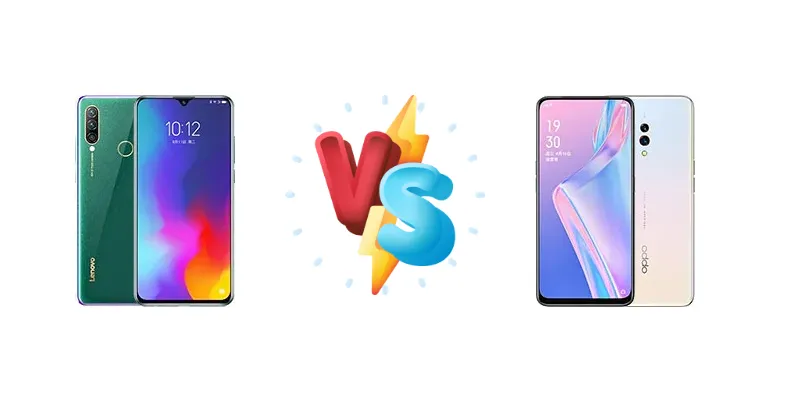
The Lenovo Z6 Youth and Oppo K3 represent a fascinating intersection in the budget smartphone market. Both devices launched around the same time, targeting price-conscious consumers with the capable Qualcomm Snapdragon 710 chipset. However, subtle differences in charging speeds and potential software optimizations create a compelling comparison for those seeking the best value.
🏆 Quick Verdict
For the average user prioritizing quick top-ups and convenience, the Oppo K3 emerges as the slightly better choice. Its 20W charging significantly reduces downtime compared to the Z6 Youth’s 15W, making it ideal for users constantly on the move. However, the Z6 Youth remains a viable option for those on a tighter budget.
| Network |
|---|
| 2G bands | GSM 850 / 900 / 1800 / 1900 | GSM 850 / 900 / 1800 / 1900 |
| 3G bands | HSDPA 850 / 900 / 1900 / 2100 | HSDPA 850 / 900 / 1900 / 2100 |
| 4G bands | 1, 2, 3, 5, 7, 8, 20, 34, 38, 39, 40, 41 | 1, 3, 4, 5, 8, 38, 39, 40, 41 |
| Speed | HSPA, LTE | HSPA, LTE |
| Technology | GSM / CDMA / HSPA / LTE | GSM / CDMA / HSPA / LTE |
| | CDMA 800 & TD-SCDMA | CDMA 800 & TD-SCDMA |
| Launch |
|---|
| Announced | 2019, May. Released 2019, May | 2019, May. Released 2019, May |
| Status | Discontinued | Discontinued |
| Body |
|---|
| Build | Glass front, plastic back, plastic frame | Glass front (Gorilla Glass 5), plastic back, plastic frame |
| Dimensions | 156.6 x 74.3 x 7.9 mm (6.17 x 2.93 x 0.31 in) | 161.2 x 76 x 9.4 mm (6.35 x 2.99 x 0.37 in) |
| SIM | Nano-SIM + Nano-SIM | Nano-SIM + Nano-SIM |
| Weight | 164 g (5.78 oz) | 191 g (6.74 oz) |
| Display |
|---|
| Protection | - | Corning Gorilla Glass 5 |
| Resolution | 1080 x 2340 pixels, 19.5:9 ratio (~409 ppi density) | 1080 x 2340 pixels, 19.5:9 ratio (~394 ppi density) |
| Size | 6.3 inches, 97.4 cm2 (~83.7% screen-to-body ratio) | 6.5 inches, 104.8 cm2 (~85.5% screen-to-body ratio) |
| Type | IPS LCD, HDR10 | AMOLED |
| Platform |
|---|
| CPU | Octa-core (2x2.2 GHz Kryo 360 Gold & 6x1.7 GHz Kryo 360 Silver) | Octa-core (2x2.2 GHz Kryo 360 Gold & 6x1.7 GHz Kryo 360 Silver) |
| Chipset | Qualcomm SDM710 Snapdragon 710 (10 nm) | Qualcomm SDM710 Snapdragon 710 (10 nm) |
| GPU | Adreno 616 | Adreno 616 |
| OS | Android 9.0 (Pie), ZUI 11 | Android 9.0 (Pie), ColorOS 6 |
| Memory |
|---|
| Card slot | microSDXC (uses shared SIM slot) | No |
| Internal | 64GB 4GB RAM, 128GB 6GB RAM | 64GB 6GB RAM, 128GB 8GB RAM, 256GB 8GB RAM |
| | - | UFS 2.1 |
| Main Camera |
|---|
| Dual | - | 16 MP, f/1.7, 1/2.5", 1.12µm, PDAF
Auxiliary lens |
| Features | Dual-LED dual-tone flash, panorama, HDR | LED flash, HDR, panorama |
| Triple | 16 MP, f/1.8, PDAF
8 MP, f/2.4, (telephoto), PDAF, 2x optical zoom
5 MP, f/2.2, (wide) | - |
| Video | 1080p@30fps | 4K@30fps, 1080p@30/120fps, gyro-EIS |
| Selfie camera |
|---|
| Features | HDR | HDR |
| Single | 16 MP, f/2.0, 26mm (wide), 1/3.06", 1.0µm | Motorized pop-up 16 MP, f/2.0, 26mm (wide), 1/3.06", 1.0µm |
| Video | 1080p@30fps | 1080p@30fps |
| Sound |
|---|
| 3.5mm jack | Yes | Yes |
| 35mm jack | Yes | Yes |
| Loudspeaker | Yes | Yes |
| Comms |
|---|
| Bluetooth | 5.0, A2DP, LE | 5.0, A2DP, LE, aptX HD |
| NFC | Yes | No |
| Positioning | GPS | GPS, GLONASS, BDS |
| Radio | FM radio | FM radio |
| USB | USB Type-C 2.0 | USB Type-C 2.0, OTG |
| WLAN | Wi-Fi 802.11 a/b/g/n/ac, dual-band, Wi-Fi Direct | Wi-Fi 802.11 а/b/g/n/ac, dual-band, Wi-Fi Direct |
| Features |
|---|
| Sensors | Fingerprint (rear-mounted), accelerometer, proximity, compass | Fingerprint (under display, optical), accelerometer, gyro, proximity, compass |
| Battery |
|---|
| Charging | 15W wired | 20W wired |
| Type | Li-Po 4050 mAh, non-removable | Li-Po 3765 mAh, non-removable |
| Misc |
|---|
| Colors | Red, Green | Black, Nebula Purple, Morning White |
| Models | L38111 | CPH1955, PCGM00 |
| Price | About 160 EUR | About 210 EUR |
Lenovo Z6 Youth
- Potentially lower price point
- Reliable Snapdragon 710 performance
- Functional and dependable
- Slower 15W charging
- Likely less refined software experience
- Potentially lower build quality
Oppo K3
- Faster 20W charging
- Potentially optimized software (VOOC)
- More convenient for frequent users
- Likely slightly higher price
- Same Snapdragon 710 chipset as the Z6 Youth
- May not offer significant camera improvements
Display Comparison
Both the Lenovo Z6 Youth and Oppo K3 likely feature LCD panels, common in this price bracket. While specific details like peak brightness and color gamut coverage are unavailable, the focus here isn't on display quality. The real-world difference will likely be minimal. Bezels are expected to be relatively standard for the time of release, prioritizing affordability over an immersive edge-to-edge experience.
Camera Comparison
Without detailed camera specifications, a direct comparison is challenging. Both phones likely feature a multi-camera setup, but the quality will depend heavily on sensor size and image processing. It’s reasonable to assume both will include a primary sensor, a depth sensor, and potentially a macro lens. Given the market segment, image quality will be adequate for social media sharing but won’t compete with flagship devices. The absence of Optical Image Stabilization (OIS) on either device suggests low-light performance will be limited.
Performance
Both devices are powered by the Qualcomm Snapdragon 710 (10nm), featuring an octa-core CPU configuration with 2x2.2 GHz Kryo 360 Gold and 6x1.7 GHz Kryo 360 Silver cores. This means CPU performance will be virtually identical in most tasks. The GPU performance will also be the same. However, Oppo’s VOOC software optimizations *could* lead to slightly better sustained performance under heavy load, though this is difficult to quantify without dedicated testing. The 10nm process node ensures reasonable thermal efficiency, but neither phone is designed for extended, demanding gaming sessions.
Battery Life
The battery capacity is not specified, but the key differentiator here is charging speed. The Oppo K3’s 20W wired charging is a significant advantage over the Lenovo Z6 Youth’s 15W. This translates to a faster 0-100% charge time, reducing downtime. While a larger battery capacity on the Z6 Youth *could* offset this, the faster charging of the K3 provides a more convenient user experience, especially for those who frequently need to top up their battery throughout the day.
Buying Guide
Buy the Lenovo Z6 Youth if you need a functional, reliable smartphone with decent performance and are willing to accept slower charging speeds to save money. It’s a solid choice for basic daily tasks and light gaming. Buy the Oppo K3 if you prioritize faster charging and a slightly more streamlined user experience, even if it means spending a bit more. This phone is better suited for users who frequently use their phone throughout the day and need to quickly replenish the battery.
Frequently Asked Questions
❓ Will the Snapdragon 710 in the Oppo K3 handle demanding games like PUBG Mobile?
The Snapdragon 710 is capable of running PUBG Mobile, but you'll likely need to lower the graphics settings to medium or low to maintain a stable frame rate. Neither phone is designed for high-end gaming, so expect some compromises.
❓ How much faster is the 20W charging on the Oppo K3 compared to the 15W charging on the Lenovo Z6 Youth?
While exact times depend on battery capacity, the 20W charging on the Oppo K3 will likely reduce charging time by approximately 20-30%. This means a significantly quicker top-up when you're in a hurry.
❓ Are software updates likely to be consistent on both devices?
Historically, Oppo has provided more consistent software updates than Lenovo on their budget devices. While neither phone is guaranteed long-term support, the Oppo K3 is more likely to receive security patches and minor feature updates.