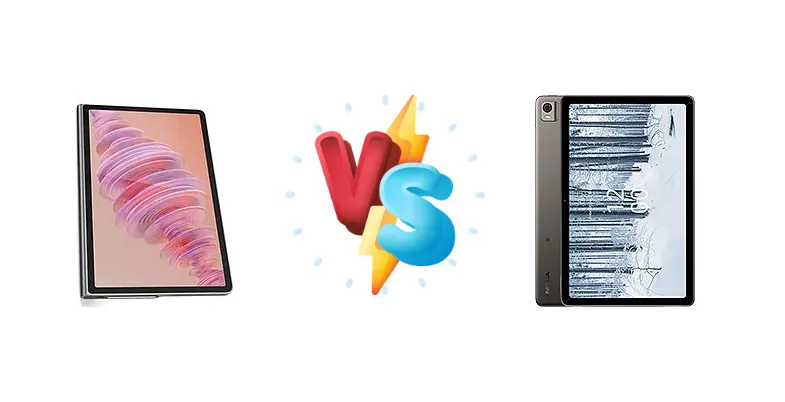
The Lenovo Tab Plus and Nokia T21 represent compelling options in the increasingly competitive Android tablet space. While both aim to deliver an affordable and versatile experience, they take distinctly different approaches to achieving that goal. The Tab Plus prioritizes processing power with a newer chipset, while the T21 focuses on a balanced feature set and Nokia’s commitment to software support. This comparison will dissect their key differences to determine which tablet best suits your needs.
🏆 Quick Verdict
For users prioritizing performance and faster charging, the Lenovo Tab Plus is the clear winner. Its Mediatek Helio G99 chipset offers a significant advantage over the Nokia T21’s Unisoc Tiger T612. However, the Nokia T21’s longer-term software support and potentially more efficient chipset could appeal to budget-conscious users.
| Network |
|---|
| 2G bands | N/A | GSM 850 / 900 / 1800 / 1900 |
| 3G bands | N/A | HSDPA 850 / 900 / 1700(AWS) / 1900 / 2100 - US, LATAM |
| 4G bands | N/A | 1, 2, 3, 4, 5, 7, 8, 12, 13, 17, 20, 28, 40, 66 - US, LATAM |
| EDGE | No | - |
| GPRS | No | - |
| Speed | - | HSPA, LTE - cellular model only |
| Technology | No cellular connectivity | GSM / HSPA / LTE |
| | - | 1, 3, 5, 7, 8, 20, 28, 38, 40, 41 - International |
| Launch |
|---|
| Announced | 2024, June 20 | 2022, September 01 |
| Status | Available. Released 2024, June | Available. Released 2022, September 01 |
| Body |
|---|
| Build | - | Glass front, aluminum back |
| Dimensions | 268.3 x 174.3 x 7.7 - 13.6 mm | 247.5 x 157.3 x 7.5 mm (9.74 x 6.19 x 0.30 in) |
| SIM | No | Nano-SIM (cellular model only) |
| Weight | 650 g (1.43 lb) | 466 g (1.03 lb) |
| | - | Splash resistant
Stylus support |
| Display |
|---|
| Protection | Mohs level 6 | Scratch-resistant glass |
| Resolution | 1200 x 2000 pixels, 5:3 ratio (~203 ppi density) | 1200 x 2000 pixels, 5:3 ratio (~224 ppi density) |
| Size | 11.5 inches, 376.4 cm2 (~80.5% screen-to-body ratio) | 10.4 inches, 307.9 cm2 (~79.1% screen-to-body ratio) |
| Type | IPS LCD, 90Hz, 400 nits (typ) | IPS LCD, 360 nits (typ) |
| Platform |
|---|
| CPU | Octa-core (2x2.2 GHz Cortex-A76 & 6x2.0 GHz Cortex-A55) | Octa-core (2x1.8 GHz Cortex-A75 & 6x1.8 GHz Cortex-A55) |
| Chipset | Mediatek Helio G99 (6 nm) | Unisoc Tiger T612 (12 nm) |
| GPU | Mali-G57 MC2 | Mali-G57 |
| OS | Android 14 | Android 12, upgradable to Android 13 |
| Memory |
|---|
| Card slot | microSDXC (dedicated slot) | microSDXC (dedicated slot) |
| Internal | 128GB 8GB RAM, 256GB 8GB RAM | 64GB 4GB RAM, 128GB 4GB RAM |
| | - | eMMC 5.1 |
| Main Camera |
|---|
| Features | - | LED flash |
| Single | 8 MP, AF | 8 MP, AF |
| Video | 1080p@30fps | 1080p@30fps |
| Selfie camera |
|---|
| Single | 8 MP | 8 MP |
| Video | 1080p@30fps | Yes |
| Sound |
|---|
| 3.5mm jack | - | Yes |
| 35mm jack | Yes | Yes |
| Loudspeaker | Yes, with stereo speakers (8 JBL Hi-Fi speakers) | Yes, with stereo speakers |
| Comms |
|---|
| Bluetooth | 5.2, A2DP, LE | 5.0, A2DP, LE |
| NFC | No | Yes (Wi-Fi/LTE model only / TA-1521) |
| Positioning | GPS, GALILEO, GLONASS | GPS - cellular model only |
| Radio | No | FM radio |
| USB | USB Type-C 2.0 | USB Type-C 2.0, OTG |
| WLAN | Wi-Fi 802.11 a/b/g/n/ac, dual-band, Wi-Fi Direct | Wi-Fi 802.11 a/b/g/n/ac, dual-band |
| Features |
|---|
| Sensors | Accelerometer, gyro | Accelerometer, proximity |
| Battery |
|---|
| Charging | 45W wired | 18W wired, PD3.0 |
| Type | Li-Po 8600 mAh | Li-Po 8200 mAh |
| Misc |
|---|
| Colors | Luna grey | Charcoal Grey |
| Models | TB351FU | TA-1495, TA-1521, TA-1505, TA-1487 |
| Price | About 280 EUR | About 240 EUR |
| SAR | - | 1.19 W/kg (body) |
| SAR EU | - | 1.56 W/kg (body) |
| EU LABEL |
|---|
| Battery | 134:05h endurance, 1000 cycles | - |
| Energy | Class D | - |
| Free fall | Class D (72 falls) | - |
| Repairability | Class A | - |
Lenovo Tab Plus
- Superior processing power with the Mediatek Helio G99.
- Faster 45W wired charging for quicker top-ups.
- Impressive 134:05h battery endurance.
- Potential for higher price compared to the Nokia T21.
- Long-term software support may be shorter than Nokia’s offering.
Nokia T21
- Potentially better battery efficiency under light workloads.
- Nokia’s commitment to software updates and security patches.
- Likely a more affordable price point.
- Significantly weaker processing performance with the Unisoc T612.
- Slower 18W charging speeds.
- Endurance rating is unknown.
Display Comparison
Display specifications are absent from the provided data, but considering the market positioning, both tablets likely feature IPS LCD panels. The key differentiator will be resolution and brightness. The Lenovo Tab Plus, given its focus on performance, may have a slightly higher resolution display. However, without concrete data, it's difficult to assess color accuracy or viewing angles. Bezels are also a crucial factor, impacting immersion, and will require hands-on testing to determine which device offers a more modern aesthetic.
Camera Comparison
Camera details are unavailable, but given the price bracket, expectations should be tempered. Both tablets likely feature basic camera setups geared towards video calls and casual snapshots. Without sensor size or aperture information, it’s impossible to definitively declare a winner. However, the Lenovo Tab Plus’s stronger processing capabilities *could* translate to slightly better image processing, potentially improving image quality in challenging lighting conditions. We anticipate both devices will lack advanced features like OIS or high-resolution sensors.
Performance
The Lenovo Tab Plus’s Mediatek Helio G99 (6nm) chipset is the clear performance leader. Its octa-core configuration, featuring two Cortex-A76 cores clocked at 2.2 GHz, provides a substantial advantage over the Nokia T21’s Unisoc Tiger T612 (12nm). The A76 cores in the G99 are architecturally superior to the A75 cores in the T612, resulting in faster single-core and multi-core performance. Furthermore, the 6nm fabrication process of the G99 offers improved power efficiency and thermal management compared to the 12nm process of the T612. This translates to less throttling during sustained workloads. The Nokia T21’s chipset, while adequate for basic tasks, will struggle with more demanding applications.
Battery Life
The Lenovo Tab Plus boasts an impressive 134:05h endurance rating, suggesting excellent battery life. While the Nokia T21’s endurance isn’t specified, the Unisoc T612’s 12nm process *could* offer better efficiency under light loads. However, the Tab Plus compensates with significantly faster 45W wired charging, a major advantage over the T21’s 18W charging with PD3.0. The 45W charging will drastically reduce recharge times, making the Tab Plus more convenient for users who frequently use their tablet throughout the day. The Tab Plus also claims 1000 charge cycles, indicating a focus on long-term battery health.
Buying Guide
Buy the Lenovo Tab Plus if you need a tablet capable of handling demanding tasks like gaming or video editing, and value faster charging speeds. Its Helio G99 chipset provides a noticeable performance boost. Buy the Nokia T21 if you prioritize a clean software experience, longer software support, and are willing to trade some processing power for potentially better battery efficiency and a lower price point.
Frequently Asked Questions
❓ Will the Unisoc Tiger T612 in the Nokia T21 struggle with graphically intensive games?
Yes, the Unisoc Tiger T612 is a lower-tier chipset compared to the Mediatek Helio G99. While it can handle basic games, demanding titles will likely require significant graphics settings reductions and may still experience noticeable lag or frame drops. The G99 in the Lenovo Tab Plus is much better suited for gaming.
❓ How long will it take to fully charge the Lenovo Tab Plus with the 45W charger?
While a precise 0-100% charge time isn't available, the 45W charging capability of the Lenovo Tab Plus will significantly reduce charging times compared to the Nokia T21’s 18W charging. Expect a full charge in well under two hours, potentially closer to 90 minutes, depending on usage during charging.
❓ Does the Nokia T21 benefit from the PD3.0 charging standard?
Yes, the Nokia T21 supports Power Delivery 3.0 (PD3.0). This allows for faster charging with compatible chargers and provides more efficient power delivery overall. However, the 18W maximum wattage still limits its charging speed compared to the Lenovo Tab Plus.
❓ How does the 6nm process of the Helio G99 impact the Lenovo Tab Plus's performance?
The 6nm fabrication process of the Mediatek Helio G99 allows for a higher transistor density and improved power efficiency compared to the 12nm process of the Unisoc T612. This results in better performance, reduced heat generation, and less throttling during sustained workloads, ultimately providing a smoother user experience.