
Lenovo Tab P11 vs Samsung Galaxy Tab S7 FE: Which Budget Tablet Reigns Supreme?
| Phones Images | |||||
|---|---|---|---|---|---|
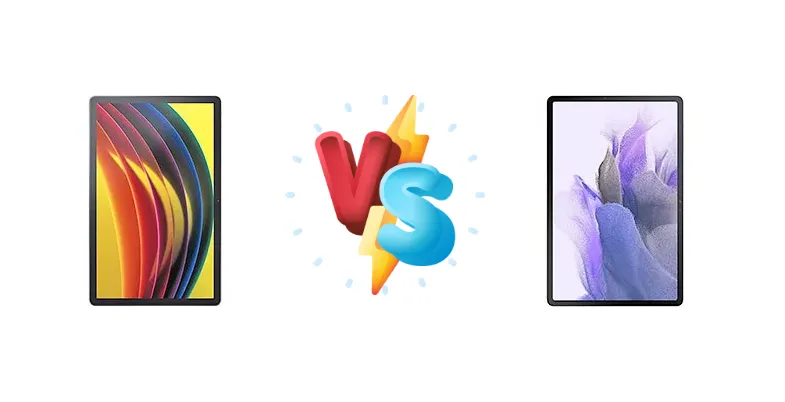
|
🏆 Quick Verdict
For most users, the Samsung Galaxy Tab S7 FE is the superior choice. While the Lenovo Tab P11 offers a compelling price, the S7 FE’s more powerful Snapdragon 750G (or 778G) chipset, brighter display, and S Pen support justify the price premium, especially for productivity and creative tasks.
| PHONES | ||
|---|---|---|
| Phone Names | Lenovo Tab P11 | Samsung Galaxy Tab S7 FE |
| Network | ||
|---|---|---|
| 2G bands | GSM 850 / 900 / 1800 / 1900 | GSM 850 / 900 / 1800 / 1900 |
| 3G bands | HSDPA 850 / 900 / 1900 / 2100 | HSDPA 850 / 900 / 1700(AWS) / 1900 / 2100 |
| 4G bands | 1, 2, 3, 4, 5, 7, 8, 19, 20, 28, 38, 40, 41 | 1, 2, 3, 4, 5, 7, 8, 12, 13, 17, 20, 25, 26, 28, 32, 38, 40, 41, 66 |
| 5G bands | - | 1, 3, 5, 7, 8, 20, 28, 38, 40, 41, 77, 78 SA/NSA/Sub6 |
| Speed | HSPA, LTE - cellular model only | HSPA, LTE, 5G - cellular model only |
| Technology | GSM / HSPA / LTE | GSM / HSPA / LTE / 5G |
| Launch | ||
|---|---|---|
| Announced | 2021, January 07 | 2021, May 25 |
| Status | Available. Released 2021, February 10 | Available. Released 2021, June 18 |
| Body | ||
|---|---|---|
| Build | - | Glass front, aluminum back, aluminum frame |
| Dimensions | 258.4 x 163 x 7.5 mm (10.17 x 6.42 x 0.30 in) | 284.8 x 185 x 6.3 mm (11.21 x 7.28 x 0.25 in) |
| SIM | Nano-SIM (cellular model only) | Nano-SIM (cellular model only) |
| Weight | 490 g (1.08 lb) | 608 g (1.34 lb) |
| Stylus support | Stylus support | |
| Display | ||
|---|---|---|
| Resolution | 1200 x 2000 pixels, 5:3 ratio (~212 ppi density) | 1600 x 2560 pixels, 16:10 ratio (~243 ppi density) |
| Size | 11.0 inches, 344.4 cm2 (~81.8% screen-to-body ratio) | 12.4 inches, 445.8 cm2 (~84.6% screen-to-body ratio) |
| Type | IPS LCD, 400 nits (typ) | TFT LCD |
| Platform | ||
|---|---|---|
| CPU | Octa-core (4x2.0 GHz Kryo 260 Gold & 4x1.8 GHz Kryo 260 Silver) | Octa-core (2x2.2 GHz Kryo 570 & 6x1.8 GHz Kryo 570) - 5G modelOcta-core (1x2.4 GHz Cortex-A78 & 3x2.2 GHz Cortex-A78 & 4x1.9 GHz Cortex-A55) - Wi-Fi model |
| Chipset | Qualcomm SM6115 Snapdragon 662 (11 nm) | Qualcomm SM7225 Snapdragon 750G 5G (8 nm) - 5G modelQualcomm SM7325 Snapdragon 778G 5G (6 nm) - Wi-Fi model |
| GPU | Adreno 610 | Adreno 619 - 5G modelAdreno 642L - Wi-Fi model |
| OS | Android 10 | Android 11, upgradable to Android 14, One UI 6 |
| Memory | ||
|---|---|---|
| Card slot | microSDXC (dedicated slot) | microSDXC (dedicated slot) |
| Internal | 64GB 4GB RAM, 128GB 4GB RAM, 128GB 6GB RAM | 64GB 4GB RAM, 128GB 6GB RAM, 256GB 8GB RAM |
| Main Camera | ||
|---|---|---|
| Features | LED flash | - |
| Single | 13 MP, (wide), AF | 8 MP, AF |
| Video | 1080p@30fps | 1080p@30fps |
| Selfie camera | ||
|---|---|---|
| Single | 8 MP, (wide) | 5 MP |
| Video | 1080p@30fps | 1080p@30fps |
| Sound | ||
|---|---|---|
| 3.5mm jack | No | No |
| 35mm jack | No | No |
| Loudspeaker | Yes, with stereo speakers (4 speakers) | Yes, with stereo speakers |
| - | Tuned by AKG | |
| Comms | ||
|---|---|---|
| Bluetooth | 5.1, A2DP, LE | 5.2, A2DP, LE (Wi-Fi), 5.2, A2DP, LE (5G) |
| NFC | No | No |
| Positioning | GPS, GLONASS, BDS - cellular model only | GPS, GLONASS, BDS, GALILEO - cellular model only |
| Radio | FM radio | No |
| USB | USB Type-C 2.0 | USB Type-C 3.2, magnetic connector |
| WLAN | Wi-Fi 802.11 a/b/g/n/ac/6, dual-band, Wi-Fi Direct | Wi-Fi 802.11 a/b/g/n/ac/6 (Wi-Fi), Wi-Fi 802.11 a/b/g/n/ac (5G) |
| Features | ||
|---|---|---|
| Sensors | Accelerometer, gyro, proximity | Accelerometer, proximity, compass, gyro (5G model only) |
| - | Samsung DeX | |
| Battery | ||
|---|---|---|
| Charging | 20W wired | 45W wired, 100% in 190 min |
| Type | Li-Po 7700 mAh | Li-Po 10090 mAh |
| Misc | ||
|---|---|---|
| Colors | Slate Grey, Platinum Grey | Mystic Black, Mystic Silver, Mystic Green, Mystic Pink |
| Models | TB-J606F | SM-T730, SM-T733, SM-T736B, SM-T735 |
| Price | About 200 EUR | About 650 EUR |
| SAR EU | - | 1.15 W/kg (body) |
| Tests | ||
|---|---|---|
| Display | - | Contrast ratio: 1886:1 (nominal) |
| Loudspeaker | - | -27.2 LUFS (Good) |
| Performance | - | AnTuTu: 292530 (v8), 355430 (v9) GeekBench: 1904 (v5.1) GFXBench: 9.7fps (ES 3.1 onscreen) |
Lenovo Tab P11
- Significantly more affordable
- Decent performance for basic tasks
- Lightweight and portable
- Less powerful processor
- Display lacks brightness and vibrancy
- Limited feature set
Samsung Galaxy Tab S7 FE
- More powerful Snapdragon 750G/778G chipset
- Brighter and larger display
- S Pen support for enhanced productivity
- Higher price point
- Can be slightly heavier than the Tab P11
- Software updates may be slower than on some other brands
Display Comparison
The Samsung Galaxy Tab S7 FE boasts a significantly brighter display, reaching a measured 522 nits compared to the Lenovo Tab P11’s unspecified brightness. Both share a similar 1886:1 contrast ratio, suggesting comparable black levels. The larger screen real estate of the S7 FE (12.4” vs 11”) further enhances the viewing experience. While neither display utilizes advanced technologies like LTPO, the S7 FE’s higher brightness makes it more usable outdoors or in brightly lit environments. The Tab P11’s display specs are less detailed, suggesting a more basic panel.
Camera Comparison
Neither tablet excels in the camera department, but the S7 FE likely holds a slight edge. While specific camera specs for the Tab P11 are limited, Samsung typically prioritizes camera quality even in its mid-range devices. The S7 FE’s camera system, while not flagship-level, benefits from Samsung’s image processing algorithms. Focusing on the main sensors is key, as both tablets likely feature low-resolution auxiliary cameras of limited utility.
Performance
The performance gap is the most significant differentiator. The Lenovo Tab P11 utilizes the Qualcomm Snapdragon 662, built on an 11nm process. This is a capable chip for everyday tasks, but it will struggle with demanding applications. The Samsung Galaxy Tab S7 FE comes in two variants: a 5G model with the Snapdragon 750G (8nm) and a Wi-Fi model with the Snapdragon 778G (6nm). The 778G, in particular, represents a substantial leap in performance, featuring a Cortex-A78 prime core alongside more efficient Cortex-A55 cores. This translates to faster app loading times, smoother multitasking, and improved gaming performance on the S7 FE. The smaller fabrication process (8nm/6nm vs 11nm) also contributes to better thermal efficiency, reducing the likelihood of throttling under sustained load.
Battery Life
The Samsung Galaxy Tab S7 FE takes 190 minutes to reach 100% charge with its 45W wired charging, while the Lenovo Tab P11 charges at 20W. While the Tab P11’s lower wattage suggests a slower charge time, the actual battery capacity of both devices isn’t specified. The S7 FE’s faster charging is a clear advantage for users who need to quickly top up their tablet. The more efficient Snapdragon 750G/778G in the S7 FE may also contribute to longer real-world battery life, despite potentially similar battery capacities.
Buying Guide
Buy the Lenovo Tab P11 if you prioritize extreme affordability and primarily need a tablet for basic media consumption, web browsing, and light tasks. It’s a solid option for casual users on a tight budget. Buy the Samsung Galaxy Tab S7 FE if you value performance, a brighter and more vibrant display, and the versatility of the S Pen for note-taking, sketching, or precise navigation. It’s the better choice for students, artists, and anyone who wants a more capable tablet experience.