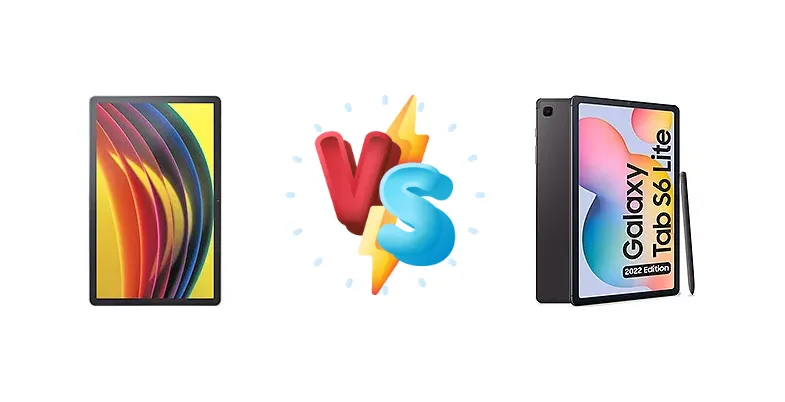
The mid-range Android tablet space is heating up, with the Lenovo Tab P11 and Samsung Galaxy Tab S6 Lite (2022) offering compelling options for students, media consumers, and casual gamers. While both aim for affordability, they take different approaches to performance and features. This comparison dives deep into the specifications to determine which tablet delivers the best overall experience.
🏆 Quick Verdict
For the average user prioritizing a smoother, more responsive experience, the Samsung Galaxy Tab S6 Lite (2022) is the better choice. Its Snapdragon 732G (or 720G) chipset, built on an 8nm process, provides a noticeable performance uplift over the Lenovo Tab P11’s Snapdragon 662, despite the slightly slower charging.
| Network |
|---|
| 2G bands | GSM 850 / 900 / 1800 / 1900 | GSM 850 / 900 / 1800 / 1900 |
| 3G bands | HSDPA 850 / 900 / 1900 / 2100 | HSDPA 850 / 900 / 1700(AWS) / 1800 / 2100 |
| 4G bands | 1, 2, 3, 4, 5, 7, 8, 19, 20, 28, 38, 40, 41 | 1, 2, 3, 4, 5, 7, 8, 12, 17, 20, 28, 38, 40, 41, 66 |
| Speed | HSPA, LTE - cellular model only | HSPA, LTE - cellular model only |
| Technology | GSM / HSPA / LTE | GSM / HSPA / LTE |
| Launch |
|---|
| Announced | 2021, January 07 | 2022, May 14 |
| Status | Available. Released 2021, February 10 | Available. Released 2022, May 23 |
| Body |
|---|
| Build | - | Glass front, aluminum back, aluminum frame |
| Dimensions | 258.4 x 163 x 7.5 mm (10.17 x 6.42 x 0.30 in) | 244.5 x 154.3 x 7 mm (9.63 x 6.07 x 0.28 in) |
| SIM | Nano-SIM (cellular model only) | Nano-SIM (cellular model only) |
| Weight | 490 g (1.08 lb) | 465/467 g (1.03 lb) |
| | Stylus support | Stylus support |
| Display |
|---|
| Resolution | 1200 x 2000 pixels, 5:3 ratio (~212 ppi density) | 1200 x 2000 pixels, 5:3 ratio (~224 ppi density) |
| Size | 11.0 inches, 344.4 cm2 (~81.8% screen-to-body ratio) | 10.4 inches, 307.9 cm2 (~81.6% screen-to-body ratio) |
| Type | IPS LCD, 400 nits (typ) | TFT LCD |
| Platform |
|---|
| CPU | Octa-core (4x2.0 GHz Kryo 260 Gold & 4x1.8 GHz Kryo 260 Silver) | Octa-core (2x2.3 GHz Kryo 470 Gold & 6x1.8 GHz Kryo 470 Silver)Octa-core (2x2.3 GHz Kryo 465 Gold & 6x1.8 GHz Kryo 465 Silver) |
| Chipset | Qualcomm SM6115 Snapdragon 662 (11 nm) | Qualcomm SM7150 Snapdragon 732G (8 nm)Qualcomm SM7125 Snapdragon 720G (8 nm) |
| GPU | Adreno 610 | Adreno 618 |
| OS | Android 10 | Android 12, upgradable to Android 14, One UI 6 |
| Memory |
|---|
| Card slot | microSDXC (dedicated slot) | microSDXC (dedicated slot) |
| Internal | 64GB 4GB RAM, 128GB 4GB RAM, 128GB 6GB RAM | 64GB 4GB RAM, 128GB 4GB RAM |
| Main Camera |
|---|
| Features | LED flash | HDR, panorama |
| Single | 13 MP, (wide), AF | 8 MP, (wide), 1/4.0", 1.12µm |
| Video | 1080p@30fps | 1080p@30fps |
| Selfie camera |
|---|
| Single | 8 MP, (wide) | 5 MP, (wide), 1/5.0", 1.12µm |
| Video | 1080p@30fps | 1080p@30fps |
| Sound |
|---|
| 3.5mm jack | No | Yes |
| 35mm jack | No | Yes |
| Loudspeaker | Yes, with stereo speakers (4 speakers) | Yes, with stereo speakers |
| | - | Tuned by AKG |
| Comms |
|---|
| Bluetooth | 5.1, A2DP, LE | 5.0, A2DP, LE |
| NFC | No | No |
| Positioning | GPS, GLONASS, BDS - cellular model only | GPS, GLONASS, BDS, GALILEO, QZSS - cellular model only |
| Radio | FM radio | No |
| USB | USB Type-C 2.0 | USB Type-C |
| WLAN | Wi-Fi 802.11 a/b/g/n/ac/6, dual-band, Wi-Fi Direct | Wi-Fi 802.11 a/b/g/n/ac, dual-band, Wi-Fi Direct |
| Features |
|---|
| Sensors | Accelerometer, gyro, proximity | Accelerometer, proximity, gyro |
| | - | ANT+ |
| Battery |
|---|
| Charging | 20W wired | 15W wired |
| Type | Li-Po 7700 mAh | Li-Po 7040 mAh |
| Misc |
|---|
| Colors | Slate Grey, Platinum Grey | Chiffon Pink, Angora Blue, Oxford Gray |
| Models | TB-J606F | SM-P613, SM-P619 |
| Price | About 200 EUR | About 400 EUR |
| SAR | - | 1.01 W/kg (body) |
Lenovo Tab P11
- Faster 20W charging
- Potentially lower price point
- Larger display size (assuming similar screen sizes)
- Less powerful Snapdragon 662 chipset
- Less efficient 11nm process
- Potentially lower build quality
Samsung Galaxy Tab S6 Lite (2022)
- More powerful Snapdragon 732G/720G chipset
- More efficient 8nm process
- Refined software experience
- Slower 15W charging
- Potentially higher price point
- S Pen sold separately
Display Comparison
Neither device boasts a cutting-edge display, but differences exist. While both likely utilize IPS LCD panels (data not provided), the focus here is on performance. Display specs are not provided, so we can only infer. Samsung typically prioritizes color accuracy and brightness in its tablets, while Lenovo often focuses on cost reduction. The lack of high refresh rate panels on either device suggests a focus on battery life over visual fluidity.
Camera Comparison
Camera performance is unlikely to be a deciding factor for most tablet buyers. Both devices likely feature modest camera setups. Without specific sensor details, it’s difficult to make a direct comparison. However, Samsung generally invests more in image processing algorithms, potentially resulting in slightly better image quality, even with similar hardware. The presence of a 2MP macro camera on either device is largely a marketing gimmick and shouldn’t influence purchasing decisions.
Performance
The core difference lies in the chipsets. The Samsung Galaxy Tab S6 Lite (2022) utilizes either the Qualcomm SM7150 Snapdragon 732G or the SM7125 Snapdragon 720G, both fabricated on an 8nm process. This is a significant advantage over the Lenovo Tab P11’s Qualcomm SM6115 Snapdragon 662, which is built on an older, less efficient 11nm process. The Snapdragon 732G’s Kryo 470 Gold cores, clocked at 2.3 GHz, offer a performance edge over the Tab P11’s 2.0 GHz Kryo 260 Gold cores. The 8nm process also contributes to better thermal efficiency, potentially reducing throttling during sustained workloads. The Tab S6 Lite’s CPU configuration (2x2.3GHz + 6x1.8GHz) versus the Tab P11’s (4x2.0GHz + 4x1.8GHz) suggests a stronger focus on single-core performance in the Samsung device, beneficial for app launch times and general responsiveness.
Battery Life
The Lenovo Tab P11 supports 20W wired charging, while the Samsung Galaxy Tab S6 Lite (2022) is limited to 15W. However, battery capacity is not provided. The faster charging speed of the Tab P11 could offset a smaller battery capacity, allowing for quicker top-ups. Conversely, the more efficient Snapdragon 732G in the Tab S6 Lite could result in longer battery life despite the slower charging. Real-world battery life will depend heavily on usage patterns.
Buying Guide
Buy the Lenovo Tab P11 if you need a large-screen Android tablet for basic tasks like video streaming, web browsing, and light productivity, and are on a very tight budget. Its focus is on providing a functional experience at the lowest possible price point. Buy the Samsung Galaxy Tab S6 Lite (2022) if you prioritize a more responsive user interface, better multitasking capabilities, and a more refined software experience, even if it means spending a bit more. It’s ideal for students taking notes with an S Pen, or anyone who wants a tablet that feels more premium.
Frequently Asked Questions
❓ Will the Snapdragon 732G in the Tab S6 Lite handle demanding games like Genshin Impact?
While the Snapdragon 732G isn't a flagship chipset, it's capable of running Genshin Impact at medium settings with reasonable frame rates. Expect some compromises in graphical fidelity to maintain smooth gameplay. The Snapdragon 662 in the Tab P11 will struggle with this title.
❓ Does the Samsung Galaxy Tab S6 Lite (2022) support the S Pen, and is it included in the box?
Yes, the Samsung Galaxy Tab S6 Lite (2022) supports the S Pen, but it is *not* included in the box and must be purchased separately. The S Pen adds significant value for note-taking, sketching, and navigating the interface.
❓ Which tablet is better for taking handwritten notes as a student?
The Samsung Galaxy Tab S6 Lite (2022) is the clear winner for note-taking. Its S Pen support, combined with Samsung's optimized software for handwriting recognition, provides a superior experience compared to using a stylus with the Lenovo Tab P11.
❓ Is the difference in charging speed between 20W and 15W noticeable in real-world use?
Yes, the 20W charging on the Lenovo Tab P11 will result in a faster 0-100% charge time. However, the actual difference may not be dramatic, and the more efficient chipset in the Tab S6 Lite could offset the slower charging with longer overall battery life.