
Lenovo Tab P11 Pro vs. P11 Gen 2: Which Tablet Delivers the Best Value?
| Phones Images | |||||
|---|---|---|---|---|---|
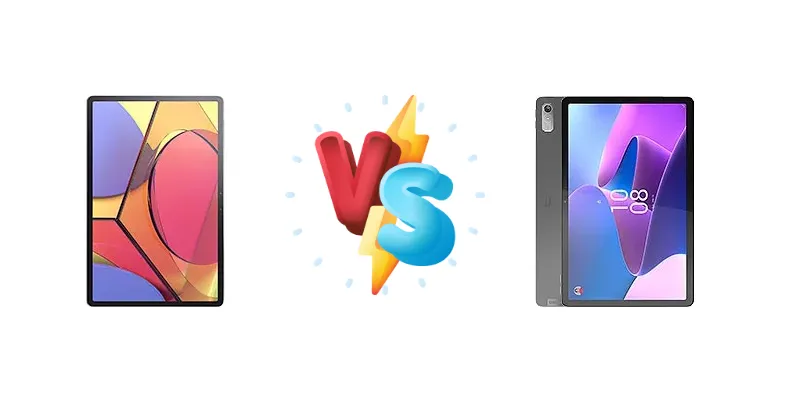
|
🏆 Quick Verdict
For most users, the Lenovo Tab P11 Gen 2 emerges as the better choice. Its Helio G99 chipset, built on a 6nm process, provides comparable performance to the Snapdragon 730G while offering improved power efficiency. This translates to longer battery life and potentially less thermal throttling during sustained tasks, making it ideal for everyday use and light gaming.
| PHONES | ||
|---|---|---|
| Phone Names | Lenovo Tab P11 Pro | Lenovo Tab P11 Gen 2 |
| Network | ||
|---|---|---|
| 2G bands | GSM 850 / 900 / 1800 / 1900 | GSM 850 / 900 / 1800 / 1900 |
| 3G bands | HSDPA 850 / 900 / 1900 / 2100 | HSDPA 800 / 850 / 900 / 1700(AWS) / 1900 / 2100 |
| 4G bands | 1, 2, 3, 4, 5, 7, 8, 18, 19, 20, 26, 28, 38, 39, 40, 41 | 1, 2, 3, 4, 5, 7, 8, 12, 13, 18, 19, 20, 25, 26, 28, 38, 40, 41, 66 |
| Speed | HSPA, LTE - cellular model only | HSPA, LTE - cellular model only |
| Technology | GSM / HSPA / LTE | GSM / HSPA / LTE |
| Launch | ||
|---|---|---|
| Announced | 2020, August 31. Released 2020, December 14 | 2022, September 01 |
| Status | Discontinued | Available. Released 2023, January |
| Body | ||
|---|---|---|
| Build | Glass front, aluminum frame, aluminum back | - |
| Dimensions | 264.3 x 171.4 x 6.9 mm (10.41 x 6.75 x 0.27 in) | 269.1 x 169.4 x 7.4 mm (10.59 x 6.67 x 0.29 in) |
| SIM | Nano-SIM (cellular model only) | Nano-SIM (cellular model only) |
| Weight | 485 g (1.07 lb) | 520 g (1.15 lb) |
| Stylus support | Stylus support | |
| Display | ||
|---|---|---|
| Resolution | 1600 x 2560 pixels, 16:10 ratio (~263 ppi density) | 1200 x 2000 pixels, 5:3 ratio (~203 ppi density) |
| Size | 11.5 inches, 383.5 cm2 (~84.6% screen-to-body ratio) | 11.5 inches, 376.4 cm2 (~82.6% screen-to-body ratio) |
| Type | OLED, HDR10, Dolby Vision, 500 nits (typ) | IPS LCD, 120Hz, 400 nits (typ) |
| Platform | ||
|---|---|---|
| CPU | Octa-core (2x2.2 GHz Kryo 470 Gold & 6x1.8 GHz Kryo 470 Silver) | Octa-core (2x2.2 GHz Cortex-A76 & 6x2.0 GHz Cortex-A55) |
| Chipset | Qualcomm SDM730 Snapdragon 730G (8 nm) | Mediatek Helio G99 (6 nm) |
| GPU | Adreno 618 | Mali-G57 MC2 |
| OS | Android 10 | Android 12L |
| Memory | ||
|---|---|---|
| Card slot | microSDXC | microSDXC (dedicated slot) |
| Internal | 128GB 4GB RAM, 128GB 6GB RAM | 64GB 4GB RAM, 128GB 4GB RAM, 128GB 6GB RAM |
| Main Camera | ||
|---|---|---|
| Dual | 13 MP, (wide), AF 5 MP, (ultrawide) | - |
| Features | - | LED flash |
| Single | - | 13 MP, f/2.4, (wide), AF |
| Video | 1080p@30fps | 1080p@30fps |
| Selfie camera | ||
|---|---|---|
| Single | 8 MP, (wide) 8 MP, IR TOF 3D, (biometrics sensor only) | 8 MP, f/2.0 |
| Video | - | 1080p@30fps |
| Sound | ||
|---|---|---|
| 3.5mm jack | No | Yes |
| 35mm jack | No | Yes |
| Loudspeaker | Yes, with stereo speakers (4 speakers) | Yes, with stereo speakers (4 speakers) |
| Comms | ||
|---|---|---|
| Bluetooth | 5.0, A2DP, LE | 5.2, A2DP, LE |
| NFC | No | No |
| Positioning | GPS, GLONASS, BDS - cellular model only | GPS, GLONASS, BDS - cellular model only |
| Radio | Unspecified | No |
| USB | USB Type-C 3.2 | USB Type-C 2.0, OTG, magnetic connector |
| WLAN | Wi-Fi 802.11 a/b/g/n/ac, dual-band, Wi-Fi Direct | Wi-Fi 802.11 a/b/g/n/ac/6e, dual-band, Wi-Fi Direct |
| Features | ||
|---|---|---|
| Sensors | Fingerprint (side-mounted), accelerometer, gyro, proximity | Accelerometer, gyro, proximity |
| Battery | ||
|---|---|---|
| Charging | 20W wired | - |
| Type | Li-Po 8600 mAh | Li-Po 7700 mAh |
| Misc | ||
|---|---|---|
| Colors | Slate Grey, Platinum Grey | Storm Grey, Sage |
| Models | TB-J706F | TB350FU |
| Price | About 550 EUR | About 350 EUR |
Lenovo Tab P11 Pro
- Potentially lower price point
- Established Qualcomm chipset
- Familiar Android experience
- Less power-efficient chipset
- Potential for thermal throttling
- Older manufacturing process
Lenovo Tab P11 Gen 2
- More efficient MediaTek Helio G99
- 6nm process for better battery life
- Potentially improved GPU performance
- Modern chipset architecture
- May be slightly more expensive
- MediaTek chipset may have less brand recognition
- Software update support may be shorter
Display Comparison
Both tablets likely feature LCD panels, but detailed display specs (resolution, brightness, color gamut) are missing. However, the chipset differences indirectly impact display experience. The more efficient Helio G99 in the Gen 2 allows for potentially longer screen-on time. The P11 Pro's older chipset may require more aggressive power management, potentially impacting brightness levels during prolonged use. Bezels are likely similar across both models, targeting the mid-range segment.
Camera Comparison
Detailed camera specifications are unavailable. Given the tablets' positioning, expect similar camera setups focused on basic photography. The image signal processor (ISP) within the Helio G99 may offer slightly improved image processing capabilities compared to the Snapdragon 730G's ISP, but the difference will likely be minimal. The absence of detailed sensor information makes a definitive comparison impossible, but focusing on the chipset's ISP suggests a slight edge to the Gen 2.
Performance
The core difference lies in the chipsets. The Lenovo Tab P11 Pro’s Qualcomm Snapdragon 730G (8nm) features a Kryo 470 CPU with a 2+6 core configuration. The P11 Gen 2 utilizes the MediaTek Helio G99 (6nm) with a 2+6 Cortex-A76/A55 configuration. While both CPUs have similar peak clock speeds (2.2 GHz for the performance cores), the Helio G99’s 6nm process offers a significant efficiency advantage. This means the Gen 2 will likely run cooler and sustain performance for longer periods. The 6nm node also allows for a higher transistor density, potentially leading to improved GPU performance for gaming. The P11 Pro's 8nm process is older and less efficient.
Battery Life
Battery capacity is not specified. However, the Helio G99’s 6nm process in the P11 Gen 2 is a major advantage. The increased efficiency translates directly to longer battery life for similar usage patterns. Both tablets support 20W wired charging, meaning charge times will likely be comparable, but the Gen 2 will deliver more usable hours per charge. The P11 Pro's older chipset will consume more power, reducing overall battery endurance.
Buying Guide
Buy the Lenovo Tab P11 Pro if you prioritize a potentially lower price point and are primarily focused on media consumption and light productivity tasks where sustained peak performance isn't critical. Buy the Lenovo Tab P11 Gen 2 if you value battery life, efficient performance for everyday tasks, and a more modern chipset architecture that promises better longevity and thermal management, even if it means paying a slight premium.