
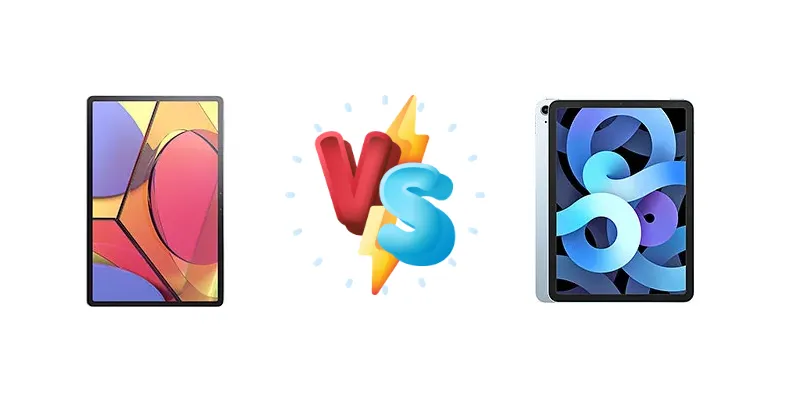
Lenovo Tab P11 Pro vs. Apple iPad Air (2020): A Performance and Value Showdown
| Phones Images | |||||
|---|---|---|---|---|---|
|
🏆 Quick Verdict
For the average user prioritizing raw performance and long-term software support, the Apple iPad Air (2020) is the clear winner. Its A14 Bionic chip delivers significantly faster processing speeds. However, the Lenovo Tab P11 Pro offers a compelling value proposition for those seeking a large-screen Android experience without the premium Apple price tag.
| PHONES | ||
|---|---|---|
| Phone Names | Lenovo Tab P11 Pro | Apple iPad Air (2020) |
| Network | ||
|---|---|---|
| 2G bands | GSM 850 / 900 / 1800 / 1900 | GSM 850 / 900 / 1800 / 1900 |
| 3G bands | HSDPA 850 / 900 / 1900 / 2100 | HSDPA 850 / 900 / 1700(AWS) / 1900 / 2100 |
| 4G bands | 1, 2, 3, 4, 5, 7, 8, 18, 19, 20, 26, 28, 38, 39, 40, 41 | 1, 2, 3, 4, 5, 7, 8, 11, 12, 13, 14, 17, 18, 19, 20, 21, 25, 26, 29, 30, 34, 38, 39, 40, 41, 46, 48, 66, 71 - A2324 |
| Speed | HSPA, LTE - cellular model only | HSPA, LTE |
| Technology | GSM / HSPA / LTE | GSM / HSPA / LTE |
| - | 1, 2, 3, 4, 5, 7, 8, 11, 12, 13, 14, 17, 18, 19, 20, 21, 25, 26, 28, 29, 30, 32, 34, 38, 39, 40, 41, 42, 46, 48, 66 - A2072 | |
| Launch | ||
|---|---|---|
| Announced | 2020, August 31. Released 2020, December 14 | 2020, September 15 |
| Status | Discontinued | Available. Released 2020, October 23 |
| Body | ||
|---|---|---|
| Build | Glass front, aluminum frame, aluminum back | Glass front, aluminum back, aluminum frame |
| Dimensions | 264.3 x 171.4 x 6.9 mm (10.41 x 6.75 x 0.27 in) | 247.6 x 178.5 x 6.1 mm (9.75 x 7.03 x 0.24 in) |
| SIM | Nano-SIM (cellular model only) | Nano-SIM + eSIM |
| Weight | 485 g (1.07 lb) | 458 g (Wi-Fi) / 460 g (3G/LTE) (1.01 lb) |
| Stylus support | Stylus support | |
| Display | ||
|---|---|---|
| Protection | - | Scratch-resistant glass, oleophobic coating |
| Resolution | 1600 x 2560 pixels, 16:10 ratio (~263 ppi density) | 1640 x 2360 pixels (~264 ppi density) |
| Size | 11.5 inches, 383.5 cm2 (~84.6% screen-to-body ratio) | 10.9 inches, 359.2 cm2 (~81.3% screen-to-body ratio) |
| Type | OLED, HDR10, Dolby Vision, 500 nits (typ) | Liquid Retina IPS LCD, 500 nits (typ) |
| Platform | ||
|---|---|---|
| CPU | Octa-core (2x2.2 GHz Kryo 470 Gold & 6x1.8 GHz Kryo 470 Silver) | Hexa-core (2x3.0 GHz Firestorm + 4x1.8 GHz Icestorm) |
| Chipset | Qualcomm SDM730 Snapdragon 730G (8 nm) | Apple A14 Bionic (5 nm) |
| GPU | Adreno 618 | Apple GPU (4-core graphics) |
| OS | Android 10 | iPadOS 14.1, upgradable to iPadOS 26.1 |
| Memory | ||
|---|---|---|
| Card slot | microSDXC | No |
| Internal | 128GB 4GB RAM, 128GB 6GB RAM | 64GB 4GB RAM, 256GB 4GB RAM |
| Main Camera | ||
|---|---|---|
| Dual | 13 MP, (wide), AF 5 MP, (ultrawide) | - |
| Features | - | HDR |
| Single | - | 12 MP, f/1.8, (wide), 1/3.0", 1.22µm, dual pixel PDAF |
| Video | 1080p@30fps | 4K@24/30/60fps, 1080p@30/60/120/240fps; gyro-EIS |
| Selfie camera | ||
|---|---|---|
| Features | - | HDR |
| Single | 8 MP, (wide) 8 MP, IR TOF 3D, (biometrics sensor only) | 7 MP, f/2.0, 31mm (standard) |
| Video | - | 1080p@30/60fps |
| Sound | ||
|---|---|---|
| 3.5mm jack | No | No |
| 35mm jack | No | No |
| Loudspeaker | Yes, with stereo speakers (4 speakers) | Yes, with stereo speakers |
| Comms | ||
|---|---|---|
| Bluetooth | 5.0, A2DP, LE | 5.0, A2DP, EDR |
| NFC | No | No |
| Positioning | GPS, GLONASS, BDS - cellular model only | GPS, GLONASS (LTE model only) |
| Radio | Unspecified | No |
| USB | USB Type-C 3.2 | USB Type-C, magnetic connector |
| WLAN | Wi-Fi 802.11 a/b/g/n/ac, dual-band, Wi-Fi Direct | Wi-Fi 802.11 a/b/g/n/ac/6, dual-band, hotspot |
| Features | ||
|---|---|---|
| Sensors | Fingerprint (side-mounted), accelerometer, gyro, proximity | Fingerprint (top-mounted), accelerometer, gyro, compass, barometer |
| Battery | ||
|---|---|---|
| Charging | 20W wired | - |
| Type | Li-Po 8600 mAh | Li-Ion 7606 mAh (28.93 Wh) |
| Misc | ||
|---|---|---|
| Colors | Slate Grey, Platinum Grey | Space Gray, Silver, Rose Gold, Green, Sky Blue |
| Models | TB-J706F | A2324, A2072, A2325, A2316, iPad13,1, iPad13,2 |
| Price | About 550 EUR | About 640 EUR |
Lenovo Tab P11 Pro
- Superior performance with the A14 Bionic chip.
- Long-term software support and updates from Apple.
- Excellent display quality and color accuracy.
- Higher price point compared to the Lenovo Tab P11 Pro.
- Limited storage options without cloud reliance.
Apple iPad Air (2020)
- More affordable price point.
- Larger display size (likely) for immersive media consumption.
- Android operating system offers greater customization.
- Significantly slower performance compared to the A14 Bionic.
- Potentially shorter software update lifespan.
Display Comparison
While both tablets offer excellent displays, the specifics differ. The Lenovo Tab P11 Pro’s display specs are missing, but given its positioning, it likely features an LCD panel. The iPad Air (2020) boasts a Liquid Retina display, known for its color accuracy and brightness. Crucially, the A14 Bionic’s image signal processor (ISP) contributes to superior display calibration. The A14’s processing power allows for more sophisticated display features, potentially including wider color gamuts and more accurate HDR performance. The P11 Pro’s value proposition likely means compromises in display technology compared to Apple’s premium offering.
Camera Comparison
Camera performance is not a primary focus for either tablet, but differences exist. The iPad Air (2020) benefits from the A14 Bionic’s ISP, enabling better image processing and noise reduction. While specific sensor details are missing for both, Apple’s computational photography algorithms generally outperform those found in mid-range Android tablets. The Lenovo Tab P11 Pro’s camera system is likely adequate for casual snapshots, but will struggle in low-light conditions compared to the iPad Air (2020).
Performance
The core difference lies in the chipsets. The Apple A14 Bionic, fabricated on a 5nm process, is a significant leap ahead of the Qualcomm Snapdragon 730G (8nm) in the Lenovo Tab P11 Pro. The A14’s hexa-core CPU, with its 2x3.0 GHz Firestorm cores, delivers substantially higher single-core and multi-core performance. The Snapdragon 730G’s octa-core configuration, while efficient, cannot match the A14’s architectural advantages. This translates to faster app loading times, smoother multitasking, and a more responsive user experience on the iPad Air (2020). The 5nm process also contributes to better thermal efficiency, meaning the iPad Air can sustain peak performance for longer periods without throttling.
Battery Life
Battery life is a complex equation. The Lenovo Tab P11 Pro’s battery capacity is unknown, but its Snapdragon 730G is generally power-efficient. The iPad Air (2020) also offers good battery life, despite its more powerful processor, thanks to Apple’s software optimization and efficient chip design. The P11 Pro’s 20W wired charging is slower than the iPad Air’s potential for faster charging with a compatible adapter (iPad Air supports USB-C Power Delivery). While the P11 Pro might offer comparable battery *capacity*, the A14’s efficiency means the iPad Air can deliver similar real-world usage with a potentially smaller battery.
Buying Guide
Buy the Lenovo Tab P11 Pro if you need a larger display for media consumption, prefer the Android operating system, and prioritize affordability. It’s ideal for casual users, students, and families. Buy the Apple iPad Air (2020) if you demand the fastest possible performance for demanding tasks like video editing or gaming, value seamless ecosystem integration with other Apple devices, and require guaranteed software updates for years to come.