
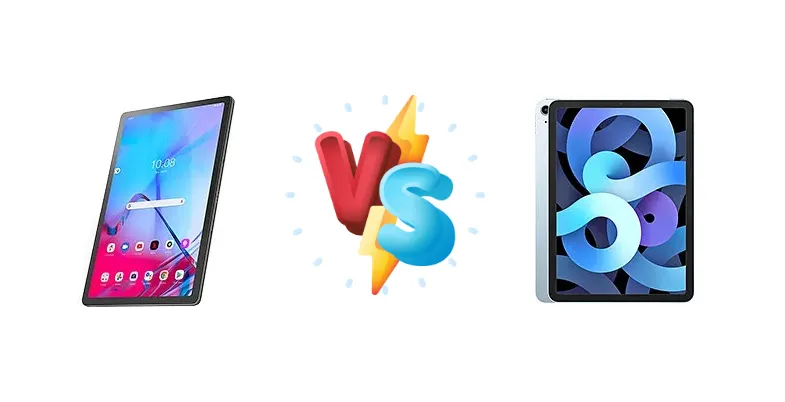
Lenovo Tab P11 5G vs. Apple iPad Air (2020): A Performance and Value Showdown
| Phones Images | |||||
|---|---|---|---|---|---|
|
🏆 Quick Verdict
For the average user prioritizing raw performance and long-term software support, the Apple iPad Air (2020) is the clear winner. Its A14 Bionic chip, built on a 5nm process, delivers significantly faster processing speeds and superior graphics capabilities. However, the Lenovo Tab P11 5G offers a compelling value proposition for those seeking 5G connectivity and a larger display at a considerably lower price point.
| PHONES | ||
|---|---|---|
| Phone Names | Lenovo Tab P11 5G | Apple iPad Air (2020) |
| Network | ||
|---|---|---|
| 2G bands | GSM 850 / 900 / 1800 / 1900 | GSM 850 / 900 / 1800 / 1900 |
| 3G bands | HSDPA 850 / 900 / 1900 / 2100 | HSDPA 850 / 900 / 1700(AWS) / 1900 / 2100 |
| 4G bands | 1, 2, 3, 4, 5, 7, 8, 19, 20, 26, 28, 34, 38, 39, 40, 41 | 1, 2, 3, 4, 5, 7, 8, 11, 12, 13, 14, 17, 18, 19, 20, 21, 25, 26, 29, 30, 34, 38, 39, 40, 41, 46, 48, 66, 71 - A2324 |
| 5G bands | 1, 3, 7, 8, 20, 28, 38, 41, 77, 78, 79 SA/NSA | - |
| Speed | HSPA, LTE, 5G | HSPA, LTE |
| Technology | GSM / HSPA / LTE / 5G | GSM / HSPA / LTE |
| - | 1, 2, 3, 4, 5, 7, 8, 11, 12, 13, 14, 17, 18, 19, 20, 21, 25, 26, 28, 29, 30, 32, 34, 38, 39, 40, 41, 42, 46, 48, 66 - A2072 | |
| Launch | ||
|---|---|---|
| Announced | 2021, September 08 | 2020, September 15 |
| Status | Available. Released 2021, December 15 | Available. Released 2020, October 23 |
| Body | ||
|---|---|---|
| Build | - | Glass front, aluminum back, aluminum frame |
| Dimensions | 258 x 163 x 7.9 mm (10.16 x 6.42 x 0.31 in) | 247.6 x 178.5 x 6.1 mm (9.75 x 7.03 x 0.24 in) |
| SIM | Nano-SIM | Nano-SIM + eSIM |
| Weight | 520 g (1.15 lb) | 458 g (Wi-Fi) / 460 g (3G/LTE) (1.01 lb) |
| Stylus support | Stylus support | |
| Display | ||
|---|---|---|
| Protection | - | Scratch-resistant glass, oleophobic coating |
| Resolution | 1200 x 2000 pixels, 5:3 ratio (~212 ppi density) | 1640 x 2360 pixels (~264 ppi density) |
| Size | 11.0 inches, 344.4 cm2 (~81.9% screen-to-body ratio) | 10.9 inches, 359.2 cm2 (~81.3% screen-to-body ratio) |
| Type | IPS LCD, Dolby Vision, 400 nits (typ) | Liquid Retina IPS LCD, 500 nits (typ) |
| Platform | ||
|---|---|---|
| CPU | Octa-core (2x2.2 GHz Kryo 570 & 6x1.8 GHz Kryo 570) | Hexa-core (2x3.0 GHz Firestorm + 4x1.8 GHz Icestorm) |
| Chipset | Qualcomm SM7225 Snapdragon 750G 5G (8 nm) | Apple A14 Bionic (5 nm) |
| GPU | Adreno 619 | Apple GPU (4-core graphics) |
| OS | Android 11 | iPadOS 14.1, upgradable to iPadOS 26.1 |
| Memory | ||
|---|---|---|
| Card slot | microSDXC (dedicated slot) | No |
| Internal | 128GB 6GB RAM, 256GB 8GB RAM | 64GB 4GB RAM, 256GB 4GB RAM |
| Main Camera | ||
|---|---|---|
| Features | LED flash | HDR |
| Single | 13 MP, (wide), AF | 12 MP, f/1.8, (wide), 1/3.0", 1.22µm, dual pixel PDAF |
| Video | 1080p@30fps | 4K@24/30/60fps, 1080p@30/60/120/240fps; gyro-EIS |
| Selfie camera | ||
|---|---|---|
| Features | - | HDR |
| Single | 8 MP, (wide) IR TOF 3D, (biometrics sensor only) | 7 MP, f/2.0, 31mm (standard) |
| Video | 1080p@30fps | 1080p@30/60fps |
| Sound | ||
|---|---|---|
| 3.5mm jack | No | No |
| 35mm jack | No | No |
| Loudspeaker | Yes, with stereo speakers (4 speakers) | Yes, with stereo speakers |
| JBL speakers | - | |
| Comms | ||
|---|---|---|
| Bluetooth | 5.1, A2DP, LE | 5.0, A2DP, EDR |
| NFC | No | No |
| Positioning | GPS, GLONASS, BDS | GPS, GLONASS (LTE model only) |
| Radio | No | No |
| USB | USB Type-C 3.2, DisplayPort | USB Type-C, magnetic connector |
| WLAN | Wi-Fi 802.11 a/b/g/n/ac/6, dual-band, Wi-Fi Direct | Wi-Fi 802.11 a/b/g/n/ac/6, dual-band, hotspot |
| Features | ||
|---|---|---|
| Sensors | Accelerometer, gyro, proximity | Fingerprint (top-mounted), accelerometer, gyro, compass, barometer |
| Battery | ||
|---|---|---|
| Charging | 20W wired | - |
| Type | Li-Po 7700 mAh | Li-Ion 7606 mAh (28.93 Wh) |
| Misc | ||
|---|---|---|
| Colors | Moon White, Storm Grey, Modernist Teal | Space Gray, Silver, Rose Gold, Green, Sky Blue |
| Models | - | A2324, A2072, A2325, A2316, iPad13,1, iPad13,2 |
| Price | About 500 EUR | About 640 EUR |
Lenovo Tab P11 5G
- 5G Connectivity for faster data speeds
- More affordable price point
- Potentially larger display size
- Less powerful processor compared to the A14 Bionic
- Likely shorter software support lifespan
- Inferior camera performance
Apple iPad Air (2020)
- Significantly faster processor (A14 Bionic)
- Superior build quality and design
- Long-term software support from Apple
- Higher price tag
- No 5G connectivity
- May require separate purchase of accessories (Apple Pencil, Magic Keyboard)
Display Comparison
While display specifications weren't provided, the iPad Air (2020) is known for its excellent color accuracy and brightness, typical of Apple's displays. The Lenovo Tab P11 5G likely utilizes an IPS LCD panel, offering good viewing angles but potentially lacking the vibrancy and peak brightness of the iPad Air. The 5nm A14 Bionic allows for more efficient display driving, potentially contributing to better battery life during video playback. Bezels are likely thinner on the iPad Air, contributing to a more modern aesthetic.
Camera Comparison
Camera details are limited, but given the market positioning, the iPad Air (2020) likely features a more refined camera system with better image processing. The Snapdragon 750G’s ISP is capable, but Apple’s image signal processing is renowned for its natural-looking results and dynamic range. Without specific sensor sizes, it’s difficult to make a definitive statement, but the iPad Air’s camera is expected to deliver superior image quality, particularly in challenging lighting conditions. We can assume the Lenovo Tab P11 5G will focus on functional photography rather than high-end image capture.
Performance
The core difference lies in the chipsets. Apple’s A14 Bionic, fabricated on a 5nm process, boasts a hexa-core CPU (2x3.0 GHz Firestorm + 4x1.8 GHz Icestorm) and a powerful GPU. This smaller node size translates to higher transistor density, resulting in increased performance and improved power efficiency compared to the Lenovo’s Qualcomm Snapdragon 750G (8nm). The Snapdragon 750G’s octa-core CPU (2x2.2 GHz Kryo 570 & 6x1.8 GHz Kryo 570) is capable, but the A14 Bionic’s architectural advantages and higher clock speeds provide a noticeable performance edge in CPU-intensive tasks and graphically demanding games. The A14's Neural Engine also offers faster machine learning performance.
Battery Life
Battery capacity wasn't provided for either device. However, the A14 Bionic’s 5nm process contributes to significantly better power efficiency. While the Lenovo Tab P11 5G supports 20W wired charging, the iPad Air (2020) supports 20W USB-C Power Delivery. The A14’s efficiency means the iPad Air is likely to achieve comparable or better battery life despite potentially having a smaller battery capacity. The 5nm process allows for more work per watt, extending usage time between charges.
Buying Guide
Buy the Lenovo Tab P11 5G if you need a large-screen tablet with 5G connectivity on a budget, primarily for media consumption, light productivity, and casual gaming. Buy the Apple iPad Air (2020) if you prioritize performance for demanding tasks like video editing, graphic design, or gaming, and value Apple’s ecosystem, long-term software updates, and optimized app experience.