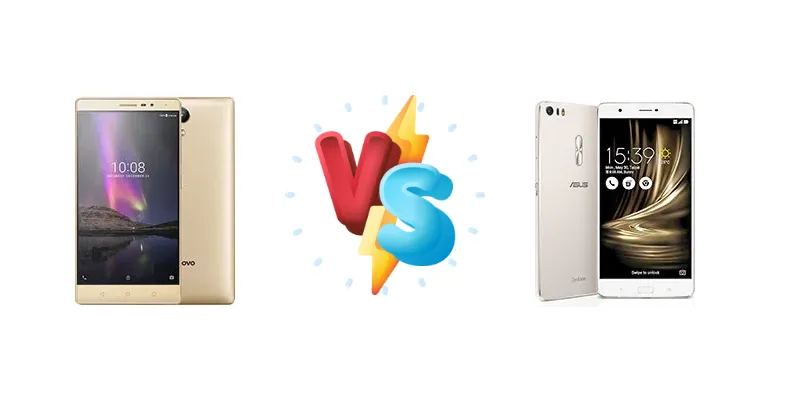
The Lenovo Phab2 and Asus Zenfone 3 Ultra represent different approaches to the large-screen smartphone market. The Phab2 aimed for affordability, while the Zenfone 3 Ultra targeted a more premium experience with a focus on multimedia and performance. This comparison dissects their core components to determine which device delivers the best value and user experience.
🏆 Quick Verdict
For the average user prioritizing responsiveness and future-proofing, the Asus Zenfone 3 Ultra is the clear winner. Its Snapdragon 652 chipset offers significantly better CPU and GPU performance than the Phab2’s Mediatek MT8735, alongside the benefit of QC3 fast charging. While the Phab2 is more affordable, the performance gap is substantial.
| Network |
|---|
| 2G bands | GSM 850 / 900 / 1800 / 1900 - SIM 1 & SIM 2 | GSM 850 / 900 / 1800 / 1900 - SIM 1 & SIM 2 |
| 3G bands | HSDPA 850 / 900 / 1900 / 2100 - EMEA | HSDPA 850 / 900 / 1900 / 2100 / 800 |
| 4G bands | 1, 2, 3, 5, 7, 8, 20, 38, 40, 41 - EMEA | 1, 3, 5, 7, 8, 18, 19, 20, 26, 28, 38, 40, 41 |
| Speed | HSPA, LTE | HSPA 42.2/5.76 Mbps, LTE (2CA) Cat6 300/50 Mbps |
| Technology | GSM / HSPA / LTE | GSM / HSPA / LTE |
| | 2, 4, 5, 7, 12, 13, 17 - USA | - |
| Launch |
|---|
| Announced | 2016, June. Released 2016, June | 2016, May. Released 2016, August |
| Status | Discontinued | Discontinued |
| Body |
|---|
| Dimensions | 175 x 89.5 x 9.6 mm (6.89 x 3.52 x 0.38 in) | 186.4 x 93.9 x 6.8 mm (7.34 x 3.70 x 0.27 in) |
| SIM | Hybrid Dual SIM (Micro-SIM, dual stand-by) | Nano-SIM + Nano-SIM |
| Weight | 225 g (7.94 oz) | 233 g (8.22 oz) |
| Display |
|---|
| Protection | - | Corning Gorilla Glass 4 |
| Resolution | 720 x 1280 pixels, 16:9 ratio (~229 ppi density) | 1080 x 1920 pixels, 16:9 ratio (~324 ppi density) |
| Size | 6.4 inches, 112.9 cm2 (~72.1% screen-to-body ratio) | 6.8 inches, 127.5 cm2 (~72.8% screen-to-body ratio) |
| Type | IPS LCD | IPS LCD |
| Platform |
|---|
| CPU | Quad-core 1.3 GHz Cortex-A53 | Octa-core (4x1.8 GHz Cortex-A72 & 4x1.4 GHz Cortex-A53) |
| Chipset | Mediatek MT8735 | Qualcomm MSM8976 Snapdragon 652 (28 nm) |
| GPU | Mali-T720MP2 | Adreno 510 |
| OS | Android 6.0 (Marshmallow) | Android 6.1 (Marshmallow), ZenUI 3 |
| Memory |
|---|
| Card slot | microSDXC (uses shared SIM slot) | microSDXC (uses shared SIM slot) |
| Internal | 32GB 3GB RAM | 32GB 3GB RAM, 64GB 3GB RAM, 128GB 4GB RAM |
| | - | eMMC 5.1 |
| Main Camera |
|---|
| Features | LED flash, HDR, panorama | Laser AF, Dual-LED dual-tone flash, HDR, panorama |
| Single | 13 MP, f/2.0, PDAF | 23 MP, f/2.0, 1/2.6", 1.0µm, PDAF, 4-axis OIS |
| Video | 720p@30fps | 1080p@30fps |
| Selfie camera |
|---|
| Single | 5 MP | 8 MP, f/2.0 |
| Video | - | 1080p@30fps |
| Sound |
|---|
| 3.5mm jack | Yes | Yes |
| 35mm jack | Yes | Yes |
| Loudspeaker | Yes | Yes, dual speakers |
| | - | 24-bit/192kHz audio |
| Comms |
|---|
| Bluetooth | 4.0, A2DP | 4.2, A2DP, EDR, LE |
| NFC | No | No |
| Positioning | GPS | GPS, GLONASS, BDS |
| Radio | FM radio | FM radio |
| USB | microUSB 2.0 | USB Type-C 2.0, OTG |
| WLAN | Wi-Fi 802.11 a/b/g/n | Wi-Fi 802.11 a/b/g/n/ac, Wi-Fi Direct |
| Features |
|---|
| Sensors | Accelerometer, gyro, proximity, compass | Fingerprint (front-mounted), accelerometer, gyro, proximity, compass |
| Battery |
|---|
| Charging | - | 18W wired, QC3, 60% in 45 min |
| Talk time | - | Up to 34 h (3G) |
| Type | Li-Ion 4050 mAh, non-removable | Li-Ion 4600 mAh, non-removable |
| Misc |
|---|
| Colors | Gunmetal Grey, Champagne Gold | Glacier Silver, Titanium Gray, Metallic Pink |
| Models | PB2-650M, PB2-650Y | - |
| Price | About 230 EUR | About 300 EUR |
Lenovo Phab2
- Potentially lower price point
- Large screen size for media consumption
- Acceptable for basic smartphone tasks
- Significantly weaker performance compared to the Zenfone 3 Ultra
- Slower charging speeds
- Likely inferior camera quality
Asus Zenfone 3 Ultra ZU680KL
- Superior performance with Snapdragon 652
- Faster charging with QC3 (60% in 45 min)
- Likely better camera quality and features
- Higher price compared to the Phab2
- May have a shorter battery life if capacity is lower than Phab2
- Larger size may not be comfortable for all users
Display Comparison
Neither device's display specifications are provided, but given their market positioning, we can infer differences. The Zenfone 3 Ultra, being the more premium device, likely features a higher resolution and potentially better color accuracy. The Phab2, focusing on affordability, likely utilizes a simpler panel. The larger screen size of both devices suggests a focus on media consumption, but the Zenfone 3 Ultra’s display is likely to offer a more visually pleasing experience.
Camera Comparison
Without specific camera specs, a direct comparison is difficult. However, the Zenfone 3 Ultra, positioned as a multimedia-focused device, likely features a more capable camera system. The Snapdragon 652’s ISP (Image Signal Processor) is generally more advanced than that found in Mediatek MT8735-based devices, resulting in better image quality, especially in low-light conditions. While both phones likely include standard features like autofocus, the Zenfone 3 Ultra may offer additional features like optical image stabilization (OIS) or more sophisticated image processing algorithms.
Performance
The core difference lies in the chipsets. The Asus Zenfone 3 Ultra’s Qualcomm MSM8976 Snapdragon 652, built on a 28nm process, is a significant upgrade over the Lenovo Phab2’s Mediatek MT8735. The Snapdragon 652 boasts an octa-core configuration (4x1.8 GHz Cortex-A72 & 4x1.4 GHz Cortex-A53) compared to the Phab2’s quad-core 1.3 GHz Cortex-A53. The Cortex-A72 cores in the Snapdragon 652 provide a substantial performance boost in CPU-intensive tasks and gaming. This translates to faster app loading times, smoother multitasking, and a more enjoyable gaming experience on the Zenfone 3 Ultra. The 28nm process also contributes to better thermal efficiency, potentially reducing throttling during sustained workloads.
Battery Life
Battery capacity isn't specified for either device. However, the Zenfone 3 Ultra’s inclusion of 18W wired charging with QC3 support is a major advantage. QC3 allows for faster charging speeds, reaching 60% charge in just 45 minutes. The Phab2 likely supports standard charging speeds, resulting in a significantly longer charge time. While a larger battery capacity on the Phab2 could offset the slower charging, the convenience and speed of QC3 on the Zenfone 3 Ultra are compelling.
Buying Guide
Buy the Lenovo Phab2 if you need a very large screen on an extremely tight budget and primarily use your phone for basic tasks like calling, texting, and light social media. Buy the Asus Zenfone 3 Ultra if you prefer a smoother, more responsive experience for multitasking, gaming, and media consumption, and value faster charging capabilities.
Frequently Asked Questions
❓ Will the Mediatek MT8735 in the Phab2 struggle with modern mobile games?
Yes, the Mediatek MT8735 is a relatively low-end chipset and will likely struggle with graphically demanding games. Expect low frame rates and potential lag, even on medium settings. The Snapdragon 652 in the Zenfone 3 Ultra offers a much smoother gaming experience.
❓ Does the Asus Zenfone 3 Ultra’s QC3 fast charging work with any charger?
While QC3 is a standard, you’ll get the fastest charging speeds with a charger that specifically supports Qualcomm Quick Charge 3.0. Using a standard charger will still charge the phone, but at a slower rate.
❓ Is the difference in performance between these two phones noticeable for everyday tasks like browsing and social media?
Yes, the difference is noticeable. The Snapdragon 652’s faster processor and more efficient architecture result in snappier app loading times and smoother scrolling, even during everyday tasks. The Phab2 may exhibit occasional lag or stuttering.